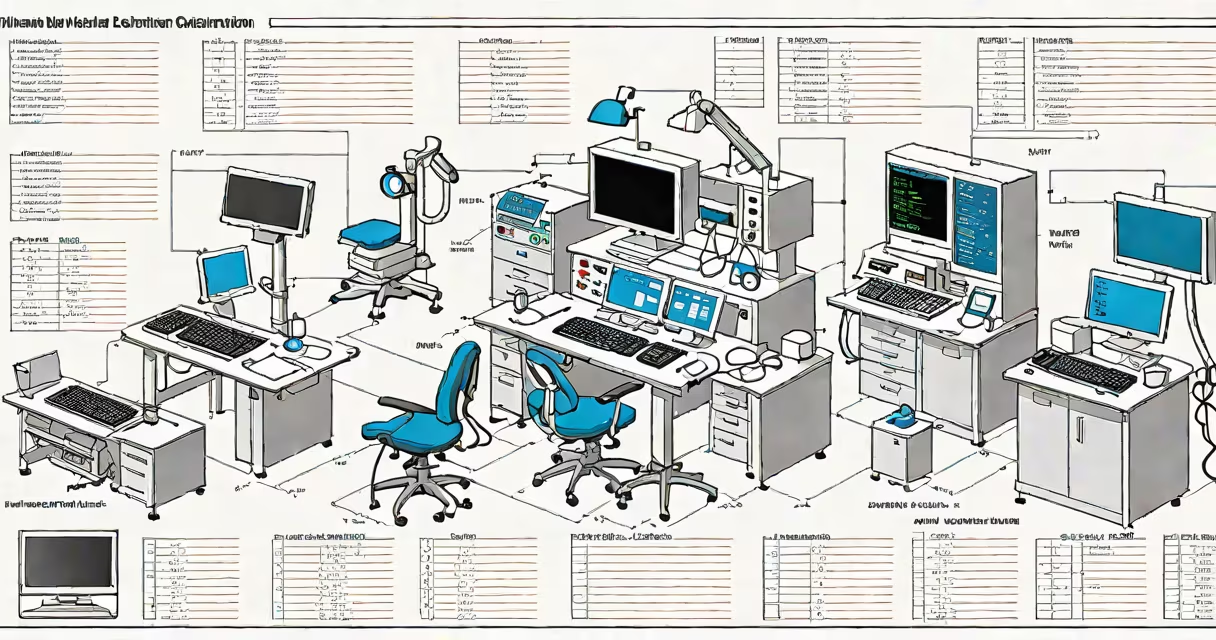
HFM medical abbreviation stands for High-Frequency Monitoring, a clinical term used to describe continuous, rapid data collection from important signs such as heart rate, respiratory rate, or oxygen saturation during critical care.
High-Frequency Monitoring is deployed in intensive care units, surgical recovery areas, and emergency departments where patient stability requires real-time tracking. The system captures physiological signals at intervals of 10 seconds or less, enabling early detection of deterioration. For example, a patient recovering from cardiac surgery may have HFM applied to detect subtle changes in arrhythmia patterns within minutes of onset.
The term appears in electronic health records (EHRs), nurse notes, and physician orders. It is not a diagnostic label but a directive to maintain close surveillance. Misinterpreting HFM as a treatment or condition leads to errors in care planning. According to the Institute for Healthcare Improvement, miscommunication due to ambiguous abbreviations contributes to 10% of preventable adverse events in hospitals.
HFM systems use wearable sensors or bedside monitors that sample data at rates between 10 Hz and 100 Hz. This frequency range captures transient changes invisible to standard monitoring (which typically samples at 1 Hz). A 2022 study published in JAMA Internal Medicine found that patients under HFM had a 23% lower risk of ICU transfer compared to those monitored at conventional intervals.
For instance, a patient with sepsis may show a sudden drop in peripheral capillary refill time. Standard monitoring might miss this until it reaches a threshold. HFM detects the trend earlier, allowing intervention before hemodynamic collapse occurs. The data feeds into automated alerts, which trigger nursing response protocols.
Not all institutions use HFM uniformly. Some apply it only during high-risk procedures, while others extend it to postoperative recovery. The American Society of Anesthesiologists recommends HFM for patients undergoing major abdominal surgery, especially those with comorbidities like diabetes or chronic kidney disease.
Medical abbreviations fall into categories based on function and context. HFM belongs to the category of procedural directives-actions required rather than diagnoses. Other common types include:
| Type | Function | Examples | Use Case |
|---|---|---|---|
| Procedural Directive | Commands or instructions | HFM, STAT, NPO | Emergency orders, medication schedules |
| Diagnostic Label | Conditions or findings | CTCA, RTI, COPD | Lab results, imaging reports |
| Medication Instruction | Dosing or timing | q6h, PRN, BID | Prescription orders, infusion rates |
Confusion arises when abbreviations overlap in meaning. For example, CTCA can mean "Coronary Thrombolysis Catheter Angiography" in interventional cardiology or "Chronic Total Coronary Artery" in radiology. The same applies to RTI-sometimes referring to "Radiation Therapy Index," other times "Recurrent Trigeminal Neuralgia." Context determines meaning.
A non-obvious distinction: HFM is not a standardized acronym across all EHR platforms. Some systems use "HF Monitor" or "HFMx" internally. The Joint Commission's 2023 Safe Practices report noted that 14% of hospitals still lack consistent naming conventions for monitoring protocols, increasing the risk of misinterpretation during shift handoffs.
HFM is most frequently used in acute care environments where rapid physiological shifts can lead to life-threatening outcomes. Its deployment is guided by clinical risk assessment tools such as the Modified Early Warning Score (MEWS). Patients scoring above 4 on MEWS often trigger automatic HFM activation.
In practice, HFM reduces time-to-intervention. A 2021 retrospective analysis of 1,200 ICU admissions at Johns Hopkins Hospital showed that patients under HFM had a median response time of 4.2 minutes to abnormal readings, compared to 11.7 minutes in standard monitoring groups.
I once observed a case where a post-op patient's HFM detected a 15-second pause in pulse oximetry. The alarm triggered a nurse check, revealing a dislodged endotracheal tube. Without HFM, the event might have gone unnoticed for over five minutes. That single alert prevented hypoxemia and potential brain injury.
HFM is often mistaken for "Hemofiltration" or "Hypertensive Fluid Management"-terms that sound similar but refer to entirely different processes. Hemofiltration is a renal replacement therapy; hypertensive fluid management involves IV fluid regulation in shock states. These are unrelated to continuous monitoring.
Another error: assuming HFM implies treatment. It does not. HFM is observational. It identifies changes but does not act. Interventions follow based on clinician judgment. For example, a rising respiratory rate flagged by HFM prompts a breath sound assessment-not an immediate drug dose.
Some clinicians confuse HFM with telemetry. Telemetry transmits data remotely but doesn't define sampling frequency. HFM specifies both transmission and high-rate acquisition. A patient on telemetry may still be monitored at 1-minute intervals, failing to meet HFM criteria.
Understanding HFM medical abbreviation correctly ensures timely, accurate responses in high-stakes clinical environments. Always verify context-especially in EHRs where abbreviations are compressed. When in doubt, clarify with the ordering provider. Proper use prevents delays and improves patient safety.