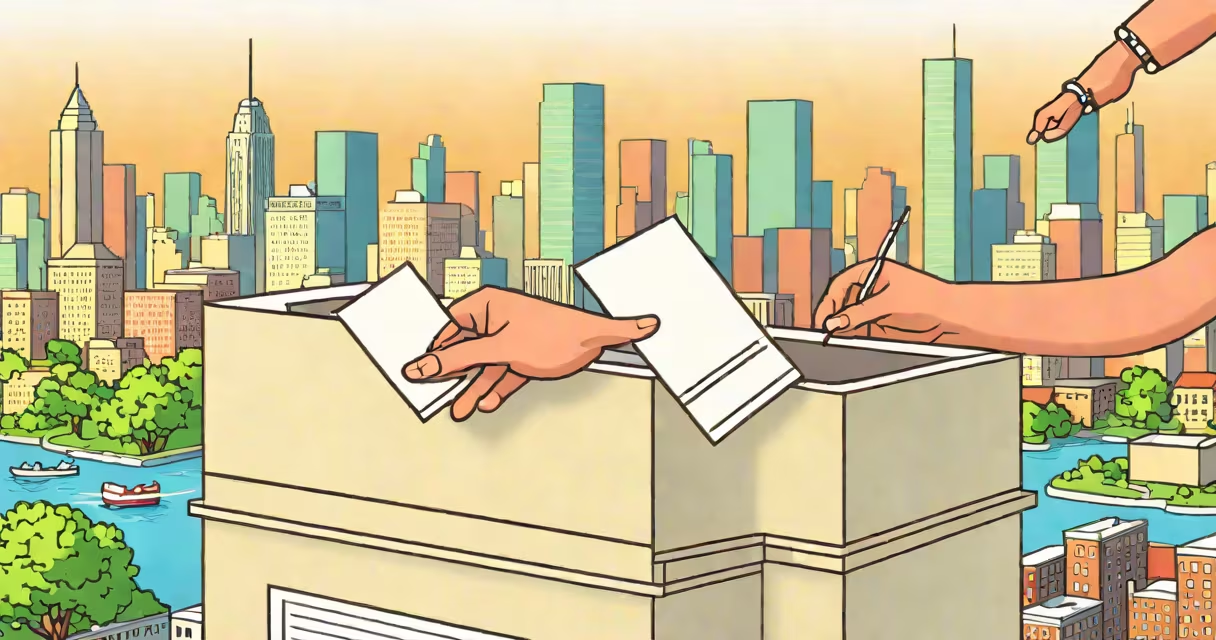
Democracy is a system of government in which power resides in the people, who exercise it either directly or through elected representatives. It relies on free and fair elections, protection of individual rights, and accountability of leaders to the public.
The term originates from ancient Greek, combining *dēmos* (people) and *kratos* (power), meaning "rule by the people." Modern democracies operate through institutions like parliaments, courts, and independent electoral bodies to ensure decisions reflect popular will while safeguarding minority rights.
According to the Encyclopaedia Britannica, democracy requires regular elections, freedom of speech, access to information, and the rule of law. These elements prevent authoritarian drift and maintain transparency in governance.
Democracy functions through structured mechanisms that translate public opinion into policy. Citizens vote in periodic elections to choose officials who make laws and manage budgets. In representative democracies, individuals elect delegates to legislative bodies-such as Congress or Parliament-who debate and pass legislation on their behalf.
Decision-making is not purely majority rule. Constitutional protections ensure that even if a majority supports a policy, it cannot violate fundamental rights. For example, the U.S. Constitution prohibits laws that infringe on free speech, even if a majority votes for them.
Checks and balances prevent concentration of power. In the United States, the executive, legislative, and judicial branches each have distinct roles and oversight powers. This structure reduces the risk of abuse, as seen during the Watergate scandal, when Congress investigated presidential misconduct.
Democracies vary in structure. The most common forms are representative, direct, and semi-direct models.
| Type | How It Works | Example Country |
|---|---|---|
| Representative | Citizens elect officials to make decisions on their behalf. | United States, Germany, Japan |
| Direct | People vote directly on laws and policies. | Switzerland (via referendums) |
| Semi-direct | Combines representation with citizen initiatives and referendums. | California (U.S.), Austria |
Switzerland uses direct democracy extensively. In 2023, voters approved a national ban on new oil drilling through a referendum, despite opposition from energy companies. This illustrates how citizens can influence major policy changes without waiting for elected officials.
Many confuse democracy with mere majority rule. But democracy protects minority voices. In Canada, Indigenous communities have legal recognition and consultation rights under the Constitution Act, 1982-even when they are outnumbered in parliament.
Another error is equating democracy with stability. Not all democratic systems function well. Venezuela was a constitutional democracy until 2013, when elected leaders began dismantling checks on power. By 2020, Freedom House classified it as "not free," citing suppression of dissent and electoral manipulation.
A lesser-known fact: democracy is not inherently stable. Research from the Proceedings of the National Academy of Sciences shows that democracies are more likely to collapse during economic crises unless institutions remain resilient. The 1930s Great Depression accelerated the fall of German democracy into Nazi rule, demonstrating how external shocks can erode democratic norms.
Democracy enables peaceful transitions of power. When leaders lose elections, they typically step down without violence. In contrast, autocratic regimes often lead to coups or civil conflict. Since 1945, countries with functioning democracies have experienced fewer internal wars than those without.
Participation strengthens legitimacy. When people feel heard, trust in government rises. A 2022 OECD study found that citizens in high-trust democracies report higher life satisfaction and greater willingness to pay taxes.
I once observed a town hall meeting in Portland, Oregon, where residents debated zoning changes affecting a local park. Over 150 people attended, including elderly residents, young parents, and business owners. After hours of discussion, the city council revised the plan to preserve green space. That moment showed how democracy isn't just about ballots-it's about dialogue, inclusion, and shared responsibility.
To cite a democracy dictionary definition in MLA format, include the source title, publisher, year, and URL. For example: "Democracy." *Merriam-Webster's Collegiate Dictionary*, 11th ed., Merriam-Webster, 2003, www.merriam-webster.com/dictionary/democracy. This method ensures academic integrity and traceability.
Democracy is not a single model. It adapts to culture, history, and scale. But its core remains consistent: power belongs to the people, exercised through fair processes and mutual accountability.