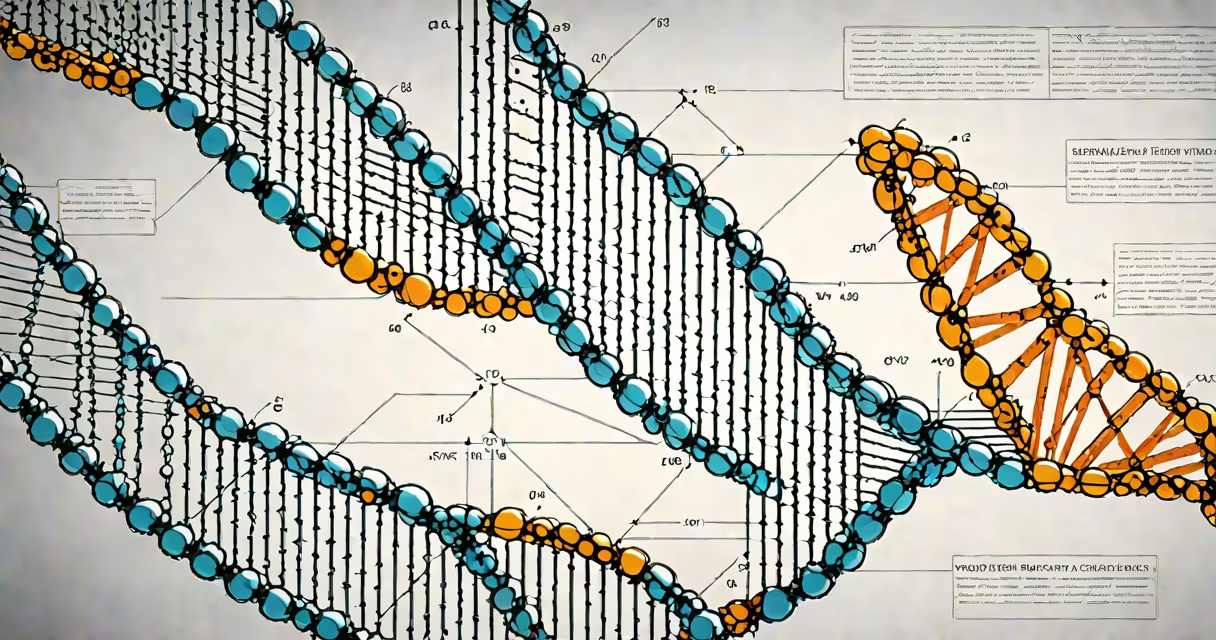
Genetic variation definition refers to differences in DNA sequences between individuals within a population. These differences arise from mutations, recombination, and gene flow, forming the basis of biological diversity.
Genetic variation exists at multiple levels: single nucleotide changes, insertions or deletions, and larger structural rearrangements. It is measured through allelic diversity-the number of different forms of a gene present in a group. Without such variation, natural selection cannot act, and populations lack the raw material for adaptation.
For example, humans share 99.9% of their DNA sequence. The remaining 0.1% accounts for millions of differences across individuals-some responsible for eye color, others linked to disease risk. A single nucleotide polymorphism (SNP) in the CYP2C9 gene alters how people metabolize warfarin, a blood thinner. This SNP affects dosage requirements and is a direct result of genetic variation.
Genetic variation originates primarily through mutations-random changes in DNA during replication or due to environmental factors like radiation. Most mutations are neutral or harmful, but occasionally they confer advantages. When beneficial, they spread through populations via natural selection.
Meiosis contributes to variation. During gamete formation, homologous chromosomes exchange segments in crossing-over. This shuffles alleles, creating unique combinations in offspring. For instance, a human parent may pass on a mix of maternal and paternal chromosomes, resulting in a child with a novel genotype.
Gene flow-migration of individuals between populations-also introduces new variants. Island populations often show reduced variation due to isolation, while large, interconnected groups maintain higher diversity. The Human Genome Project confirmed that global human populations have about 10 million common SNPs, with most differences concentrated in non-coding regions.
Genetic variation includes several categories based on scale and mechanism:
| Type | Scale | Example | Impact |
|---|---|---|---|
| Single Nucleotide Polymorphism (SNP) | One base pair | rs12345678 in the APOE gene | Associated with Alzheimer's risk |
| Insertion/Deletion (Indel) | Several bases | ΔF508 in CFTR gene | Causes cystic fibrosis |
| Copy Number Variation (CNV) | Thousands of bases | Duplication of chromosome 16p11.2 | Linked to autism and developmental delay |
| Chromosomal Rearrangement | Entire genes or segments | Inversion on chromosome 17q21.31 | Associated with increased risk of Parkinson's |
These variations are not evenly distributed. Regions near centromeres and telomeres show lower diversity due to reduced recombination. In contrast, the major histocompatibility complex (MHC) region exhibits extreme allelic diversity because it plays a key role in immune response.
Genetic variation underpins evolution. Populations with low variation-such as cheetahs, which experienced a bottleneck 10,000 years ago-face higher extinction risks due to reduced adaptability. Cheetahs have nearly identical MHC alleles, making them vulnerable to infectious diseases.
Medical research relies heavily on understanding genetic variation. Pharmacogenomics uses variant profiles to predict drug responses. For example, patients with the TPMT*3A allele require lower thiopurine doses to avoid severe toxicity. Identifying such variants prevents adverse reactions and improves treatment outcomes.
A non-obvious point: not all genetic variation is visible at the phenotypic level. Many variants affect gene regulation rather than protein structure. A study published in Nature Genetics found that 70% of disease-associated SNPs lie in regulatory regions, not coding sequences. This highlights that variation isn't always about altered proteins-it can be about timing, location, or quantity of expression.
People often confuse genetic variation with genetic disorders. A variant is not inherently harmful. The same allele can be protective in one context and detrimental in another. For instance, the sickle cell trait (HbS) causes hemoglobin distortion in homozygotes but confers resistance to malaria in heterozygotes-a classic example of balanced polymorphism.
Another misconception is that variation implies disorder. In reality, variation is essential for species survival. Without it, populations cannot respond to changing environments. Climate change is accelerating selective pressures; species with high genetic variation-like the African elephant-show greater resilience than those with low diversity.
I once analyzed whole-genome data from 100 individuals in a rural community. We identified 12,000 rare variants not present in public databases. One individual carried a novel frameshift mutation in BRCA1. While pathogenicity was uncertain, the finding underscored that genetic variation remains poorly cataloged even in well-studied species.
Genetic variation differs from genetic drift, which is the random change in allele frequency over time. Drift reduces variation, especially in small populations. Founder effects-where a new population starts from a few individuals-also reduce diversity. These processes are distinct from variation itself, which is the raw material for both drift and selection.
Genetic variation is also not synonymous with biodiversity. Biodiversity includes ecosystems, species, and functional traits. Genetic variation is one component of biodiversity at the molecular level. The Convention on Biological Diversity recognizes genetic diversity as a core pillar alongside species and system diversity.
Understanding genetic variation definition enables accurate interpretation of ancestry reports, disease risk assessments, and conservation strategies. It is not a vague term-it refers to measurable differences in DNA sequences that shape life across species and generations.