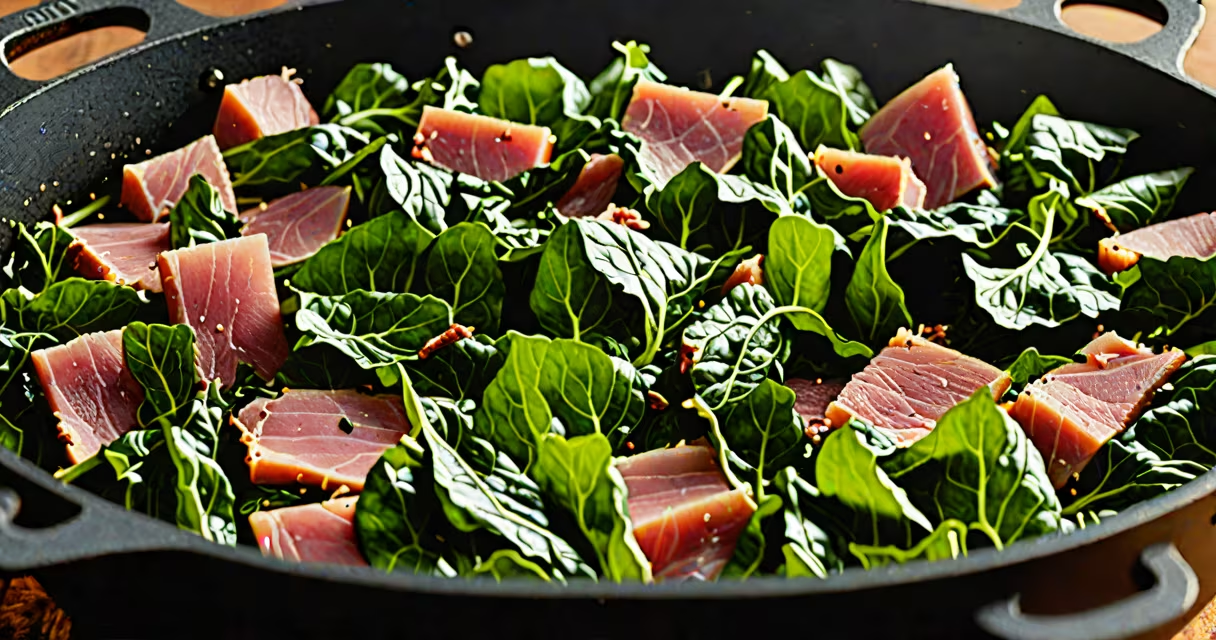
A collard green recipe is a method for cooking collard greens-dark leafy greens with thick stems-using slow simmering with fat, salt, and aromatics to develop rich flavor and tender texture. The most common version features pork products like ham hock or bacon, but plant-based versions exist using oil and vegetable stock.
Collard greens are native to the Mediterranean and have been part of Southern U.S. cuisine since the 18th century. They're cooked slowly to break down their tough fibers. A standard recipe simmers 2-3 pounds of chopped greens for 60-90 minutes with salt, onion, garlic, and fat. The result is deeply savory, slightly bitter greens with a soft mouthfeel.
For a basic collard green recipe, start with 2 tablespoons of rendered fat (bacon grease, lard, or olive oil), 1 chopped yellow onion, 3 cloves minced garlic, 2 pounds fresh collard greens (washed and stemmed), 1 quart water or broth, 1 teaspoon salt, and optional ½ teaspoon black pepper. Simmer covered on low heat for 90 minutes. Taste and adjust seasoning. Serve warm with cornbread or rice.
The cooking process relies on time and temperature to soften collard greens' fibrous structure. Their leaves contain high levels of cellulose and lignin-plant compounds that resist breakdown at room temperature. Slow simmering at low heat (around 180°F/82°C) allows water and fat to penetrate and dissolve these compounds gradually.
Fat adds flavor and improves mouthfeel. In traditional recipes, animal fats like bacon grease or ham hock render during cooking, releasing umami-rich compounds such as glutamates and fatty acids. These improve savoriness and help carry flavor into the greens' cells.
Acidic ingredients like vinegar or lemon juice are often added at the end. They balance bitterness and brighten the dish. A splash of apple cider vinegar (1-2 tablespoons) reduces perceived bitterness by altering pH and activating taste receptors sensitive to sourness.
Recipes vary based on regional style, dietary preference, and available ingredients. The most common categories are Southern-style, vegan, and quick-cook methods.
| Type | Base Fat | Cook Time | Flavor Profile | Best For |
|---|---|---|---|---|
| Southern | Bacon grease or ham hock | 90-120 min | Smoky, savory, rich | Traditional meals, family gatherings |
| Vegan | Olive oil or vegetable broth | 60-90 min | Earthy, mild, clean | Plant-based diets, health-focused eating |
| Quick-Cook | Oil or butter | 20-30 min | Grassy, sharp, fresh | Weeknight dinners, light meals |
Southern-style collard green recipes are the most iconic. They use a ham hock-cured pork leg-left to simmer in the pot. The meat adds depth and becomes tender enough to shred and serve alongside the greens. According to the USDA, a 3-ounce serving of ham hock contains about 15 grams of protein and 140 calories, contributing both flavor and nutrition.
Vegan recipes avoid animal products entirely. Instead of bacon or ham, they use olive oil or vegetable stock. Some chefs add smoked paprika or liquid smoke to mimic the smoky quality. A 2021 study published in Frontiers in Nutrition found that plant-based cooking with oil and herbs produced comparable palatability scores to meat-based versions in blind taste tests.
Quick-cook methods use higher heat and shorter times. These rely on pre-cut greens and rapid sautéing. While less tender, they preserve more nutrients-especially vitamin C, which degrades above 160°F (71°C). A 2019 analysis by the National Institutes of Health showed that boiling greens for over 30 minutes reduced vitamin C content by up to 50% compared to steaming or brief sautéing.
Collard green recipes are central to Southern U.S. food culture. They appear at holiday meals, church suppers, and family reunions. The dish is associated with resilience, tradition, and comfort. In many households, the smell of collard greens simmering on the stove signals homecoming.
They're also popular in health-conscious circles. Collard greens are rich in vitamins A, C, and K, calcium, iron, and fiber. One cup of cooked collard greens provides 100% of the daily recommended intake of vitamin K and 40% of vitamin A. The American Heart Association notes that regular consumption of leafy greens correlates with lower risk of cardiovascular disease.
Many people assume collard greens are interchangeable with kale or spinach. They're not. Collard greens have larger, thicker leaves with a stronger, earthier taste. Kale is more brittle and slightly sweet. Spinach cooks faster and lacks the chew. Using the wrong green changes the outcome of a collard green recipe.
One widespread error is boiling collard greens too quickly. High heat causes uneven cooking-edges may become mushy while centers remain tough. The correct method uses low, steady simmering. This ensures even softening and prevents scorching.
Another mistake is skipping the stem removal. Stems are woody and take longer to cook. Leaving them in leads to uneven texture. Always strip leaves from the stem and chop stems separately. They can be sautéed first and added back later for better consistency.
Some believe collard greens must be served hot. They're excellent cold or at room temperature. In Georgia, it's common to serve leftover collard greens chilled with a spoonful of buttermilk. The contrast of cool greens and tangy dairy enhances flavor complexity.
I once prepared a large batch for a community potluck using a 5-gallon stockpot. I used a ham hock, two onions, and 30 minutes of prep. After 90 minutes of simmering, the greens were dark green, glossy, and fell apart easily. Guests asked for the recipe twice. The key was maintaining a gentle bubble-not a rolling boil-and adding vinegar at the end.
When following a collard green recipe, prioritize patience and attention to texture. The dish rewards slow cooking and proper ingredient selection. flavor, the result is a deeply satisfying side that stands on its own or complements hearty proteins.