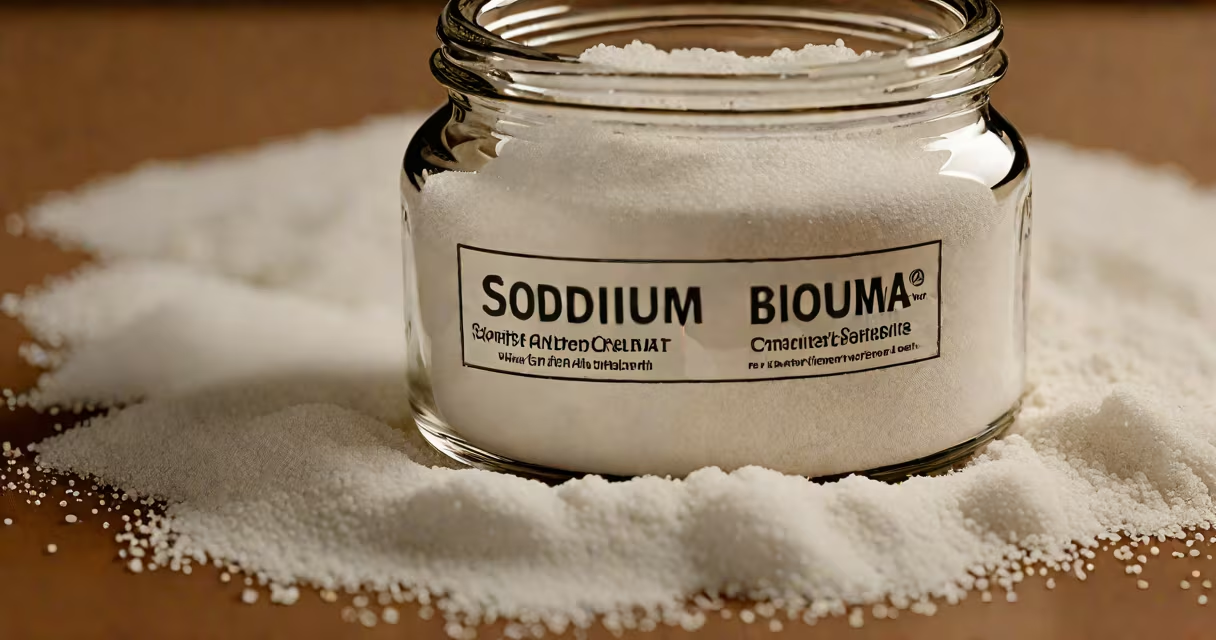
The chemical name of soda is sodium bicarbonate (NaHCO₃), a white crystalline compound used in baking, cleaning, and medical treatments. It's also known as baking soda and is distinct from carbonated beverages, which contain dissolved carbon dioxide.
Sodium bicarbonate forms when sodium ions bond with bicarbonate ions. It dissolves easily in water and reacts with acids to release carbon dioxide gas. This reaction causes dough to rise during baking and produces the fizz in antacid tablets.
Despite the shared term "soda," sodium bicarbonate is unrelated to fizzy drinks like cola or seltzer. Those are carbonated solutions containing carbonic acid (H₂CO₃), formed when CO₂ dissolves in water. The confusion arises because both involve carbon dioxide, but their chemistry and uses differ completely.
Sodium bicarbonate acts as a weak base. When mixed with an acid-such as vinegar (acetic acid), lemon juice (citric acid), or stomach acid-it undergoes a neutralization reaction:
NaHCO₃ + CH₃COOH → NaCH₃COO + H₂O + CO₂↑The carbon dioxide (CO₂) produced creates bubbles. This is why baking soda is used in recipes requiring leavening. One teaspoon (about 5 grams) of baking soda can produce roughly 1.5 liters of CO₂ gas when reacting with sufficient acid.
In medicine, sodium bicarbonate treats metabolic acidosis-a condition where blood pH drops too low. It's also used in dialysis and as an antacid. A typical dose is 1-2 grams orally, though higher doses require medical supervision due to risks like alkalosis or fluid overload.
Sodium bicarbonate appears in several forms based on application:
| Type | Use Case | Form | Typical Concentration |
|---|---|---|---|
| Baking soda | Cooking, cleaning | Powdered | 99% pure |
| Food-grade | Leavening agent | Granular | Min. 98% NaHCO₃ |
| Pharmaceutical | Antacid, acidosis treatment | Tablets, oral solution | 500 mg per tablet |
Household cleaners often combine baking soda with water or vinegar. A paste made from equal parts baking soda and water removes stains from sinks and tiles. The abrasive texture and mild alkalinity break down grease and organic residue.
For deodorizing refrigerators, place a small bowl of baking soda inside. It absorbs odors through chemical adsorption, not masking. Over time, it neutralizes volatile acids like acetic acid (from spoiled milk) and ammonia (from fish).
"Soda" often refers to sugary carbonated drinks, especially in American English. But the chemical name of soda-sodium bicarbonate-is not related to those beverages. Carbonated soft drinks contain carbon dioxide under pressure, forming carbonic acid. Their pH ranges from 2.5 to 4.5, making them acidic.
Sodium bicarbonate has a pH of about 8.3 in a 1% aqueous solution. It's mildly basic. Mixing it with acidic sodas causes immediate foaming. For example, adding baking soda to cola triggers rapid CO₂ release-visible as a foam eruption. This is why it's dangerous to mix baking soda with carbonated drinks in closed containers.
A common mistake is assuming all "soda" products are safe to ingest. While food-grade sodium bicarbonate is non-toxic in small amounts, excessive consumption can lead to hypernatremia (high sodium levels), metabolic alkalosis, or kidney strain. The FDA limits sodium intake to 2,300 mg per day; one teaspoon of baking soda contains 1,259 mg of sodium.
When making quick breads like banana muffins, a recipe calling for 1/2 teaspoon of baking soda requires precise measurement. Too little results in dense texture; too much causes a bitter taste and uneven rising.
For instance, a standard muffin recipe uses:
When mixed, the baking soda reacts with lactic acid in the milk and any acidic ingredients (like buttermilk or yogurt). The resulting CO₂ expands air pockets in the batter, lifting the muffin during baking. Without this reaction, the muffin would be flat and heavy.
I once baked a batch using 1 tablespoon instead of 1/2 teaspoon. The result was a puffy, crumbly loaf with a noticeable metallic aftertaste-proof that even small errors in ratio affect outcome.
Sodium bicarbonate is not the same as sodium carbonate (Na₂CO₃), also called washing soda. Sodium carbonate is stronger, with a pH around 11. It's used in laundry detergents and glass manufacturing but is corrosive to skin and eyes. It cannot replace baking soda in cooking.
Also, sodium bicarbonate differs from sodium chloride (NaCl), table salt. Though both contain sodium, they serve different roles. Salt enhances flavor; baking soda affects pH and texture. Using one in place of the other leads to failed recipes or health risks.
Understanding the chemical name of soda prevents misuse. It ensures accurate labeling, safe handling, and correct substitution in recipes and formulations.