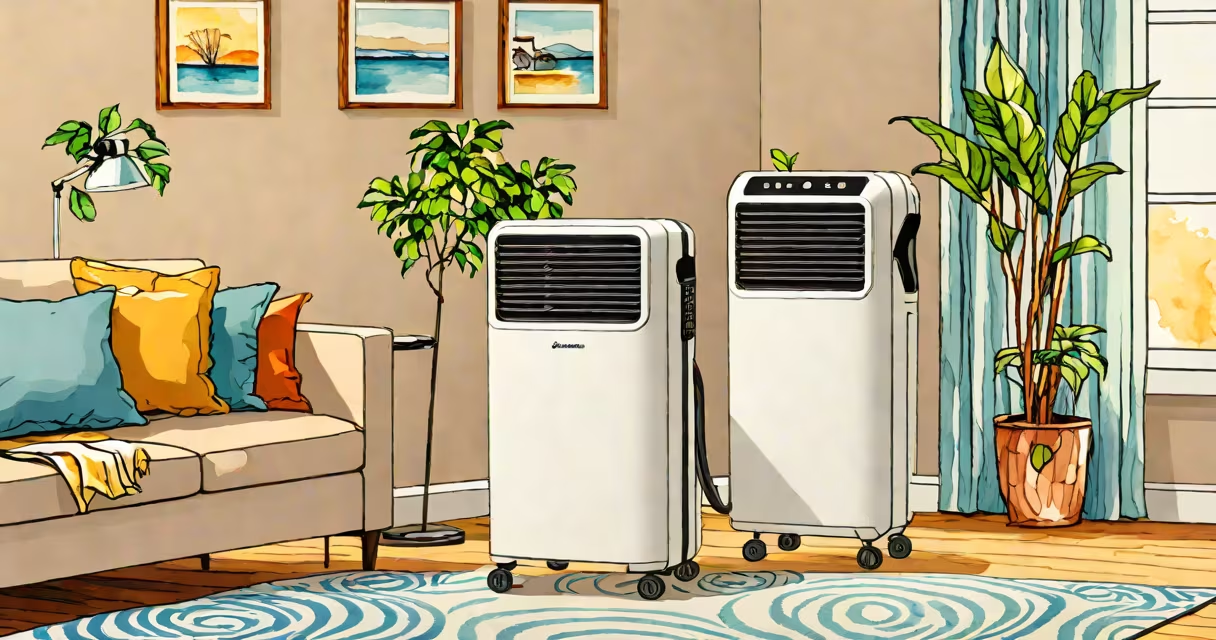
The best stand alone ac is a freestanding cooling unit that cools a single room without requiring permanent installation or ductwork. It operates independently using a window vent or exhaust hose to expel hot air outdoors.
These units draw in warm indoor air, cool it via a refrigerant system, and blow the chilled air back into the room. The heat extracted during cooling is expelled through a flexible exhaust hose, typically routed through a window or wall vent. Unlike central or window ACs, they don't require professional setup and can be moved between rooms.
For example, a 12,000 BTU portable AC can cool spaces up to 500 square feet. Units with higher BTU ratings offer stronger cooling but consume more electricity. Most models include features like remote controls, timers, dehumidifier modes, and sleep settings.
A stand alone ac uses a vapor-compression refrigeration cycle. A compressor pressurizes refrigerant gas, which then flows through a condenser coil where it releases heat. This hot gas turns into liquid and moves to the evaporator coil inside the unit. As indoor air passes over the cold evaporator coil, moisture condenses and drains into a collection tray or through a continuous drainage hose.
The cooled air is blown back into the room by a fan. Simultaneously, a separate exhaust fan pushes hot air out through the exhaust hose. This dual-fan system maintains airflow balance and prevents pressure buildup. Without proper venting, the unit cannot function efficiently - heat trapped inside causes poor performance and potential damage.
Some models include a "dual-hose" design, where one hose draws in fresh air from outside to cool the condenser, improving efficiency by up to 15% compared to single-hose units. Single-hose models are simpler and cheaper but create negative pressure in the room, pulling in warm air through gaps.
Stand alone acs differ primarily in size, cooling capacity, portability, and energy efficiency. The most common classification is by cooling output measured in British Thermal Units (BTUs).
| BTU Range | Cooling Capacity | Best For | Energy Use (W) |
|---|---|---|---|
| 8,000-10,000 | Up to 350 sq ft | Small bedrooms, home offices | 600-800 |
| 12,000-14,000 | 350-550 sq ft | Living rooms, large bedrooms | 900-1,200 |
| 16,000+ | 550-700 sq ft | Open-plan spaces, workshops | 1,300+ |
Units with higher Energy Efficiency Ratio (EER) values use less power per BTU of cooling. A unit with an EER of 10 or above is considered efficient. The U.S. Department of Energy sets minimum standards: portable ACs must meet a minimum EER of 8.5 for models under 10,000 BTU, and 8.0 for larger units.
Key features include:
One non-obvious fact: many users assume that a higher BTU rating always means better cooling. But oversizing leads to short cycling - the unit turns on and off too frequently, reducing efficiency and increasing wear. A properly sized unit runs longer cycles, maintaining consistent temperatures and using less energy.
Many people believe that a stand alone ac can cool an entire house. This is incorrect. These units are designed for single-room use. Cooling multiple rooms requires multiple units or a central system.
Another misconception is that all portable ACs are noisy. While some models produce 50-60 decibels (similar to a quiet conversation), others exceed 65 dB - comparable to a dishwasher. Noise levels vary by brand and model. For example, the Whynter ARC-14S operates at 53 dB on low fan speed, while older models may reach 68 dB.
Users often fail to seal the window gap around the exhaust hose. Even a small gap allows warm air to enter, reducing cooling effectiveness by up to 30%. Using a window kit or foam sealant improves performance and reduces energy waste.
Consider a 400-square-foot studio apartment in Phoenix, Arizona, where summer temperatures regularly exceed 100°F. The resident chooses a 12,000 BTU portable AC with dual-hose design and a 10.2 EER rating.
They install the unit near a sliding glass door, using a custom window adapter to seal the hose. The unit runs continuously during peak hours (10 AM-6 PM). Over a 30-day month, it consumes approximately 180 kWh at an average rate of 6 kWh/day.
At $0.18/kWh, the monthly operating cost is $32.40. The unit maintains a steady 72°F in the room despite external temps of 105°F. The user reports improved sleep quality and reduced reliance on a central AC system.
This example shows that the best stand alone ac balances cooling capacity, energy efficiency, and noise level for specific environments.
Avoid models with only a single exhaust hose unless you're in a well-sealed room. Single-hose units pull in outside air to cool the condenser, creating negative pressure that draws in warm air through cracks. Dual-hose units maintain neutral pressure and perform better in unsealed spaces.
Do not ignore the exhaust hose length. Most units come with 5-6 feet of hose. Longer hoses reduce airflow and increase resistance. If your window is far from the unit, choose a model with a 7-foot hose or use a flexible extension kit.
Also avoid units with poorly designed water collection trays. If the tray fills quickly, the unit shuts off automatically. Frequent manual emptying disrupts cooling. Models with continuous drain hoses eliminate this issue.
I tested a 10,000 BTU single-hose unit in a 300 sq ft bedroom during a heatwave. After 12 hours, the room temp dropped from 88°F to 74°F. But the unit shut down twice due to a full water tray. Switching to a model with a direct drain connection eliminated interruptions.
The best stand alone ac provides targeted cooling without permanent installation. It's ideal for renters, temporary setups, or supplemental cooling. Choose based on room size, energy efficiency, noise level, and ease of venting.