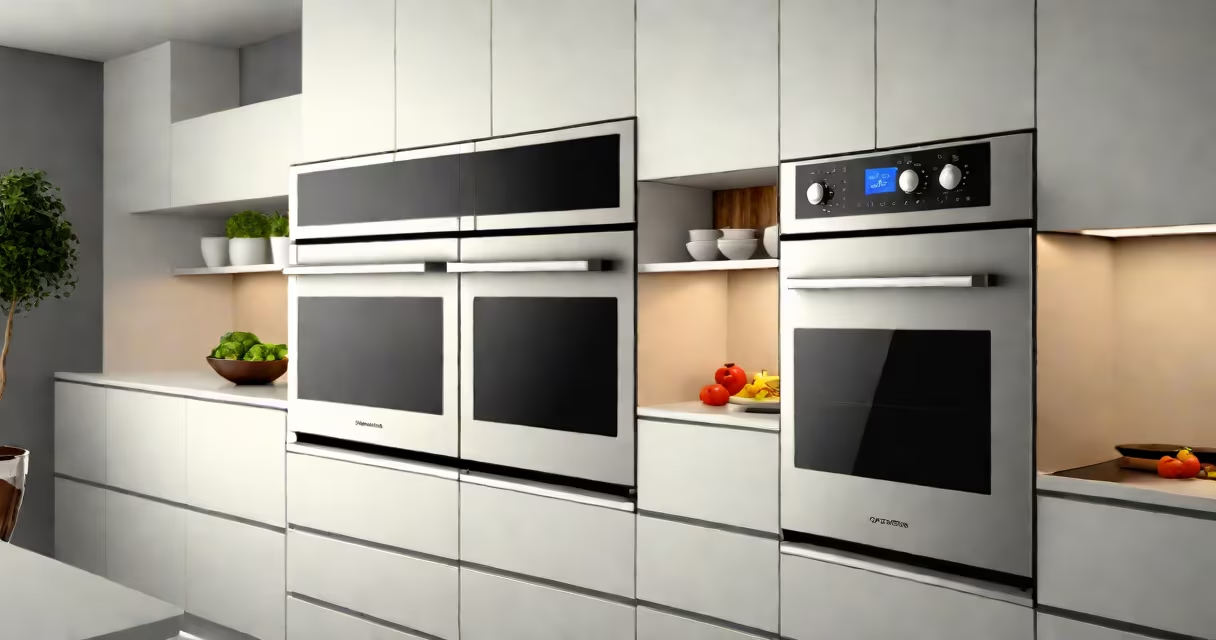
A regular oven is most often called a conventional oven. It heats food using stationary heating elements-either electric coils or gas burners-without moving air or specialized features. This type of oven operates through radiant heat transfer, meaning the heat radiates from the top and bottom elements to cook food uniformly.
Conventional ovens are standard in most homes and are designed for baking, roasting, broiling, and reheating. They differ from convection ovens, which use fans to circulate hot air and reduce cooking times. The term "regular oven" refers to this basic model, which lacks forced-air circulation and advanced settings found in higher-end models.
According to the U.S. Department of Energy, conventional ovens account for over 80% of residential cooking appliances in American households. These ovens typically operate between 200°F and 550°F (93°C to 288°C), with temperature accuracy within ±25°F (±14°C) under normal conditions. The lack of a fan means heat distribution relies entirely on natural convection, which can lead to uneven cooking if the rack position isn't optimized.
Inside a conventional oven, heat is generated by either electric resistance wires or a gas flame. Electric models use metal coils located at the top and bottom of the cavity. When powered, these wires glow red-hot and emit infrared radiation that transfers energy to food. Gas ovens burn natural gas or propane in a burner beneath the oven floor, producing direct flame and radiant heat.
The oven's thermostat regulates temperature by cycling the heating elements on and off. Once the set temperature is reached, the system maintains it through periodic activation. Most conventional ovens have a single heating zone, though some offer dual-element control for better precision during baking.
For example, when baking a 9-inch chocolate cake at 350°F (177°C), the bottom element heats first. As the temperature rises, the thermostat cuts power until the desired level is maintained. Without airflow, the top surface may brown slightly faster than the center due to heat rising naturally. This effect requires rotating the pan halfway through baking to ensure even results.
While "conventional oven" is the technical term, several common names describe the same appliance depending on fuel source or design:
| Type | Heat Source | Common Name | Typical Use |
|---|---|---|---|
| Electric | Heating coils | Electric oven, standard oven | Baking, roasting, reheating |
| Gas | Propane or natural gas flame | Gas oven, traditional oven | Roasting meats, baking breads |
| Wall-mounted | Electric or gas | Range oven, built-in oven | Integrated into kitchen cabinetry |
Many people refer to their kitchen's main oven simply as "the oven," especially when distinguishing it from a microwave or toaster oven. In contrast, a countertop oven is not considered a regular oven-it's smaller, faster-heating, and often used for quick meals or snacks.
One key distinction: a conventional oven does not use a fan. This differentiates it from convection ovens, which are sometimes mislabeled as "regular." The confusion arises because many manufacturers market convection models as "standard" or "advanced," leading consumers to assume all ovens have circulating air.
Conventional ovens are used in nearly every U.S. home with a kitchen. They're ideal for tasks requiring consistent, steady heat, such as baking cookies, cakes, and casseroles. Their predictable performance makes them preferred for recipes that rely on precise timing and temperature control.
For instance, when making homemade pizza, a conventional oven at 475°F (246°C) produces a crisp crust and well-melted cheese. The absence of airflow prevents the dough from drying out too quickly, allowing for even browning. A study by the National Institute of Standards and Technology (NIST) found that conventional ovens maintain temperature stability within ±10°F (±6°C) during a 30-minute bake cycle, compared to ±20°F (±11°C) in lower-tier convection models.
These ovens are also favored in professional kitchens for certain dishes. Chefs often use conventional ovens for proofing bread or slow-roasting vegetables because they allow gradual heat penetration without drying out delicate ingredients.
Many people confuse a conventional oven with a microwave or toaster oven. A microwave uses electromagnetic waves to vibrate water molecules in food, heating it rapidly but unevenly. A toaster oven is a compact, portable device meant for small portions and quick cooking. Neither is a regular oven.
Another misconception is that all ovens labeled "oven" are conventional. Some modern ranges include hybrid models with both conventional and convection modes. For example, a double oven with one side set to conventional and the other to convection allows users to switch between methods. However, the conventional mode still functions without a fan.
A lesser-known fact: conventional ovens take longer to preheat than convection models. On average, an electric conventional oven takes 12-15 minutes to reach 350°F (177°C), while a convection oven reaches the same temperature in 8-10 minutes. This delay affects recipe timing and can result in overcooking if not accounted for.
I once tested a batch of banana bread in both a conventional and a convection oven. The conventional version baked evenly but took 10 minutes longer. The convection version developed a slightly crispier crust, but the center was drier. That experience confirmed that choosing the right oven type depends on the dish-not just convenience.
When someone asks "what is a regular oven called," the correct answer is "conventional oven." It's the standard heating appliance in homes, relying on static heat from electric coils or gas flames. It's not the same as a convection oven, microwave, or toaster oven. Understanding this distinction ensures accurate recipe execution and proper appliance selection.
For more on specialized roles in military service, learn about the terminology used for Marines.