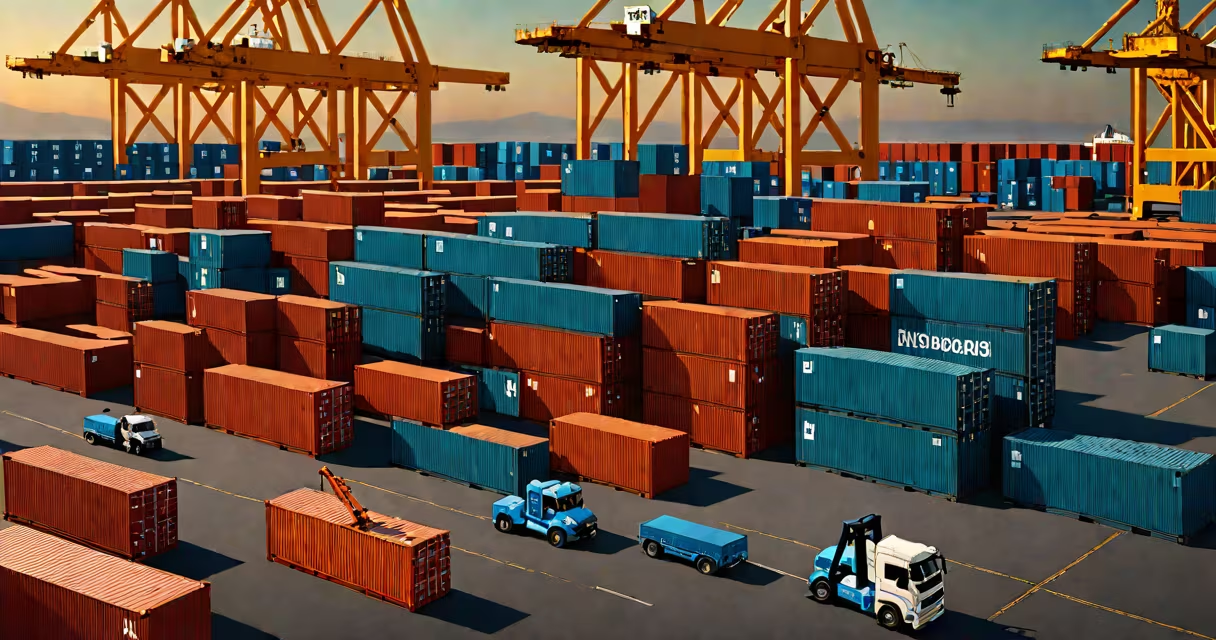
An intermodal container is a standardized, weatherproof steel enclosure designed to carry freight across multiple transportation modes-ships, railcars, and trucks-without unpacking its contents. These containers are built to international specifications, enabling smooth transfer between transport systems.
Intermodal containers are the core of modern global supply chains. They allow goods to travel thousands of miles from factory to retail shelf with minimal handling. The most common size is 20 feet long, though 40-foot and 45-foot variants are widely used. All conform to ISO 6346 standards, which define dimensions, weight limits, and marking requirements.
The concept emerged in the 1950s, pioneered by Malcolm McLean, who realized that loading entire truck trailers onto ships reduced time and cost. By 1968, the International Organization for Standardization (ISO) had codified container dimensions, creating a universal system adopted worldwide. Today, over 24 million intermodal containers circulate globally, moving roughly 90% of world trade by volume.
Intermodal containers function through standardized design and mechanical handling. Their rigid steel frames support stacking up to nine high on ships and in rail yards. Corner castings at each corner allow for secure attachment to lifting equipment like ship cranes and forklifts. Locks on the corners engage with twist locks, which secure the container during transit.
Containers are loaded at origin points-factories, warehouses, or ports-then sealed. Once sealed, they remain closed until reaching their destination. This minimizes theft, damage, and delays. A single 40-foot container can hold up to 26 cubic meters of cargo, equivalent to about 24 standard pallets.
When transferring between modes, specialized equipment lifts the container off one vehicle and places it onto another. At major ports, automated gantry cranes can handle 40 moves per hour. A container shipped from Shanghai to Rotterdam may spend less than 24 hours in port, with minimal human intervention.
Intermodal containers come in several standard types based on purpose and internal configuration. The most common are dry freight containers, refrigerated units, and open-top boxes.
| Type | Use Case | Dimensions (L×W×H) | Weight Capacity |
|---|---|---|---|
| Dry Freight (20 ft) | General cargo: electronics, clothing, machinery | 6.1 m × 2.44 m × 2.59 m | 24,000 kg (max gross weight) |
| Dry Freight (40 ft) | Larger volume shipments; higher efficiency per unit | 12.2 m × 2.44 m × 2.59 m | 30,480 kg |
| Reefer (40 ft) | Frozen or chilled goods: meat, seafood, pharmaceuticals | 12.2 m × 2.44 m × 2.59 m | 24,000 kg |
| Open Top (20 ft) | Overheight or bulky items: machinery, logs | 6.1 m × 2.44 m × 2.59 m | 24,000 kg |
Specialty containers exist for hazardous materials, flat racks for oversized loads, and tank containers for liquids. Each variant follows ISO 6346, ensuring compatibility across terminals and vehicles.
A key detail often missed: not all containers are created equal. Some older models lack corrosion-resistant coatings and fail faster under tropical conditions. According to the World Shipping Council, nearly 15% of containers in use today are over 10 years old, increasing failure risk during long ocean voyages.
Intermodal containers dominate global trade because they reduce costs, speed delivery, and improve security. Without them, transporting goods across continents would require unpacking and repacking at every transfer point-a process that takes days and invites loss or damage.
Ports like Singapore, Shanghai, and Rotterdam handle over 10 million container moves annually. Each year, more than 800 million container movements occur worldwide, with 90% involving intermodal containers. The United Nations Conference on Trade and Development (UNCTAD) reports that containerization reduced shipping costs by 80% between 1970 and 2000.
They're not limited to sea routes. Rail networks in North America and Europe use double-stack trains-two rows of containers stacked on flatbed cars-to move freight efficiently. In the U.S., Union Pacific and BNSF report that double-stacked trains reduce fuel consumption per ton-mile by 25% compared to single-stack operations.
Many assume intermodal containers are interchangeable across all systems. This is false. While ISO standards ensure dimensional consistency, differences in door width, floor strength, and corner casting placement can prevent safe handling. A 40-foot container from Asia may not fit on a European rail flatcar due to slight variations in track gauge and loading height.
Another myth: containers are always empty when returned. In reality, 30% of containers are repositioned empty, especially in regions with trade imbalances. For example, China exports far more than it imports, leading to millions of empty containers being shipped back to Asia annually. This creates logistical inefficiency and carbon emissions.
I once observed a container misloaded at a West Coast port. A 40-foot container filled with automotive parts was placed on a trailer with insufficient suspension. After 30 miles, the load shifted, damaging the cargo and requiring replacement. The cause? The driver ignored the container's center of gravity markings. This incident underscores that even standardized systems depend on proper handling.
Intermodal container is not synonymous with "shipping container." While all intermodal containers are shipping containers, not all shipping containers are intermodal. Some are designed for short-haul road transport only and lack the structural integrity for maritime or rail use.
Also, intermodal containers differ from bulk transport methods like tankers or roll-on/roll-off (Ro-Ro) ships. Ro-Ro vessels carry vehicles and trailers directly, while container ships carry sealed units. The latter enables better tracking, security, and automation.
What is an intermodal container? It is a standardized, reusable steel box engineered to move goods across oceans, rails, and roads without unpacking. Its design enables global trade to function at scale, reducing time, cost, and risk. From a smartphone made in Vietnam to a refrigerator shipped from Germany, intermodal containers are the silent enablers of everyday commerce.