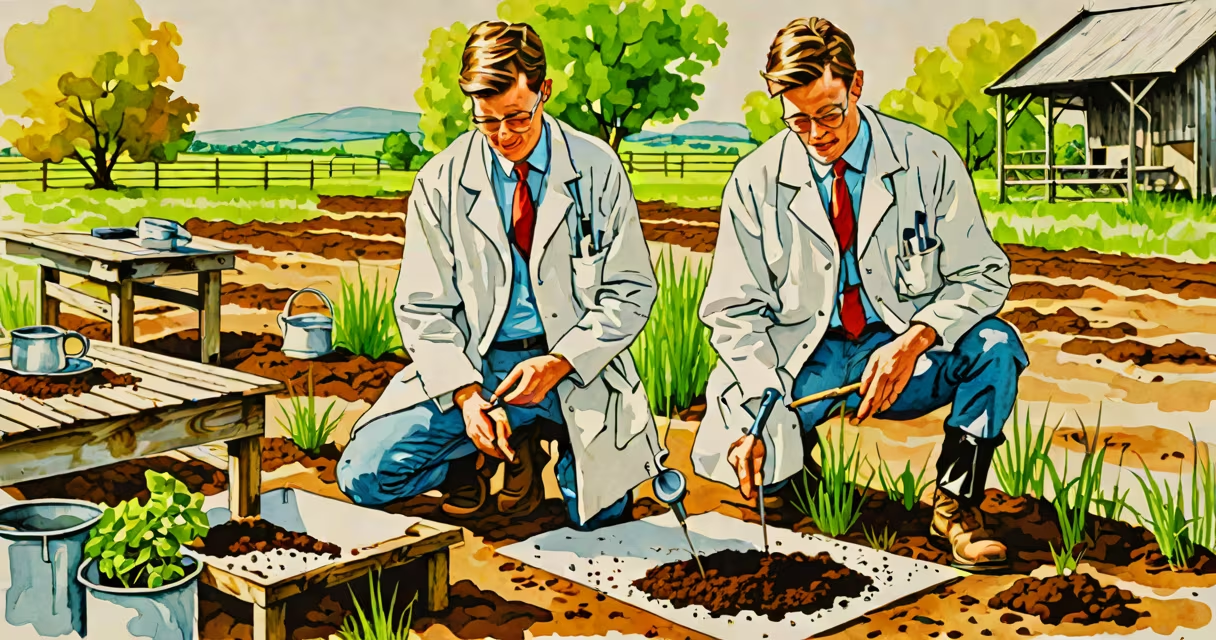
The bachelor of science and agriculture (BScA) is a multidisciplinary undergraduate degree that integrates core scientific principles with applied agricultural practices. It prepares graduates for careers in sustainable food production, agri-environmental management, and agricultural innovation.
This degree blends laboratory-based biology, chemistry, and ecology with fieldwork in crop science, animal husbandry, and land management. Students complete coursework in plant physiology, soil science, agricultural economics, and environmental policy. The curriculum emphasizes real-world problem solving through on-farm projects and research internships.
Offered by select universities in Australia, Canada, and the United States, the BScA typically spans four years. It requires completion of 120-144 credit hours, including 60+ hours in science and 30+ hours in agricultural studies. Graduates earn a Bachelor of Science with a major in Agriculture, distinct from standalone BSc or BSc in Agriculture degrees.
BScA programs structure learning around integrated modules that connect theoretical science with on-ground application. For example, a unit on nutrient cycling may include classroom instruction on nitrogen fixation, followed by fieldwork measuring soil nitrates in a working wheat paddock.
Students take foundational courses in microbiology, genetics, and statistics during their first two years. By year three, they specialize in areas such as precision agriculture, organic farming, or climate-resilient crop development. Final-year capstone projects often involve designing a sustainable farming system for a local community or developing a pest management strategy using biocontrol agents.
Field components are mandatory. At the University of Guelph, students spend 12 weeks on the Macdonald Campus farm, managing livestock and crops under faculty supervision. At the University of Melbourne, students complete a 40-day internship with regional agricultural cooperatives.
While most BScA programs follow a standard structure, variations exist based on institutional focus and regional agricultural priorities.
| Program Type | Focus Areas | Example Institution | Unique Feature |
|---|---|---|---|
| Research-Intensive | Genetic modification, climate modeling, soil remediation | University of Alberta | Requires thesis and publication in peer-reviewed journals |
| Applied Practice | Organic certification, farm automation, water conservation | University of California, Davis | Includes 15-week apprenticeship with certified organic farms |
| Policy & Sustainability | Food security, carbon sequestration, rural development | University of British Columbia | Offers joint degree with Master of Public Policy |
Some institutions offer dual-degree tracks. The University of Saskatchewan allows students to complete a BScA alongside a minor in Indigenous land stewardship, integrating traditional ecological knowledge with modern agronomy.
Many assume the BScA is equivalent to a Bachelor of Science in Agriculture (BScAg). They are not interchangeable. A BScAg focuses solely on agricultural production systems, while the BScA includes rigorous training in experimental design, data analysis, and scientific communication.
Another misconception is that BScA graduates only work on farms. While field experience is central, many pursue roles in agricultural consulting, biotech startups, government regulatory agencies, or international development organizations. A 2022 report from the Australian Bureau of Agricultural and Resource Economics found that 68% of BScA graduates entered non-farming sectors within five years of graduation.
A key distinction lies in accreditation. In Canada, the Canadian Society of Soil Science accredits BScA programs that meet national standards for soil science training. Programs lacking this endorsement may not qualify for certain federal grants or professional licensing.
In 2021, a BScA student at the University of Queensland developed a low-cost sensor network to monitor soil moisture in drought-prone regions of Queensland. The project reduced irrigation waste by 34% in pilot trials and was adopted by three regional farming cooperatives.
At Michigan State University, a BScA cohort designed a vertical hydroponic system for urban schools. The setup grew leafy greens using 90% less water than conventional methods. The team presented findings at the National Association of State Universities and Land-Grant Colleges conference.
I once supervised a BScA student who studied the impact of cover cropping on nematode populations in soybean fields. Over two growing seasons, we collected 216 soil samples and analyzed them using PCR-based DNA sequencing. We found that planting crimson clover reduced root-knot nematodes by 62%. This data informed a new extension bulletin distributed by the USDA's Cooperative Extension Service.
Unlike these specialized paths, the BScA bridges natural science and practical land use. It is ideal for those seeking to address global challenges like food insecurity, biodiversity loss, and climate adaptation through evidence-based agriculture.
Graduates with a bachelor of science and agriculture are equipped to lead in sustainable food systems, agri-tech innovation, and environmental stewardship. The degree delivers both scientific rigor and hands-on relevance, making it a strategic choice for future-focused careers in agriculture and beyond.