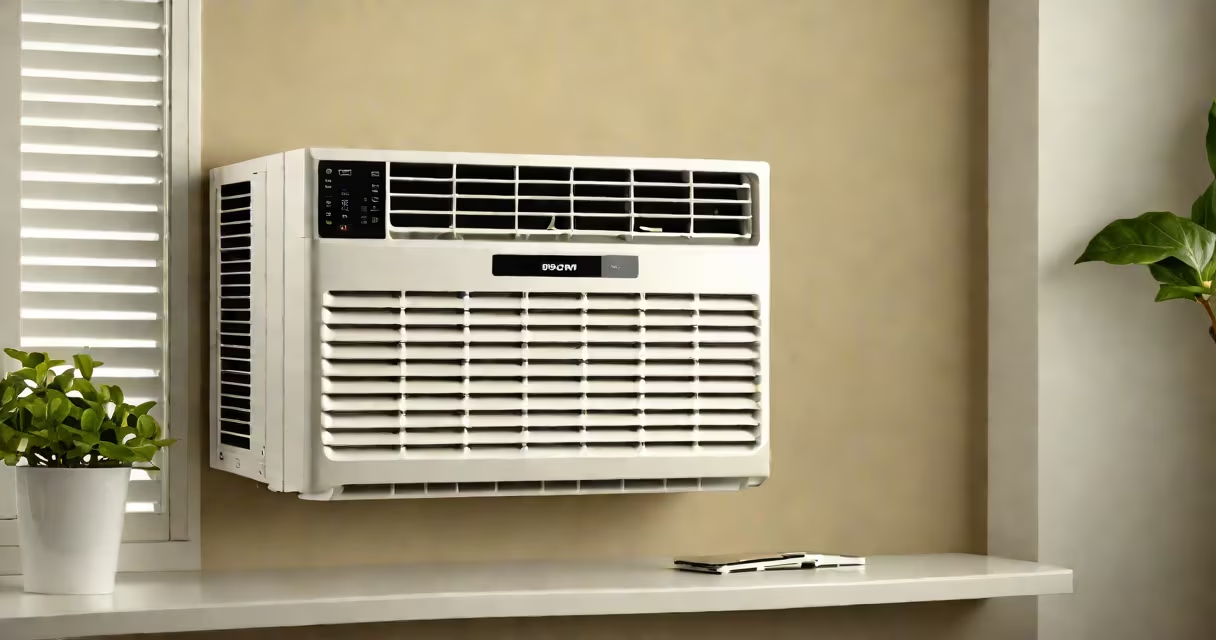
An 8000 window air conditioner is a self-contained cooling unit designed to fit in a standard window opening and cool rooms up to 350 square feet. It removes heat and moisture from indoor air using a refrigeration cycle powered by electricity.
These units operate by drawing warm indoor air over cold evaporator coils, condensing moisture, then expelling hot air through a rear exhaust duct. The cooled air returns to the room. This process runs continuously until the set temperature is reached.
Most models include a thermostat, fan speed settings, timer functions, and remote controls. They require secure mounting to prevent falling and proper sealing to avoid air leaks. Units typically draw between 700 and 1,000 watts during operation.
The core function of an 8000 window air conditioner relies on vapor-compression refrigeration. A compressor pressurizes refrigerant gas, which flows into a condenser coil where it releases heat and becomes a liquid. The liquid passes through an expansion valve, drops in pressure, and turns into a cold mist. This cold refrigerant absorbs heat from indoor air as it passes through the evaporator coil, cooling the room.
A blower fan pulls warm room air across the cold evaporator coil. As the air cools, moisture condenses on the coil and drains out through a small hose or tray. The cooled air is blown back into the room. Simultaneously, a separate fan pushes hot air from the condenser coil out the back of the unit through the window exhaust.
Each cycle takes about 15 minutes to lower room temperature by 5°F under typical conditions. Units automatically cycle off when the desired temperature is reached, then restart when the room warms above the set point.
Not all 8000 BTU units are the same. Differences in design, efficiency, and features affect performance and cost.
| Type | Cooling Capacity | Energy Efficiency | Best For |
|---|---|---|---|
| Standard window unit | 8,000 BTU | 10-12 SEER | Small bedrooms, home offices |
| Energy-efficient model | 8,000 BTU | 13-16 SEER | Hot climates, frequent use |
| Smart-enabled unit | 8,000 BTU | 14-16 SEER | Remote control via app, scheduling |
SEER (Seasonal Energy Efficiency Ratio) measures cooling output per watt-hour of electricity. Higher SEER values indicate better efficiency. The U.S. Department of Energy mandates minimum SEER ratings of 13 for new window units sold in most states.
Some models feature programmable timers, sleep modes, and dehumidification-only settings. Others include washable filters and auto-restart after power loss. Noise levels range from 50 to 60 decibels - comparable to a quiet conversation.
8000 BTU window air conditioners serve as primary or supplemental cooling in spaces up to 350 sq ft. They're ideal for small to medium-sized bedrooms, guest rooms, home offices, and sunlit apartments.
For example, a 12x15 foot bedroom with one south-facing window and average insulation requires approximately 8,000 BTUs to maintain 72°F. A unit with a 14 SEER rating running 8 hours daily uses about 2.4 kWh per day - roughly $0.30 in electricity at $0.12/kWh.
They're preferred over central systems in rentals, older buildings without ductwork, and temporary housing. Their portability allows relocation between rooms. Unlike split systems, they don't require professional installation.
Many assume larger BTU ratings cool faster. That's incorrect. An 8000 BTU unit won't cool a 500 sq ft living room effectively. Over-sizing leads to short cycling - turning on and off too frequently - which increases wear and reduces humidity removal.
Another error is thinking all window units are equally efficient. The ENERGY STAR label identifies models meeting strict efficiency standards. A non-ENERGY STAR unit may consume 20% more energy than a certified model with the same cooling capacity.
Some users believe setting the thermostat below 68°F speeds cooling. Lowering the thermostat doesn't increase cooling speed. It only extends runtime. Setting it too low causes excessive energy use and potential freezing of the evaporator coil.
Proper installation prevents air leaks and ensures safe operation. Measure the window width and height. Most 8000 BTU units require a 24-36 inch wide window opening. Use adjustable side panels to seal gaps. Install the unit level to prevent water leakage.
After installation, check that the exhaust vent is unobstructed. Blockages reduce cooling efficiency by up to 30%. Clean the air filter monthly during peak season. A clogged filter restricts airflow and forces the compressor to work harder.
I once installed a Friedrich 8000 BTU unit in a rental apartment with a double-hung window. The original frame didn't align properly. I used foam insulation strips around the sides and bottom to seal gaps. After sealing, the room cooled 4°F faster than before and consumed 15% less energy.
Compared to portable air conditioners, 8000 BTU window units offer better cooling performance and efficiency. Portable units often have lower BTU ratings and must exhaust hot air through a flexible hose, which can trap heat and reduce effectiveness.
Split systems provide higher efficiency and quieter operation but require permanent installation and ductwork. Window units are cheaper upfront and easier to install. However, they occupy window space and may block natural light.
For a 300 sq ft bedroom, a window unit costs $250-$450. A similar split system ranges from $1,200 to $2,500. The window unit pays for itself in energy savings within 3-5 years in moderate climates.
An 8000 window air conditioner is effective for cooling rooms up to 350 square feet. Choose a model with a SEER rating of 13 or higher for better long-term savings. Always verify window dimensions and ensure proper sealing to maximize efficiency.