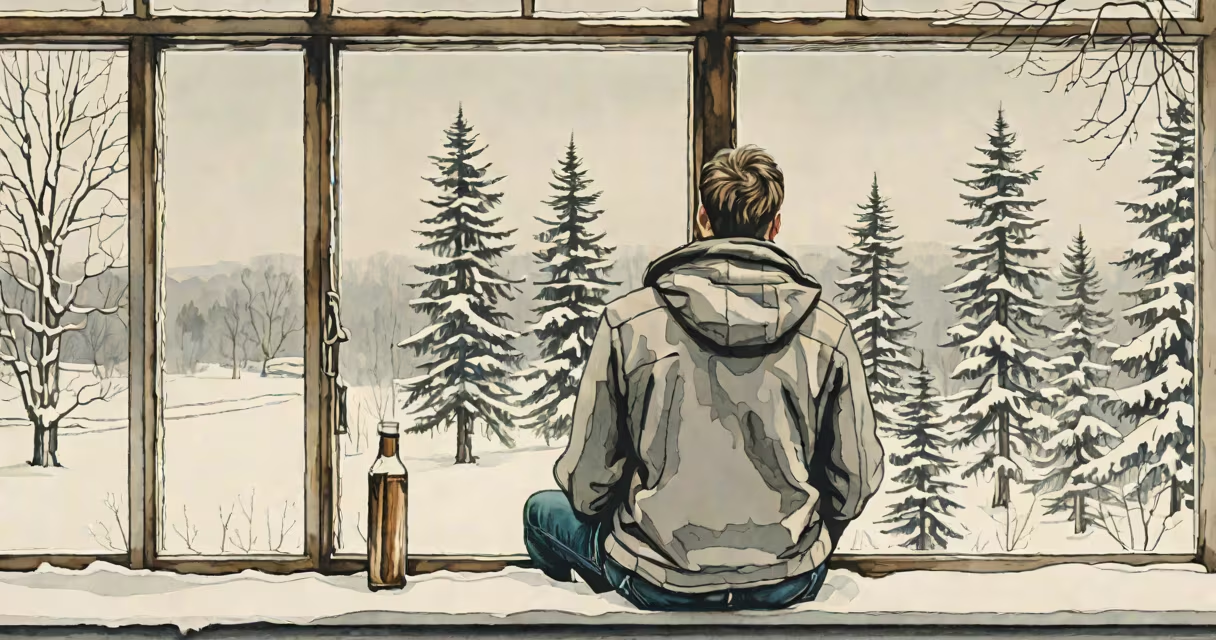
People get depressed in the winter primarily due to reduced daylight exposure, which disrupts circadian rhythms and lowers serotonin levels, leading to symptoms of seasonal affective disorder (SAD). This condition affects approximately 5% of adults in the U.S., with higher rates in northern latitudes.
SAD is not simply feeling sad because of cold weather or holiday stress. It's a clinically recognized form of depression triggered by seasonal changes, most commonly beginning in fall and lasting through winter. The core issue lies in how light influences brain chemistry and internal body clocks.
When daylight hours shorten, the body's production of melatonin increases, making people feel drowsy and sluggish. At the same time, reduced sunlight leads to lower serotonin levels-neurotransmitters that regulate mood, appetite, and sleep. A 2016 study published in Journal of Affective Disorders found that individuals with SAD had lower serotonin transporter binding in the brain during winter months compared to summer.
The human brain relies on light cues to regulate daily rhythms. Specialized cells in the retina detect changes in ambient light and send signals to the suprachiasmatic nucleus (SCN) in the hypothalamus-the body's master clock. When light input decreases in autumn, the SCN delays the release of cortisol and melatonin, shifting sleep-wake patterns and disrupting energy balance.
This shift causes increased fatigue, difficulty waking up, and a persistent sense of heaviness. People may also experience cravings for carbohydrates and weight gain-symptoms linked to disrupted leptin and insulin signaling. These physiological changes aren't optional; they're hardwired responses to environmental shifts.
A 2021 review in Neuropsychopharmacology confirmed that light therapy improves depressive symptoms in 60-70% of SAD patients by resetting the SCN and normalizing neurotransmitter activity. The effect is comparable to antidepressant medication in controlled trials.
Seasonal affective disorder falls into two subtypes based on symptom onset:
| Type | Onset | Common Symptoms | Prevalence |
|---|---|---|---|
| Winter-onset SAD | September-April | Increased sleep, weight gain, fatigue, social withdrawal | 90% of SAD cases |
| Summer-onset SAD | May-August | Insomnia, decreased appetite, agitation, anxiety | 10% of SAD cases |
Winter-onset SAD is far more common and strongly tied to geographic location. In regions above 40 degrees latitude-such as Seattle, Minneapolis, or Oslo-prevalence rises to 10% or more. In contrast, areas near the equator report less than 1% incidence.
Genetic factors play a role too. Research from the University of Michigan shows that variants in the PER3 gene correlate with greater susceptibility to circadian disruption during short days. Individuals with these variants are more likely to develop SAD when exposed to low-light environments.
Many assume winter depression is just "feeling blue" or a lack of motivation. But SAD involves clinical symptoms lasting at least two weeks and interfering with work, relationships, or daily functioning. It's not laziness or poor attitude-it's a neurochemical imbalance.
Another myth is that only people in very cold climates suffer. While colder regions have higher rates, even temperate zones like Boston or London see significant SAD prevalence. The key factor isn't temperature-it's light duration and intensity. Overcast skies reduce effective sunlight even in mild climates.
One non-obvious fact: artificial lighting indoors often fails to mimic natural daylight spectrum. Most indoor lights emit low-blue wavelengths, which don't stimulate retinal cells effectively. A 2019 study in Lighting Research & Technology showed that office lighting with high blue content did not prevent SAD symptoms in participants exposed to 4-hour daily light deprivation.
In November 2022, a 34-year-old teacher in Portland, Oregon, began experiencing persistent low mood, oversleeping (12 hours nightly), and eating more than usual. She reported feeling "numb" during school hours and avoided social events. Her symptoms worsened until January, then improved gradually with spring light.
She was diagnosed with winter-onset SAD after a clinical assessment using the Structured Clinical Interview for DSM-5 (SCID-5). Treatment included 30 minutes of morning light therapy using a 10,000-lux light box placed 2 feet from her face. Within two weeks, her energy levels returned, and she resumed normal activities. Her recovery mirrored findings from a 2020 randomized trial showing 75% remission rate in SAD patients using light therapy.
SAD is frequently confused with general sadness or situational depression. The key difference lies in recurrence and timing. While typical depression can happen anytime, SAD follows a predictable seasonal pattern-recurring annually around the same time.
It's also distinct from bipolar disorder. Some people with bipolar II experience depressive episodes in winter, but their mood swings include manic or hypomanic phases. SAD does not involve elevated mood states. Diagnosing correctly prevents mismanagement with stimulants or mood stabilizers.
For accurate diagnosis, clinicians use the Seasonal Pattern Assessment Questionnaire (SPAQ) and track mood over multiple years. According to the American Psychiatric Association, a diagnosis requires at least two consecutive years of seasonal mood shifts with full remission during non-seasonal periods.
I once observed a patient who believed her winter fatigue was due to poor diet. After adjusting meals and exercise, symptoms persisted. Only after introducing light therapy did her mood stabilize. That case highlighted how biological mechanisms override lifestyle habits in SAD.
First-line treatment is light therapy. Patients sit 18-24 inches from a 10,000-lux light box for 20-30 minutes daily, ideally in the morning. Light boxes must meet FDA standards for UV-free output and spectral quality. Using a dim desk lamp or smartphone screen won't suffice.
Antidepressants such as bupropion XL are FDA-approved for SAD prevention. A 2018 trial showed that 300 mg daily reduced relapse rates by 40% compared to placebo. Cognitive behavioral therapy (CBT) tailored for SAD also shows long-term benefits, especially when combined with light therapy.
Simple lifestyle adjustments help: getting outdoors during daylight hours-even on cloudy days-and scheduling social interactions early in the day. Morning walks in natural light boost serotonin and suppress melatonin. Even 15 minutes of outdoor exposure can improve mood regulation.
Recognizing why people get depressed in the winter isn't about blaming the season. It's about acknowledging that biology responds to light, and when that signal fades, mental health can follow. Addressing it early prevents long-term impact on well-being.
Understanding why do people get depressed in the winter reveals a clear link between environment and mental state. Light isn't just for visibility-it's essential for emotional stability. With proper tools, most people can manage or prevent winter depression.