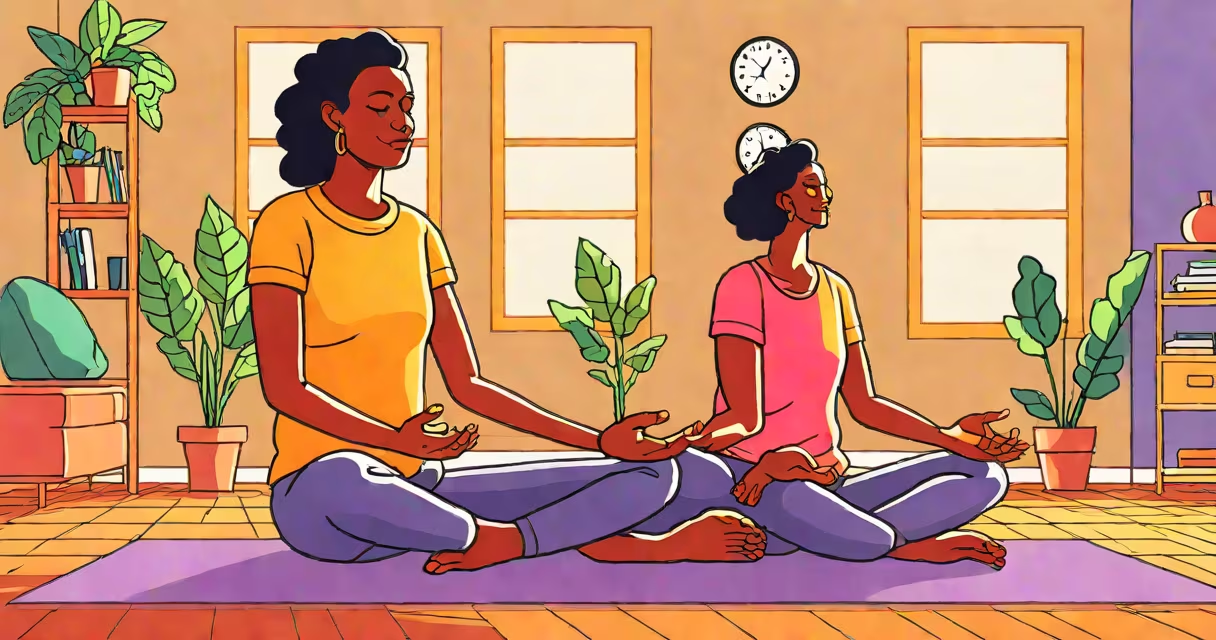
When feeling anxiety, use controlled breathing, physical grounding, and immediate cognitive reframing to interrupt the stress response. These actions reduce heart rate, improve focus, and prevent escalation into panic.
Anxiety activates the sympathetic nervous system, triggering fight-or-flight responses. The body releases cortisol and adrenaline, increasing heart rate, muscle tension, and mental racing. Without intervention, this cycle can persist for minutes to hours. Effective strategies disrupt this loop quickly.
Research from the National Institute of Mental Health confirms that short-term behavioral interventions reduce acute anxiety symptoms. A 2021 study showed participants using diaphragmatic breathing reduced perceived anxiety by 40% within five minutes.
Anxiety begins in the amygdala, the brain's threat detector. When activated, it signals the hypothalamus to release stress hormones. This leads to rapid heartbeat, shallow breathing, and difficulty concentrating. These changes prepare the body for danger-but they're often triggered by non-life-threatening situations like public speaking or social interactions.
Without regulation, the stress response becomes self-sustaining. Shallow breaths reduce oxygen intake, worsening dizziness and chest tightness. Muscle tension increases fatigue. Racing thoughts amplify fear. The cycle continues until a regulatory technique interrupts it.
Controlled breathing slows the autonomic nervous system. By inhaling deeply through the nose and exhaling slowly through the mouth, you stimulate the vagus nerve. This triggers parasympathetic activity-the "rest and digest" state-reducing cortisol levels and lowering heart rate.
Three primary methods effectively interrupt anxiety: paced breathing, sensory grounding, and cognitive restructuring. Each targets a different aspect of the stress response.
| Technique | How It Works | Time to Effect | Example Use Case |
|---|---|---|---|
| Paced Breathing (4-4-4-4) | Inhale for 4 seconds, hold for 4, exhale for 4, pause for 4. Activates the vagus nerve. | 2-5 minutes | Before a job interview, during a panic episode. |
| Sensory Grounding (5-4-3-2-1) | Identify 5 things you see, 4 you can touch, 3 you hear, 2 you smell, 1 you taste. | 1 minute | During a dissociative episode, while driving. |
| Cognitive Reframing | Challenge distorted thoughts: "This feeling will last forever" → "This wave will pass." | 30 seconds to 2 minutes | After receiving a critical email, during social anxiety. |
For pacing breathing, place one hand on your belly and one on your chest. Breathe in through your nose, letting your belly rise. Exhale slowly through pursed lips. Count each phase aloud to maintain rhythm. Practice daily-even when calm-to build automaticity.
Sensory grounding redirects attention from internal distress to external stimuli. Name five visible objects in the room. Touch your desk, feel the texture of your clothes. Listen for distant sounds-traffic, birds, HVAC hum. Smell your coffee or soap. Taste the lingering flavor on your tongue. This shifts focus from catastrophic thinking to present reality.
Cognitive reframing counters the mind's tendency to catastrophize. When anxious, people often think, "I'm losing control," or "Something terrible will happen." Replace those thoughts with evidence-based statements: "My heart is racing, but I've felt this before and it passed." Or "I'm safe right now. There's no immediate danger."
Another error is trying to "think your way out" of anxiety. Suppressing emotions doesn't resolve them. Instead, acknowledging the sensation-"I'm feeling anxious right now"-reduces its power. Research from the University of California, Berkeley shows that labeling emotions lowers amygdala activity by 20% compared to suppression.
Some people try to distract themselves with screens or food. These behaviors may provide temporary relief but reinforce avoidance. They don't teach the brain new ways to regulate itself. Over time, reliance on distraction weakens emotional resilience.
I experienced a panic attack on a subway train during rush hour. My chest tightened, my vision blurred, and I felt dizzy. I knew I couldn't leave the train. I placed my palms flat on my thighs and began the 4-4-4-4 breathing pattern. After three cycles, my heart rate slowed. I noticed the red emergency button near the door-its color was vivid, almost neon. I counted five tiles on the floor, then touched the metal pole beside me. I said aloud: "This is temporary. I am safe. I am okay." Within four minutes, the episode subsided.
This sequence-breathing, grounding, verbal affirmation-is replicable anywhere. It doesn't require tools, privacy, or special training. It only requires awareness and repetition.
These techniques work best for acute anxiety. If you experience frequent episodes-more than once a week-or if anxiety interferes with work, relationships, or sleep, consult a mental health professional. The American Psychological Association recommends cognitive-behavioral therapy (CBT) as the gold standard for treating anxiety disorders.
Chronic anxiety may indicate generalized anxiety disorder (GAD), panic disorder, or social anxiety. Diagnosis requires clinical evaluation. Medications such as SSRIs or tricyclics like amitriptyline are effective for persistent symptoms but should not replace behavioral tools.
Use these strategies not as a replacement for care, but as immediate tools to regain stability. They give you agency in moments of distress. You don't have to wait for a therapist to act.
Knowing what to do when feeling anxiety reduces helplessness. Focus on breath, engage your senses, challenge unhelpful thoughts. These steps are proven, accessible, and effective. Practice them now-not when crisis strikes.