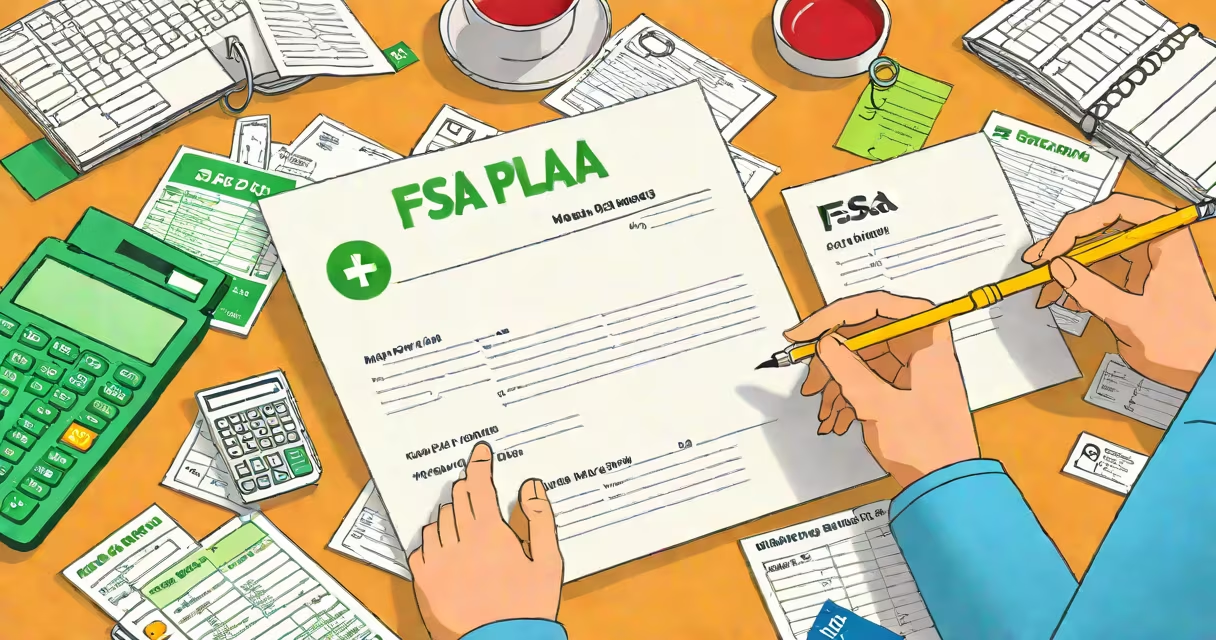
A flexible spending account (FSA) plan is a tax-advantaged benefit offered by employers that allows employees to set aside pre-tax dollars to pay for qualified medical, dental, and vision expenses not covered by insurance. Funds must be used within the plan year or forfeited, unless a grace period or carryover option is available.
FSA plans are funded through payroll deductions. Employees choose an annual contribution amount during open enrollment, typically between $500 and $3,000, depending on employer policy. The IRS sets the maximum limit for 2024 at $3,450 for health FSAs, though most employers cap contributions lower. This amount is deducted from your paycheck before taxes, lowering your taxable income and increasing take-home pay.
For example, if you earn $60,000 annually and contribute $2,000 to an FSA, your taxable income drops to $58,000. Assuming a 22% federal tax rate, you save $440 in federal taxes alone. Additional state and payroll taxes further increase the net benefit. These savings make FSA plans a useful tool for managing healthcare costs.
Employees elect a contribution amount during annual enrollment, usually in the fall. Once selected, the amount is withheld from each paycheck throughout the year. The funds accumulate in a dedicated account linked to a debit card or reimbursement system. When you incur eligible medical expenses, you can submit claims or use the FSA card to pay directly.
Reimbursement requires documentation such as itemized receipts, insurance explanation of benefits (EOB), or prescription records. Employers may require digital submission via a portal or physical forms. Claims are reviewed for eligibility based on IRS guidelines. Approved payments are issued as reimbursements, often within 5-10 business days.
Unused funds are generally forfeited at the end of the plan year. Some employers offer a 2.5-month grace period (ending March 15) to spend remaining balances. Others allow up to $610 to be carried over to the next year, as permitted under IRS rules effective 2024. Without either option, unused funds disappear-a key limitation many overlook.
There are two primary types of FSA plans: Health FSA and Limited-Purpose FSA (LP-FSA).
| Type | Eligible Expenses | Use With HSA | Best For |
|---|---|---|---|
| Health FSA | Prescriptions, copays, dental care, vision services, over-the-counter medications (with doctor's note) | No - cannot be used with an HSA | Employees who want broad coverage for out-of-pocket medical costs |
| Limited-Purpose FSA | Dental and vision only | Yes - can be used alongside an HSA | Employees with a high-deductible health plan (HDHP) and an HSA |
Using both a Health FSA and an HSA is prohibited due to IRS coordination rules. However, pairing an LP-FSA with an HSA is allowed and common among employees with HDHPs. This setup lets you cover dental and vision costs through the FSA while using HSA funds for other medical expenses.
Some employers also offer Dependent Care FSAs, which cover childcare or eldercare expenses. These are separate from health FSAs and have different IRS limits ($5,000 per household in 2024). They are not related to medical costs and do not count toward the $3,450 health FSA cap.
Many confuse FSAs with Health Savings Accounts (HSAs). While both allow tax-free spending on medical expenses, they differ in structure and flexibility. HSAs are portable-yours to keep even if you leave your job. FSAs are tied to employment and vanish upon termination unless you qualify for COBRA continuation, which is rare.
Another misconception is that FSA funds can be used for non-medical purposes. The IRS strictly defines eligible expenses. Using funds for gym memberships, vitamins, or wellness retreats results in penalties and repayment of the amount. The IRS maintains a list of qualified expenses on IRS.gov.
I once used my FSA to pay for a $220 eye exam and contact lens prescription. The clinic accepted the FSA card directly. After submitting the receipt online, I received reimbursement in 7 days. The process was smooth-but only because I kept the original invoice and verified the provider accepted FSA payments beforehand.
Employers sponsor FSA plans to improve employee well-being and reduce healthcare-related financial stress. Studies show that employees with access to FSAs report higher satisfaction with their benefits package. According to the Society for Human Resource Management (SHRM), 68% of U.S. employers offered FSAs in 2023, up from 54% in 2018.
From a business perspective, FSAs reduce taxable wages, lowering employer payroll taxes. For every $1,000 in FSA contributions, an employer saves approximately $77 in FICA taxes. This creates a direct cost-saving incentive.
Employees who fail to use their FSA funds lose an average of $1,000 per year in unspent benefits, according to a 2023 study by the National Association of FSA Professionals. This underscores the importance of accurate budgeting and early planning.
To avoid losing funds, estimate your medical needs for the year. Consider upcoming procedures, medication refills, routine checkups, and potential emergencies. A conservative approach is to contribute slightly less than expected, then adjust next year based on actual usage.
For example, if you expect $1,800 in medical costs-$500 for prescriptions, $600 for dentist visits, $500 for glasses, and $200 for co-pays-set your contribution at $2,000. This buffer covers unexpected costs and reduces risk of overspending.
If your employer offers a carryover or grace period, factor that into your decision. Carryover allows up to $610 to roll over to the next year. Grace periods extend the deadline to spend funds until March 15. Knowing these options helps prevent loss of funds.
Review your FSA plan details each year during open enrollment. Confirm your employer's rules on carryover, grace periods, and eligible expenses. If you're unsure, consult your HR department or review the Summary Plan Description (SPD) provided during enrollment.
Understanding what is a fsa plan ensures you maximize tax savings and avoid costly mistakes. Use tools like the IRS's FSA Eligibility Guide or your employer's benefits portal to track spending and stay compliant.