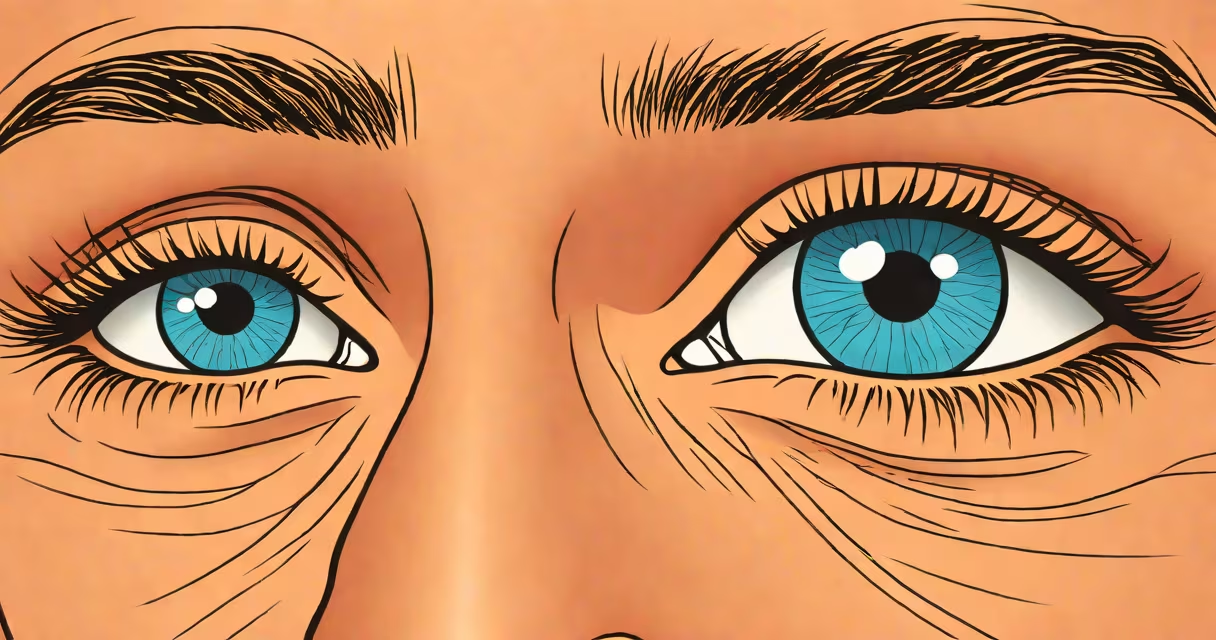
Thyroid eye disease (TED) causes visible changes in the eyes and surrounding tissues, including bulging eyes (proptosis), eyelid retraction, redness, swelling, and double vision. These signs result from inflammation and tissue expansion behind the eyes due to autoimmune activity linked to thyroid dysfunction.
TED typically develops in people with Graves' disease, an autoimmune condition that overstimulates the thyroid. The immune system attacks both the thyroid gland and the tissues around the eyes. This leads to fat and muscle swelling in the orbit-the bony cavity housing the eyeball-pushing the eye forward. The condition affects about 25% of patients with Graves' disease, according to the American Thyroid Association.
Physical appearance varies by stage. Early signs include mild eyelid swelling, redness, and a gritty sensation. As the disease progresses, the eyes may visibly protrude. In severe cases, the eyelids fail to close completely during sleep, leading to corneal dryness and damage. Some patients report feeling pressure behind the eyes or difficulty moving their eyes in certain directions.
The most recognizable visual traits of TED appear in the upper and lower eyelids, the space between the eyes, and the front of the eye socket. These features stem from immune-mediated inflammation in orbital soft tissues.
Key physical signs include:
A 2021 study published in Eye & Vision found that 87% of TED patients reported visible changes in facial appearance, with 63% describing social discomfort due to eye prominence. These changes are not cosmetic-they reflect active inflammation that can threaten vision.
Thyroid eye disease is often mistaken for sinusitis, allergies, or infections. But unlike those conditions, TED affects both eyes symmetrically and involves the orbital tissues beyond the surface of the eye.
For example, allergic conjunctivitis causes itching and watery eyes but doesn't lead to proptosis or diplopia. Sinus infections may cause facial pain and pressure, but they don't produce eyelid retraction or restricted eye movement. TED, however, shows distinct patterns: swelling in the orbital fat and extraocular muscles, particularly the inferior and medial rectus muscles.
One key diagnostic clue is the presence of restrictive myopathy. When the eye muscles swell, they lose elasticity and cannot move freely. A patient may report that their left eye can't look up past the horizontal plane. This limitation is not due to nerve damage but to mechanical restriction from inflamed tissue.
Doctors classify TED using the European Group on Graves' Ophthalmopathy (EGGO) scale, which ranges from 0 (no signs) to 6 (severe disease with optic nerve compression).
| Stage | Visible Signs | Functional Impact |
|---|---|---|
| 1 | Mild eyelid swelling, redness | Minimal impact on vision |
| 2 | Proptosis (18-20 mm), eyelid retraction | Increased risk of corneal exposure |
| 3 | Double vision, eye movement restriction | Difficulty reading or driving |
| 4 | Corneal ulceration, dryness | Pain, infection risk |
| 5 | Optic nerve compression | Loss of central vision |
| 6 | Severe vision loss, blindness | Emergency treatment needed |
Stage 3 and above require urgent intervention. The National Institutes of Health notes that untreated TED can lead to permanent vision loss due to compression of the optic nerve.
In 2019, a 42-year-old woman with newly diagnosed Graves' disease began noticing her eyes felt "full" and her eyelids were tight. Over six weeks, she developed noticeable bulging. Her primary care doctor initially attributed it to stress. After referral to an endocrinologist, MRI confirmed orbital inflammation and muscle enlargement.
She was treated with high-dose oral corticosteroids and later received intravenous rituximab, a monoclonal antibody therapy approved for moderate-to-severe TED. Within three months, her proptosis improved from 23 mm to 19 mm, and double vision resolved. Her eyes returned to a near-normal appearance, though residual eyelid retraction remained.
This case illustrates that TED is not just a cosmetic issue-it can progress rapidly and requires early diagnosis. Delayed treatment increases the risk of irreversible damage.
Many assume TED only affects people with hyperthyroidism. But up to 30% of patients develop TED before thyroid function abnormalities appear. In some cases, eye symptoms precede thyroid testing by months.
Another misconception is that smoking has no effect. In reality, current smokers have a 2.5 times higher risk of developing severe TED compared to nonsmokers, according to research from the Journal of Clinical Endocrinology & Metabolism.
Patients also often believe that eye changes are reversible once thyroid levels stabilize. But TED can persist or worsen even after thyroid function normalizes. Treatment focuses on controlling inflammation, not just managing hormones.
If you notice persistent eye puffiness, eyelid retraction, or eyes that seem to bulge, see an ophthalmologist or endocrinologist. Early imaging-such as CT or MRI-can detect orbital swelling before symptoms become severe.
Screening tools like the Clinical Activity Score (CAS) help assess disease activity. A score of 3 or higher indicates active inflammation requiring treatment. The American Thyroid Association recommends initiating immunosuppressive therapy within 6 months of symptom onset to prevent long-term disability.