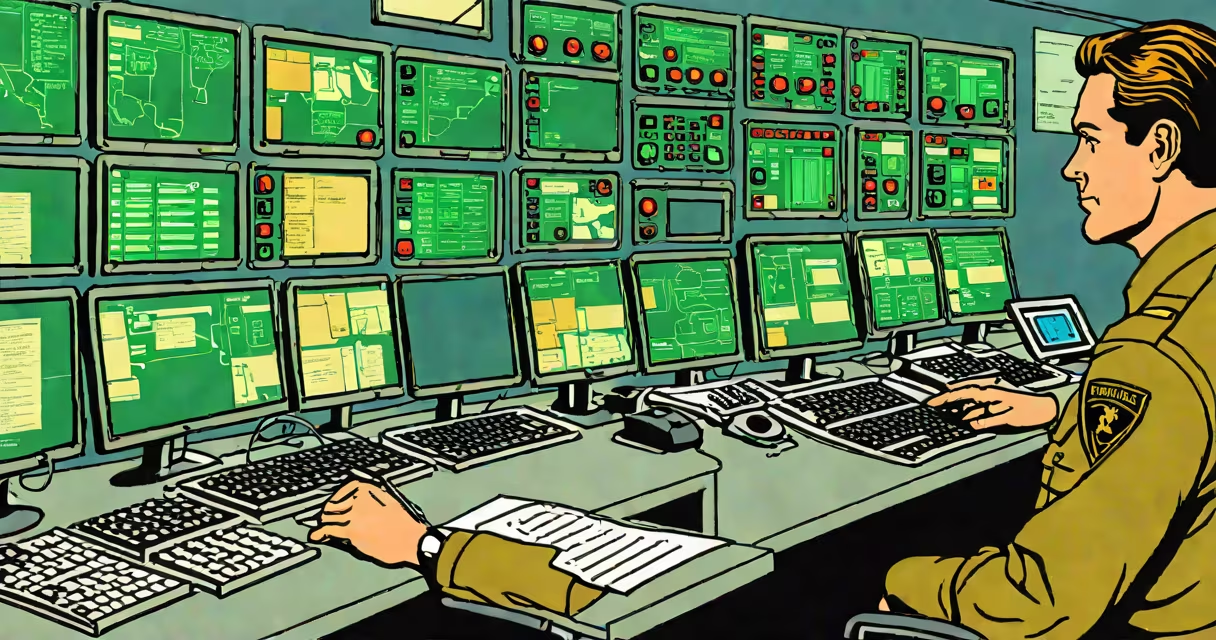
A duty officer is a trained individual assigned to monitor operations, manage incidents, and coordinate responses during a specific shift, ensuring continuity of safety, compliance, and emergency preparedness. They serve as the central point of contact for critical events and act under established protocols.
Duty officers operate in environments requiring constant oversight-such as hospitals, government facilities, corporate campuses, and military installations. Their role is not reactive but proactive: they anticipate risks, verify reports, and escalate issues according to predefined procedures. The position demands clear judgment, calm under pressure, and familiarity with emergency systems and communication channels.
According to the National Fire Protection Association (NFPA), effective incident management relies on designated personnel who are authorized and trained to make immediate decisions during crises. This aligns with the core function of a duty officer: to maintain situational awareness and ensure timely coordination across teams.
During a shift, a duty officer monitors real-time data streams-security camera feeds, access logs, alarm systems, and incident reports. When an alert triggers, they assess severity using standard operating procedures (SOPs), determine whether internal resources suffice, or if external agencies (like police or medical services) must be contacted.
For example, at a university campus, a duty officer receives a report of a fire alarm activation in Building B. They cross-check surveillance footage, confirm evacuation status via campus communications, and notify the fire department if occupants remain inside. Simultaneously, they update the incident log and inform senior staff through a chain-of-command protocol.
They do not necessarily respond physically to emergencies-they direct others. Their authority comes from training, authorization, and institutional trust. A duty officer's actions are documented for accountability and review, especially if a situation escalates or results in legal scrutiny.
The duties and responsibilities of a duty officer vary based on sector. Below is a comparison of common roles:
| Industry | Primary Responsibility | Typical Shift Duration | Reporting Authority |
|---|---|---|---|
| Hospital | Coordinate patient transfers, manage staff shortages, respond to medical emergencies | 8-12 hours | Chief Medical Officer or Risk Management |
| Corporate Security | Oversee access control, investigate suspicious activity, liaise with law enforcement | 12 hours | Head of Security or Compliance Officer |
| Military Base | Monitor threat levels, manage force readiness, handle combat alerts | 24 hours | Base Operations Commander |
| Government Agency | Respond to national security alerts, manage crisis communications | 12 hours | Director of Emergency Management |
While all share the core function of oversight and escalation, the tools and standards differ. A hospital duty officer uses electronic health record (EHR) dashboards and triage protocols. A military duty officer operates under Joint Service Manual directives and encrypted communication channels.
Many confuse a duty officer with a security guard. While both contribute to safety, a security guard enforces physical presence and patrols. A duty officer focuses on information synthesis, decision-making, and coordination across departments. One may be on-site; the other often works from a centralized command center.
Another misunderstanding is equating the role with "on-call" personnel. On-call staff are available for consultation but are not continuously monitoring. A duty officer is actively engaged throughout their shift, even during low-activity periods. They perform routine checks-verifying system uptime, confirming shift handover completeness, validating access permissions.
A non-obvious distinction: duty officers are not always in charge of the event. In a large-scale incident, such as a cyberattack on a financial institution, the duty officer may initiate the incident response team but defer to the chief information security officer (CISO) for technical direction. Their power lies in coordination, not sole command.
In 2022, a major U.S. hospital experienced a surge in ER admissions due to a regional storm. The night-duty officer, trained in emergency operations, activated the hospital's Incident Command System (ICS) structure. They verified bed availability, confirmed ambulance routing, and alerted the trauma team. They also coordinated with local EMS and public health officials.
By the time the morning shift arrived, the officer had logged 47 incident updates, initiated 12 resource requests, and ensured all patient transfers were documented. The hospital's leadership later cited the duty officer's actions as key to preventing overcrowding and maintaining care quality during peak demand.
This example illustrates that a duty officer's impact is measurable. According to the American College of Healthcare Executives (ACHE), consistent staffing of trained duty officers reduces response delays by up to 38% in high-stress scenarios.
I once observed a duty officer at a federal research facility during a simulated breach drill. The officer received a false alarm from a motion sensor in a restricted zone. Instead of reacting immediately, they cross-referenced video feeds, checked access logs, and confirmed the alert was triggered by a malfunctioning sensor. They logged the false positive, notified maintenance, and updated the daily incident report.
When the drill shifted to a simulated data exfiltration attempt, the officer escalated to the cybersecurity team within 90 seconds. Their calm demeanor and adherence to procedure prevented unnecessary panic. That shift reinforced how important structured decision-making is-even when nothing is actually wrong.
The duty officer is not a field responder, a forensic investigator, or a policy maker. They do not conduct root cause analysis or draft new regulations. Their function ends at coordination and escalation. If a situation requires specialized expertise-such as bomb disposal or psychological intervention-the duty officer ensures the right team is dispatched.
Also, the role is not interchangeable with a shift leader in manufacturing or retail. While shift leaders manage workflow and staffing, they lack the formal authority to activate emergency protocols or interface with external agencies. A duty officer's mandate includes legal and procedural frameworks beyond operational supervision.
A duty officer is a trained professional who manages operational continuity and incident response during their shift. They are not just on-call helpers-they are active coordinators with defined authority and responsibility. Their work prevents small issues from becoming crises and helps organizations respond swiftly and accurately during emergencies.