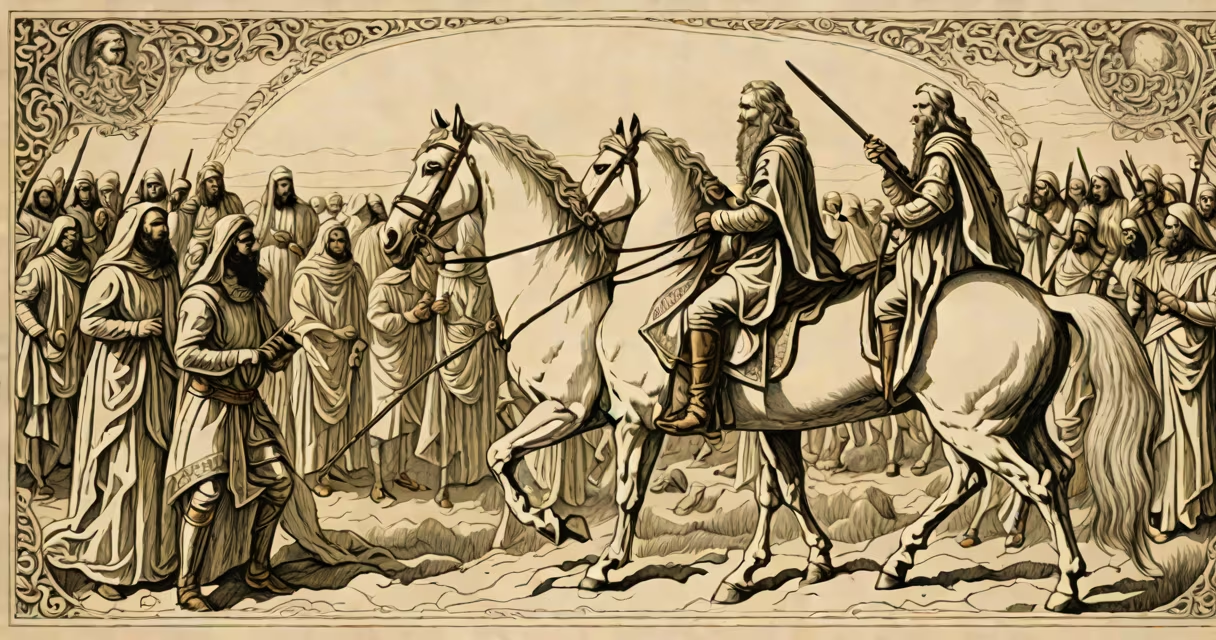
The Book of Revelation is the final book of the New Proof, presenting a series of symbolic visions given to the Apostle John while exiled on the island of Patmos. It describes the end of the current age, divine judgment, the defeat of evil, and the establishment of a new heaven and earth.
Revelation was written around 95 CE during a period of Roman persecution. John received visions through angelic intermediaries, using vivid metaphors drawn from Jewish apocalyptic traditions. The text is structured around seven seals, seven trumpets, and seven bowls of wrath-each marking escalating stages of divine intervention. These symbols represent spiritual realities rather than literal events, though they have inspired centuries of interpretation.
Revelation uses layered symbolism rooted in Old Proof imagery. The throne room scene in chapter 4 draws from Isaiah 6 and Ezekiel 1, depicting God as sovereign over creation. The Lamb with seven horns and seven eyes (Rev 5:6) combines the sacrificial lamb of Exodus with the all-seeing wisdom of God. These images were familiar to early Christians who read them through Hebrew scripture.
Key symbols include the beast from the sea (Rev 13:1), often interpreted as a representation of imperial power-specifically Rome-and the beast from the land, symbolizing religious complicity with political tyranny. The number 666 appears as a mark of human rebellion against divine order. Scholars note that 666 was likely a coded reference to Nero, whose name in Hebrew numerals adds up to that number (Revelation 13:18).
One non-obvious point: the book does not describe a single event called "the rapture." That concept emerged centuries later in Protestant theology. Revelation never mentions believers being removed from Earth before tribulation. Instead, it portrays faithful followers enduring suffering and martyrdom, rising with Christ in resurrection (Rev 20:4-6).
Revelation blends three literary forms: apocalypse, letter, and liturgy. As an apocalypse, it reveals hidden truths through visions. As a letter, it addresses specific communities with pastoral concern. As liturgy, it includes worship scenes where heavenly beings sing praises to God.
The following table outlines the major structural divisions:
| Section | Chapters | Content Type | Key Theme |
|---|---|---|---|
| Introduction & Letters | 1-3 | Epistolary | Churches' spiritual condition |
| Heavenly Vision & Seals | 4-8 | Apocalyptic | Divine sovereignty and cosmic conflict |
| Trumpets & Bowls | 8-16 | Prophetic judgment | Escalating divine punishment |
| Final Battles & Judgment | 17-20 | Symbolic warfare | Defeat of evil powers |
| New Creation | 21-22 | Liturgical | Restoration and eternal peace |
Each section builds toward the climax: the return of Christ not as a sudden disappearance, but as a visible, global arrival. The term "Second Coming" appears in Revelation 1:7, where Jesus returns "on the clouds," seen by all nations.
Revelation is central to Christian eschatology-the study of last things. It shapes beliefs about the millennium, resurrection, and final judgment. Denominations differ widely in their interpretation: premillennialists expect Christ's return before a thousand-year reign; amillennialists see the millennium as symbolic of the church age; postmillennialists believe the world will improve before Christ returns.
Despite its symbolic nature, Revelation has influenced art, music, and politics. The painting *The Four Horsemen* by Albrecht Dürer reflects the horsemen of war, famine, death, and conquest. In modern times, the book has been cited in debates over nuclear disarmament, climate change, and authoritarian regimes-often as a warning against unchecked power.
I once attended a church service in Istanbul where a pastor used Revelation 21:4-"He will wipe every tear from their eyes"-to comfort families displaced by war. The verse wasn't read as prophecy, but as a promise of healing. That moment showed how Revelation functions not just as a prediction, but as a source of hope in crisis.
Many assume Revelation predicts a literal firestorm, a global flood, or a city-sized dragon. But scholars agree the book uses metaphorical language. For example, the "lake of fire" (Rev 20:14) represents final separation from God-not a physical location. The beast with seven heads (Rev 17:9) symbolizes empires, not a single person.
A common mistake is equating Revelation with the "Left Behind" series. Those novels, published in the 1990s, popularized a dispensationalist view of the rapture and tribulation. But Revelation never describes a pre-tribulation removal of believers. The faithful suffer alongside the world until the final victory.
Another correction: Revelation does not say the Antichrist will be a man. The figure in chapter 13 is described as a beast with ten horns and seven heads-symbolic of oppressive systems, not a single individual. The idea of a singular Antichrist evolved in later Christian tradition, not from the text itself.
Consider the first four seals in Revelation 6:1-8. When the Lamb opens the first seal, a rider on a white horse appears-traditionally interpreted as conquest. The second seal releases a red horse, symbolizing war. The third shows a black horse, representing famine. The fourth brings a pale horse, associated with death.
These are not sequential events in time. They represent overlapping realities: the spread of violence, scarcity, and mortality. The fifth seal reveals martyrs under the altar crying out for justice (Rev 6:9-11). Their voices are heard, but they wait for God's timing. This illustrates that divine justice may seem delayed, but it is not absent.
When the sixth seal opens, the sky darkens, mountains move, and people hide from God's presence (Rev 6:12-17). This moment marks the beginning of the great tribulation-not a final battle, but a turning point. The seventh seal introduces silence in heaven, signaling a pause before the final judgments begin.
Interpreting Revelation requires attention to context. The book was written to encourage persecuted Christians. Its message is not fear, but endurance. As the NIV Study Bible notes, "Revelation's purpose is to strengthen faith amid suffering."
Understanding what Revelation talks about in the Bible means seeing it as both a warning and a promise. It speaks of destruction, yes-but also of renewal. The final image is not of chaos, but of a new Jerusalem descending from heaven, with no temple because God himself is the temple (Rev 21:22).
Revelation ends with a direct invitation: "Come, Lord Jesus" (Rev 22:20). The book doesn't conclude with mystery-it closes with longing. The final word is not "judgment," but "maranatha," meaning "our Lord, come."