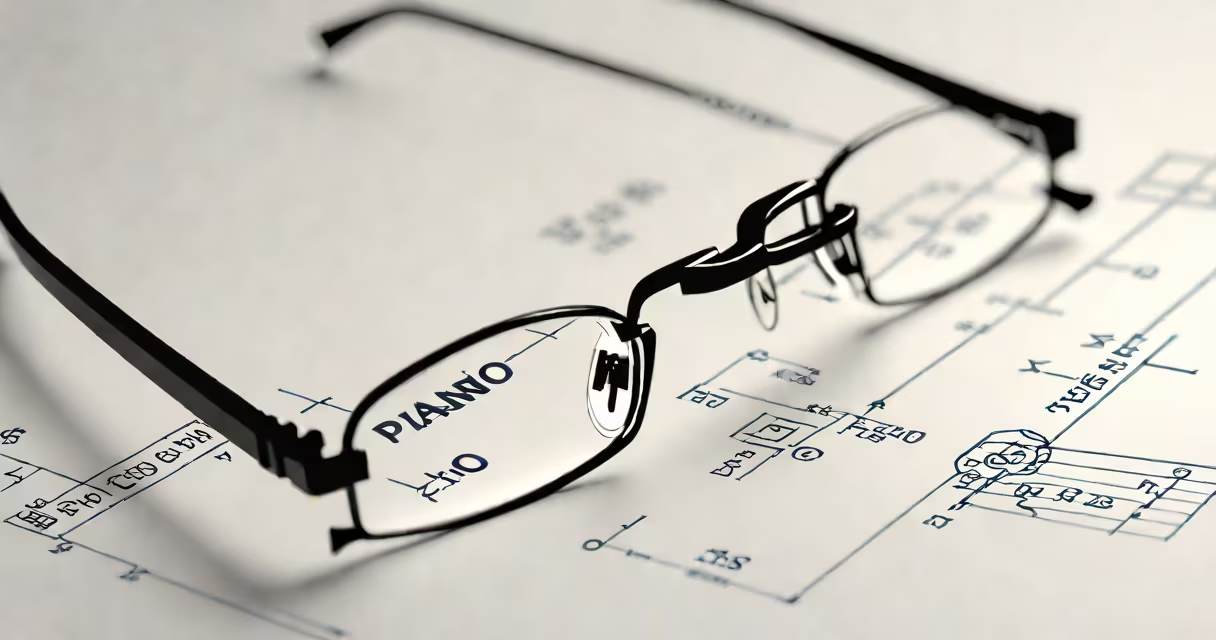
Plano means a lens with zero corrective power-no refractive strength to alter vision. It's used in eyewear that doesn't correct nearsightedness, farsightedness, or astigmatism, such as sunglasses or safety glasses.
When a prescription includes "plano," it indicates no optical correction is needed. This term appears in both eyeglass and contact lens prescriptions, often abbreviated as "PL" or "Pl." It's not a mistake-it's a deliberate designation for lenses with no curvature to bend light.
For example, a prescription listing "OD: -2.00 -1.00 x 180 OS: plano" means the right eye requires correction for myopia and astigmatism, while the left eye needs no correction. The left eye's lens has no refractive power.
Plano lenses do not alter the path of incoming light. They maintain the natural focus of the eye without adding or subtracting visual power. Unlike lenses with positive or negative diopters, they don't compensate for refractive errors.
These lenses are optically flat. Their surface curvature is zero, meaning they don't converge or diverge light rays. As a result, they don't improve or degrade vision-they simply transmit what's seen through them unchanged.
Plano lenses are used in situations where protection, aesthetics, or fashion outweigh visual correction. Examples include non-prescription sunglasses, reading glasses for people with perfect vision, and safety goggles in industrial settings.
Plano lenses appear in several forms, each serving distinct purposes:
| Type | Use Case | Example |
|---|---|---|
| Non-corrective eyewear | Fashion or sun protection | Sunglasses with UV protection but no vision correction |
| Safety goggles | Workplace eye protection | Polycarbonate lenses with anti-fog coating, plano |
| Reading glasses | For people with normal vision | "Computer glasses" with plano lenses to reduce glare |
| Replacement lenses | For damaged frames | Replacements in existing frames with no prescription |
Plano lenses are also common in contact lenses. A person may wear daily disposable contacts labeled "plano" for comfort or cosmetic reasons-such as changing eye color-without altering vision.
Some people use plano lenses in combination with tinted or polarized filters. For instance, a pair of driving glasses with plano lenses and gray tint reduces glare without affecting focus.
Many assume "plano" means a lens is broken or defective. That's incorrect. Plano is a valid, intentional specification. It's not a default error-it's a precise term used in ophthalmic science.
Another misconception is that plano lenses are always clear. Not true. Plano lenses can be tinted, mirrored, or photochromic. The absence of corrective power doesn't limit design options.
A key distinction: plano lenses don't correct vision, but they can still serve functional roles. A worker wearing safety goggles with plano lenses prevents debris from entering the eyes-even though their vision remains uncorrected.
In 2022, the American Optometric Association reported that 63% of adults who wear eyewear use non-prescription lenses for protection or fashion. Among them, many choose plano lenses for everyday sunglasses.
Consider a construction worker using safety glasses with plano polycarbonate lenses. These lenses meet ANSI Z87.1 standards for impact resistance. Even though the worker wears corrective lenses on the side, the safety glasses have no prescription-just plano lenses to shield against flying particles.
Similarly, a customer buying blue-light blocking computer glasses might select a pair with plano lenses. The lenses filter screen radiation but don't alter focus. The wearer sees without needing vision correction.
Confusion often arises between "plano" and similar terms. Here's how they differ:
| Term | Meaning | Corrective Power |
|---|---|---|
| Plano | No correction; zero diopters | 0.00 D |
| SPH (Sphere) | Correction for nearsightedness/farsightedness | ±1.00 D or higher |
| CYL (Cylinder) | Correction for astigmatism | ±0.25 D or higher |
| AXIS | Location of astigmatic correction | 0° to 180° |
If a prescription shows "OD: -1.50 -0.75 x 100 OS: plano," the right eye has moderate myopia and astigmatism. The left eye has no refractive error-its lens is plano.
Plano is not interchangeable with "no prescription." While both indicate no correction, "plano" is the technical term used in clinical and manufacturing contexts. "No prescription" is informal and imprecise.
I once helped a client fit new frames with existing plano lenses. She had lost her prescription glasses but still needed the same frame style. We reused the original plano lenses-no refraction needed. The process took under 15 minutes and cost $20 for lens replacement. Her vision remained unchanged, but she regained full functionality.
This experience confirmed that plano lenses aren't placeholders-they're purpose-built tools. They serve users who don't need vision correction but still require eye protection or aesthetic consistency.
Plano means zero diopter correction in eye prescriptions. It's not a flaw-it's a standard specification for lenses with no optical power. Used widely in sunglasses, safety gear, and non-corrective eyewear, plano lenses serve practical and stylistic functions.
Understanding what plano means ensures clarity when reading prescriptions or selecting eyewear. It's a term rooted in ophthalmic precision, not ambiguity.