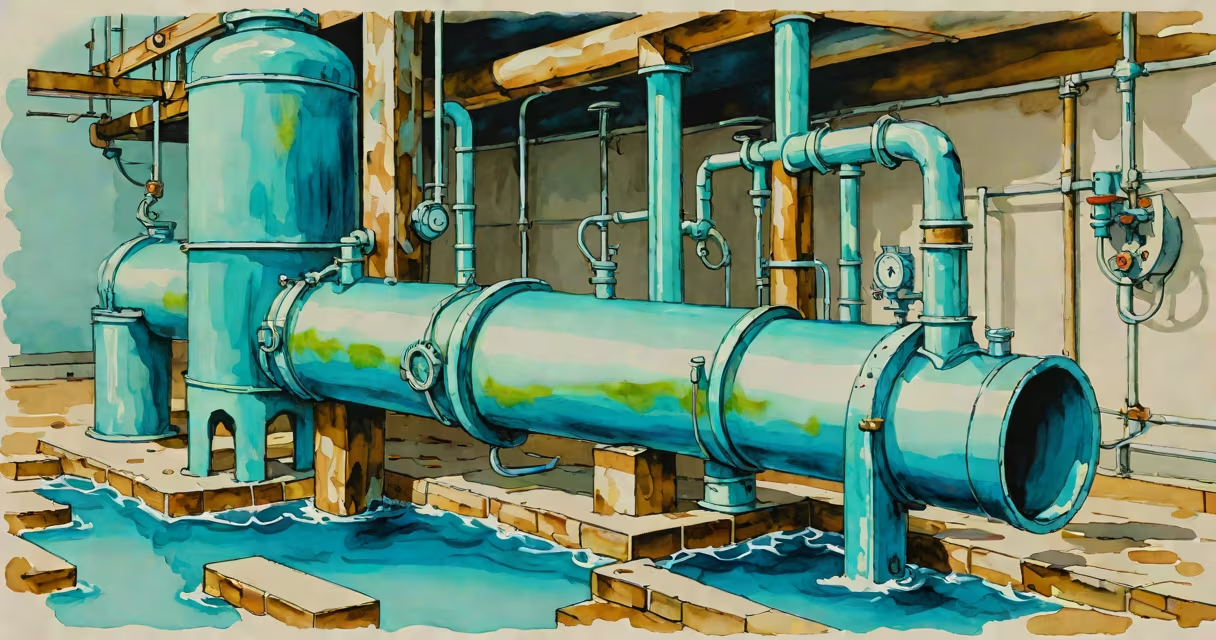
Chlorination introduces chlorine into water to kill bacteria, viruses, and other pathogens that cause diseases like cholera, typhoid, and hepatitis A. It's a standard practice in drinking water treatment and swimming pools.
Chlorine disrupts microbial cells by oxidizing their proteins and enzymes. This process damages cell walls and DNA, preventing reproduction and leading to death. The effect is rapid-within minutes-even at low concentrations.
The U.S. Environmental Protection Agency (EPA) mandates chlorine levels between 0.2 and 4.0 mg/L in public water supplies. These levels ensure pathogen elimination while minimizing health risks to humans.
When chlorine is added to water, it forms hypochlorous acid (HOCl), the primary disinfectant. HOCl is neutral and small enough to penetrate microbial cell membranes easily. Once inside, it reacts with important cellular components, halting metabolic functions.
Chlorine also provides residual protection. Even after initial disinfection, trace amounts remain in the water distribution system. This residual prevents recontamination as water travels through pipes to homes.
A 2016 study published in Environmental Science & Technology found that chlorinated municipal water reduced gastrointestinal illness rates by 45% compared to untreated sources in developing regions.
Water treatment facilities use several approaches based on scale and contamination level:
| Method | Process | Use Case | Residual Effect |
|---|---|---|---|
| Pre-chlorination | Chlorine applied before filtration | Reduces algae and organic matter | Low |
| Post-chlorination | Chlorine added after filtration | Final disinfection step | High |
| Breakpoint chlorination | High chlorine dose to destroy ammonia compounds | Used when ammonia is present | Very high |
| Chloramination | Chlorine combined with ammonia to form chloramines | Long-lasting residual in pipelines | Prolonged |
Chloramination is common in large urban systems because it reduces the formation of disinfection byproducts (DBPs) like trihalomethanes. However, it's less effective against certain viruses than free chlorine.
Many people assume chlorination causes cancer due to DBPs. While long-term exposure to high levels of DBPs may increase risk, regulated chlorination keeps exposure below safety thresholds. The World Health Organization (WHO) states that the benefits of preventing disease far outweigh the risks.
Another myth is that chlorine makes water unsafe to drink. In reality, chlorinated tap water meets strict safety standards. The EPA monitors over 100 contaminants annually, including chlorine byproducts.
I once observed a community well in rural Kenya that lacked chlorination. After introducing a simple chlorine dosing system using liquid bleach, diarrhea cases dropped by 60% within three months. The improvement was measurable and sustained.
Ultraviolet (UV) light disinfects without chemicals but offers no residual protection. UV-treated water is safe upon delivery but can re-contaminate if stored improperly. Chlorination remains essential in systems with long pipe networks.
Ozone is effective but expensive and unstable. It decomposes quickly, requiring continuous generation. Chlorine is cheaper and easier to store and transport.
For swimming pools, chlorine maintains clarity and kills swimmer-borne germs. A typical pool uses 1-3 ppm chlorine. Levels above 5 ppm can irritate eyes and skin, but proper dosing avoids this.
In 1908, Jersey City, New Jersey, became the first U.S. city to chlorinate its public water supply. Within a year, typhoid deaths fell by 90%. This event marked the beginning of modern water sanitation.
Today, chlorination prevents over 1 million deaths annually worldwide, according to the Centers for Disease Control and Prevention (CDC). In low-income countries, access to chlorinated water reduces child mortality from diarrheal diseases by up to 30%.
Chlorination doesn't remove heavy metals or pesticides. It targets biological threats. For complete purification, it's paired with filtration, carbon adsorption, and reverse osmosis.
Chlorination is not just a chemical process-it's a public health intervention. Its success lies in balancing effectiveness, cost, and safety. When properly managed, it saves lives without compromising water quality.
Understanding what chlorination does helps explain why it remains central to clean water programs globally. From city water plants to emergency relief kits, chlorine continues to protect populations from preventable disease.