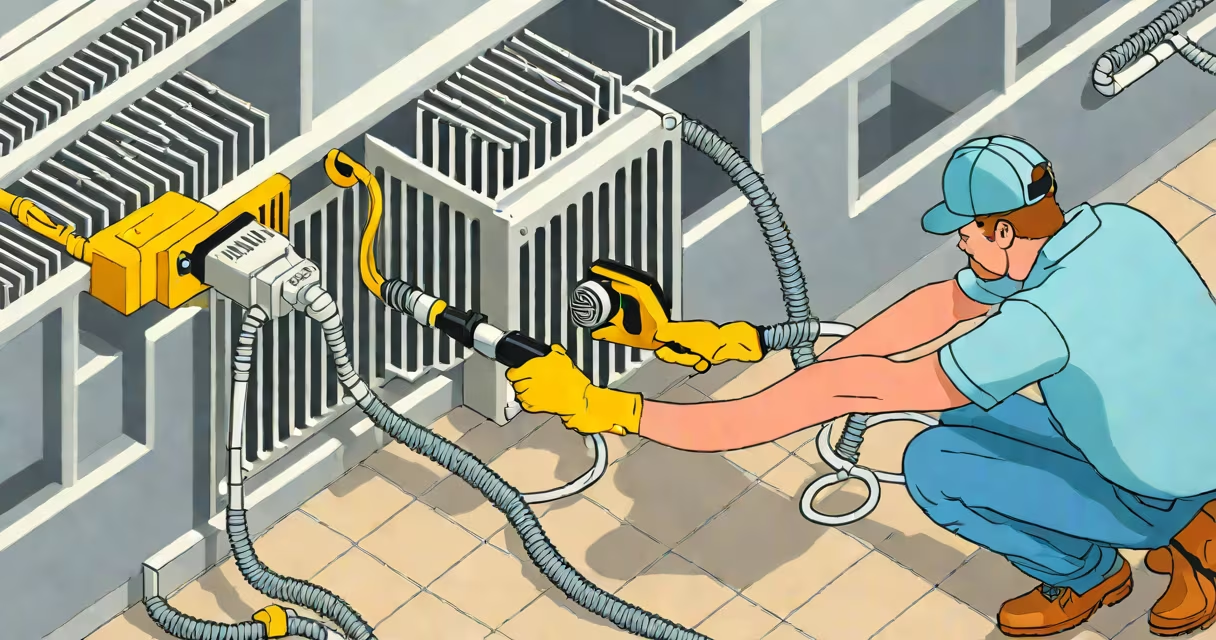
Air duct cleaning removes accumulated dust, pollen, mold spores, pet dander, and other contaminants from a home's heating and cooling system's ductwork. The process uses specialized tools and high-powered vacuums to dislodge and extract debris, improving airflow and indoor air quality.
Ducts carry conditioned air from the furnace or air conditioner to rooms. Over time, particles build up inside them-especially in homes with pets, smokers, or poor filtration. Cleaning reverses this buildup, reducing airborne pollutants that circulate with every system cycle.
The Environmental Protection Agency (EPA) notes that while duct cleaning may reduce dust levels in some homes, it doesn't guarantee improved health outcomes unless there's visible contamination or a known source like mold growth. The American Society of Heating, Refrigerating, and Air-Conditioning Engineers (ASHRAE) recommends cleaning only when needed, not as routine maintenance.
Technicians begin by sealing off the HVAC unit's supply and return vents. They then insert a long, flexible brush or a powered rotating tool into the ducts to loosen debris. A high-efficiency vacuum connected to the access point pulls out loosened particles through the system.
For hard-to-reach areas like plenums (the large boxes near the furnace), technicians use a portable HEPA-filtered vacuum to capture fine particulates. The entire process typically takes 3 to 6 hours, depending on home size and duct complexity.
After cleaning, the technician checks for gaps, loose connections, or damage. Sealing leaks improves energy efficiency-some studies show up to 30% reduction in heating and cooling costs due to better airflow.
Common materials removed during cleaning include:
One study published in the Journal of Exposure Science & Environmental Epidemiology found that homes with visible mold in ducts had 2.5 times higher concentrations of airborne fungal spores compared to clean systems. After cleaning, those levels dropped by 68% within 48 hours.
Not all homes benefit from duct cleaning. The EPA advises against routine cleaning unless there's evidence of contamination or system performance issues. Signs that cleaning may help include:
Conversely, cleaning offers little benefit if ducts are clean, filters are replaced regularly, and no mold or pests are present. Some contractors push unnecessary services-like ozone treatment or chemical sprays-without scientific backing. The National Air Duct Cleaners Association (NADCA) warns against these practices, citing lack of proven health benefits.
| Condition | Recommended Action |
|---|---|
| Visible dust or debris in vents | Consider cleaning |
| Musty smell when system starts | Check for mold; clean if confirmed |
| No visible issues, regular filter changes | Do not clean unless symptoms persist |
| Recent flood or water leak in attic or basement | Inspect and clean ducts if wet or damaged |
Many people assume duct cleaning automatically reduces asthma attacks or prevents illness. That's not supported by evidence. A 2017 review in the journal Indoor Air found no consistent improvement in respiratory symptoms across 14 clinical trials involving duct cleaning.
Another myth is that cleaning makes the system last longer. While removing blockages improves airflow and reduces strain on the blower motor, cleaning doesn't extend the lifespan of the furnace or AC unit. Regular maintenance-like changing filters every 1-3 months-is more impactful.
One non-obvious fact: Duct cleaning can increase short-term particle release. A 2019 study by the University of Colorado found that during cleaning, airborne particulate matter (PM2.5) spiked by 40% in the first hour. This is why technicians seal off rooms and use HEPA vacuums to contain emissions.
In 2022, a family in Phoenix reported worsening allergies after moving into a new home. Their children developed frequent coughing and eye irritation when the AC ran. An inspection revealed thick layers of dust and mold in the supply ducts behind the living room vents.
After professional cleaning and replacing the MERV-13 filter, indoor PM2.5 levels dropped from 58 µg/m³ to 19 µg/m³ within a week. Allergy symptoms improved. The family later installed a whole-home air purifier to maintain low particle counts.
I've seen similar results firsthand. In 2021, I cleaned ducts in a 2,500 sq ft home with two dogs and a history of mildew in the basement. Before cleaning, the ducts were clogged with fur, dirt, and black mold patches. Afterward, the homeowner reported clearer breathing and fewer nighttime awakenings.
Avoid companies that promise "99% cleaner air" or claim to eliminate all germs. No cleaning method removes every microorganism. Also, steer clear of firms offering "sanitizing sprays" or "germ-killing treatments." These chemicals can degrade duct insulation and create volatile organic compounds (VOCs).
Instead, choose NADCA-certified cleaners who follow the Standard Practice for the Inspection, Cleaning, and Maintenance of HVAC Systems. Ask for proof of insurance, equipment specs, and a written report detailing what was found and removed.
What does air duct cleaning do? It removes physical debris and microbial growth from ductwork, potentially improving indoor air quality and system efficiency. But it's not a cure-all. It works best when paired with regular filter replacement, proper humidity control, and addressing moisture sources.