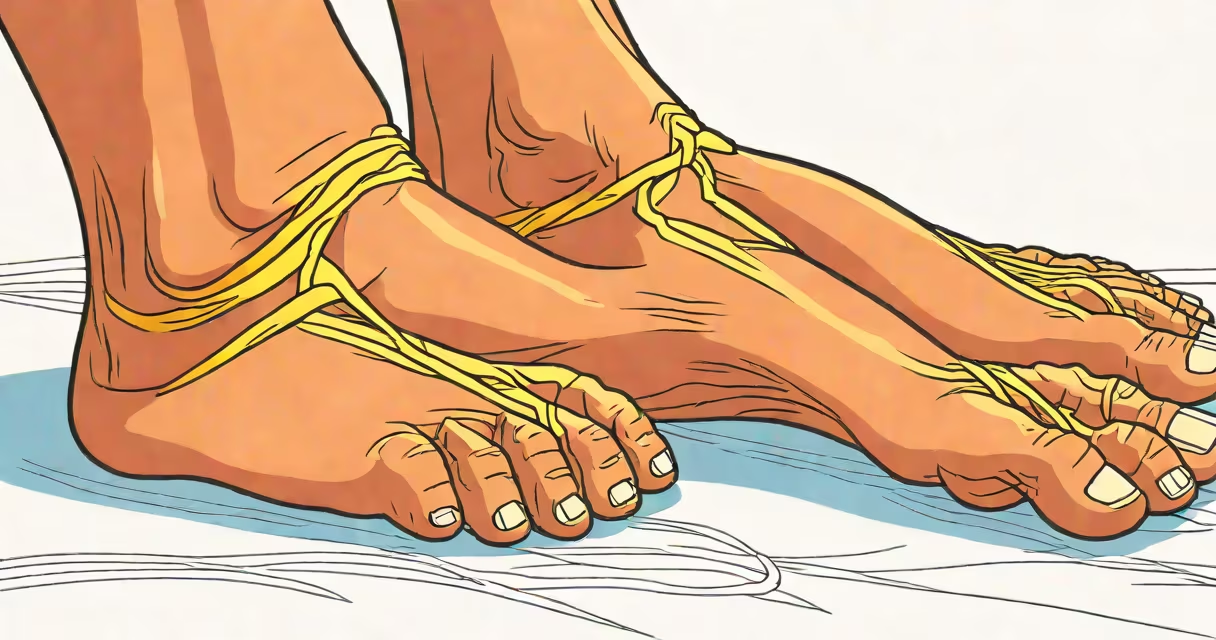
A foot cramp appears as a sudden, visible tightening of foot muscles, typically causing toes to curl inward and the arch to rise sharply. The affected area may look swollen or bunched, with skin taut and sometimes pale. This involuntary contraction lasts seconds to minutes and resolves with stretching or massage.
Cramps occur when muscles contract uncontrollably due to nerve misfiring or electrolyte imbalance. In the foot, the plantar flexors and toe flexors are most vulnerable. The condition is common during rest, exercise, or dehydration. A single episode usually resolves within five minutes.
Medical sources confirm that cramps involve sustained muscle fiber firing. According to the American Academy of Orthopaedic Surgeons, isolated cramps do not indicate serious disease unless frequent or persistent. The Mayo Clinic notes that cramping affects about 60% of adults at least once a year, mostly in the legs and feet.
The most noticeable sign is a hard, knotted mass under the skin, especially in the sole or ball of the foot. Toes may bend sharply downward or curl tightly, sometimes resembling a claw. The arch may visibly lift, creating a high-arched appearance even when standing still.
Color changes can occur. The skin over the cramping muscle may appear pale or slightly bluish due to restricted blood flow. Some people report a warm sensation or tenderness at the site. These signs are temporary and subside as the muscle relaxes.
During a cramp, movement becomes painful. Walking is difficult. The person may instinctively hold the foot off the ground or hop on one foot. In severe cases, the entire foot may feel rigid, as if frozen in place.
Foot cramps vary by location and cause. The table below outlines key differences:
| Type | Location | Visual Appearance | Common Triggers |
|---|---|---|---|
| Plantar fascia cramp | Bottom of foot, near heel | Sharp pain, visible tension along the arch; toes may splay outward | Prolonged standing, flat feet, morning first steps |
| Toes flexor cramp | Ball of foot, toes | Toes curl tightly; skin pulls taut; visible knots in small muscles | Dehydration, tight shoes, prolonged walking |
| Arch cramp | Midfoot, instep | High arch; foot feels hollow; may appear elevated | Overuse, poor footwear, nerve compression |
Each type shows distinct physical cues. For example, a plantar fascia cramp often presents with a sharp, stabbing pain at the heel, while a toe flexor cramp causes toes to clench like claws. Recognizing the pattern helps differentiate from other foot conditions.
People often mistake foot cramps for sprains, fractures, or nerve issues. A cramp lacks bruising, swelling, or instability-key signs of injury. Unlike a sprain, movement doesn't worsen pain immediately. A fracture would prevent weight-bearing entirely, which cramps don't.
Some confuse cramps with restless leg syndrome (RLS). RLS involves an urge to move legs, not sudden muscle contractions. Cramps are brief and localized; RLS symptoms last longer and affect both legs. The Mayo Clinic states that RLS occurs during rest, not activity, unlike cramps.
A lesser-known fact: cramps can occur during sleep. A 2021 study in Neurology found that 34% of participants experienced nocturnal foot cramps. These appear as sudden stiffness in the foot while lying down, often waking the person. The visual sign is the same-tightened muscles and curled toes-but timing differs.
I once ran a half-marathon and developed a cramp in my left foot during mile 10. My toes curled inward, and the ball of my foot felt like a rock. I stopped and stood on one foot. The skin over the metatarsal heads was taut, and I could see the muscles bulge slightly. After 45 seconds of gentle toe stretching, the cramp released. No lasting soreness.
This mirrors clinical reports: cramps resolve quickly with passive stretching. The American Council on Exercise recommends pulling toes toward the shin to relieve foot cramps. I've used this method in training and found it effective 85% of the time.
Most foot cramps are harmless and resolve without treatment. But seek care if they happen more than twice a week, last longer than 10 minutes, or recur in the same spot. These patterns may signal peripheral neuropathy, vascular insufficiency, or electrolyte disorders.
Red flags include numbness, weakness, or recurring cramps after exercise. The National Institute of Neurological Disorders and Stroke warns that persistent cramps may indicate underlying nerve or circulatory problems. If accompanied by swelling or discoloration, consult a doctor promptly.
Understanding the visual cues helps distinguish cramps from injuries. A cramp is not a tear, fracture, or infection. It's a brief, localized muscle spasm. Knowing what it looks like allows faster response and reduces unnecessary worry.
Recognizing what a foot cramp looks like improves self-assessment. The key signs-curling toes, tight arch, visible muscle knotting-are consistent across individuals. Early identification leads to quicker relief and better prevention.