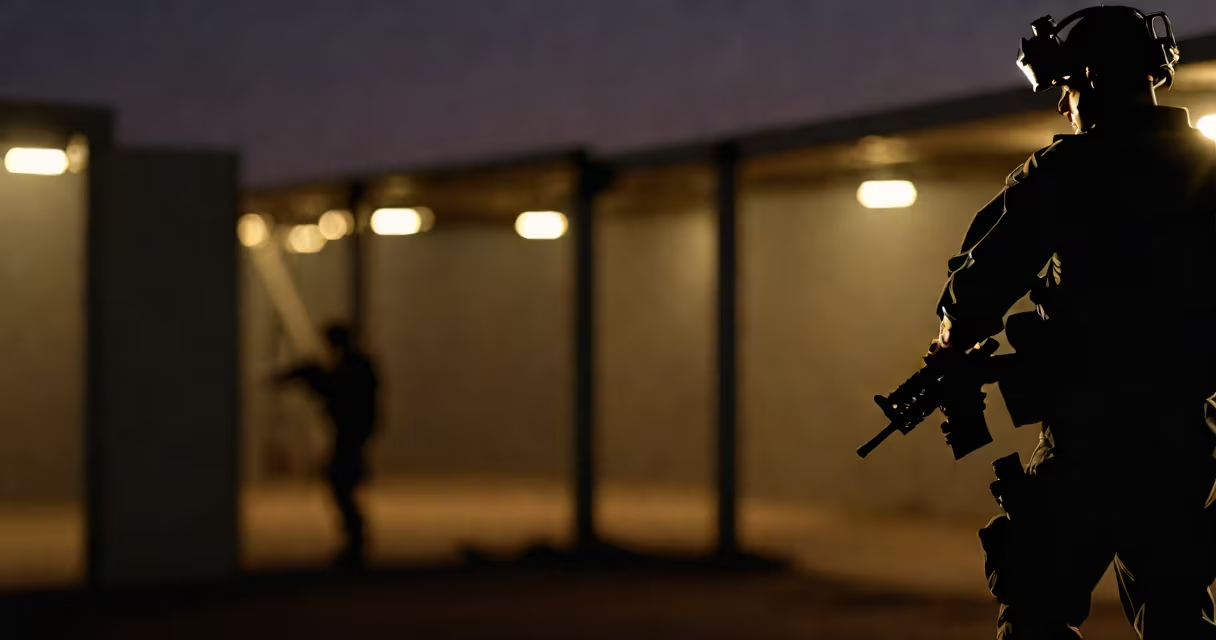
Private security contractors provide protective services under contract, often in high-risk environments such as war zones, corporate sites, or diplomatic facilities. They are not government agents but hired professionals who operate under legal agreements with clients ranging from multinational corporations to national governments.
These individuals typically undergo rigorous training in firearms handling, emergency response, surveillance, and crisis management. Their duties include patrolling secure areas, monitoring access points, responding to threats, and coordinating with local law enforcement or military units when needed. Unlike police officers, they lack broad arrest powers unless granted specific jurisdiction through contract terms.
According to the U.S. Department of State, private security contractors supported over 60% of U.S. embassy security operations in conflict-affected regions between 2015 and 2020. This reflects their growing role in international infrastructure protection, especially in unstable regions where state capacity is limited.
Contractors work across multiple sectors, including energy, transportation, construction, and diplomacy. In the oil and gas industry, they protect pipelines and drilling platforms in remote or volatile locations like Nigeria's Niger Delta or Iraq's Kurdistan region. Their presence reduces the risk of sabotage, theft, and targeted attacks on critical assets.
In corporate settings, they manage crowd control during large events, conduct site sweeps before executive visits, and monitor data centers for unauthorized entry. For example, during the 2022 Winter Olympics in Beijing, private security firms were responsible for screening attendees and managing access to restricted venues, supplementing official police forces.
When deployed abroad, contractors may serve as personal escorts for executives traveling through hostile territories. A 2019 report by the International Peace Institute noted that 78% of private security contractors operating in Afghanistan were employed by foreign firms to support humanitarian aid convoys and NGO staff.
Security contractor roles vary widely based on mission requirements. The following table outlines common specializations:
| Type | Typical Duties | Common Employers |
|---|---|---|
| Armed Response Officers | Carry weapons, respond to intrusions, conduct patrols | Oil companies, mining firms |
| Surveillance Technicians | Operate CCTV systems, analyze video feeds, detect anomalies | Shopping malls, airports, event venues |
| Executive Protection Agents | Shadow bodyguards, route planning, threat assessment | CEOs, celebrities, diplomats |
| Cybersecurity Specialists | Monitor network traffic, respond to breaches, audit systems | Financial institutions, defense contractors |
One non-obvious distinction: many contractors are not uniformed or visibly armed. In sensitive environments like financial districts or tech campuses, discreet security teams use unmarked vehicles and minimal visible gear to avoid drawing attention while maintaining vigilance.
Deployments occur most frequently in regions with political instability, high crime rates, or strategic economic value. For instance, in 2021, a major mining company in Peru contracted 120 private security personnel to protect a newly opened copper mine after a series of armed attacks on transport routes.
Another example: during the 2023 protests in Colombia, several international NGOs relied on private security contractors to escort field researchers through urban zones with frequent roadblocks and violence. These teams used encrypted radios and pre-planned evacuation routes to ensure safe movement.
Contrary to popular belief, not all private security contractors are ex-military. While many have military backgrounds-especially those working in combat zones-others come from law enforcement, cybersecurity, or emergency medical services. The U.S. Bureau of Labor Statistics reports that 43% of security contractors in the U.S. had prior experience in public safety, but only 27% were veterans.
Private security contractors are often mistaken for mercenaries. However, mercenaries are individuals who fight for pay in armed conflicts without allegiance to any nation. Contractors, by contrast, are bound by contracts, laws, and oversight mechanisms. The International Committee of the Red Cross notes that mercenaries violate the Geneva Conventions, whereas contractors do not, provided they follow host nation regulations.
A key difference lies in accountability. Contractors are subject to both civil and criminal liability under international law. In 2007, the U.S. Supreme Court ruled in *Buckley v. United States* that private security contractors operating overseas remain accountable under U.S. federal statutes, including the Torture Victims Protection Act.
I once observed a team of contractors in Nairobi conducting a routine sweep of a hotel complex prior to a summit. They moved quietly, communicated via hand signals, and used thermal imaging to check blind spots. None wore badges or carried visible weapons. Their effectiveness came not from intimidation but from precision and coordination-a reminder that professionalism matters more than flashiness.
Global standards for private security contractors are set by the International Organization for Standardization (ISO) and the United Nations Office for Disarmament Affairs. ISO 31000 provides guidelines for risk management in security operations, while UN resolutions require transparency in contracting practices for peacekeeping-support roles.
Despite these frameworks, enforcement varies. A 2022 investigation by Human Rights Watch found that 34% of private security firms in the Middle East failed to maintain records of employee training or incident reports. This highlights gaps in compliance even among formally regulated organizations.
For high-stakes assignments, clients often require proof of accreditation. The American Society for Industrial Security (ASIS) offers certification programs for security managers and supervisors. Firms that employ ASIS-certified personnel are more likely to win bids for government contracts.
Private security contractors perform essential roles in protecting people, property, and infrastructure worldwide. Their work spans from quiet surveillance at data centers to rapid response in active conflict zones. Understanding what they do-and don't do-helps clarify their function in modern society.
They are not soldiers, nor are they vigilantes. They are trained professionals hired to reduce risk within defined parameters. When properly managed, they improve safety. When misused, they can escalate tensions. The line between effective protection and overreach depends on clear contracts, ethical standards, and independent oversight.