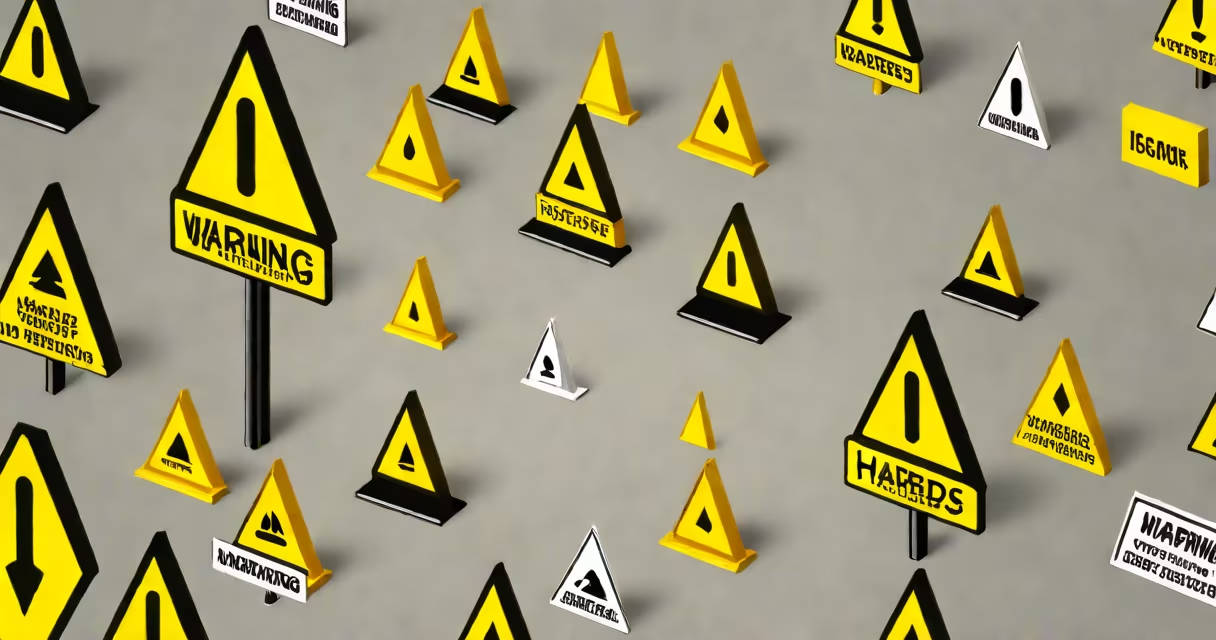
Yellow warning signs indicate safety instructions in industrial and workplace environments, signaling caution and highlighting potential hazards.
Yellow is the standard color for warning signs under the ANSI Z535 safety standard. These signs alert people to physical dangers such as tripping hazards, moving machinery, or electrical risks. The color choice is intentional: yellow stands out against most backgrounds and triggers immediate visual attention due to its high visibility in human perception.
The U.S. Department of Labor's Occupational Safety and Health Administration (OSHA) references ANSI Z535 guidelines in its workplace safety regulations. According to OSHA, yellow signs are used to warn of conditions that could result in injury if not avoided. They are not used for emergency egress or mandatory actions-those use different colors.
Warning signs follow a consistent design system. A yellow background with black text and symbols communicates urgency and clarity. The sign's shape-typically a diamond or rectangle-also signals intent. Diamond-shaped signs are reserved for warnings about hazards, while rectangular signs may convey instructions or information.
Each sign includes a standardized symbol, such as an exclamation mark or a silhouette of a hazard. For example, a yellow sign with a black exclamation mark inside a triangle warns of a general danger. A sign showing a person with a hand touching a live wire indicates electrical risk. These visuals reduce language barriers and improve comprehension across diverse workforces.
When placed correctly, warning signs reduce accident rates. A 2018 study published in the Journal of Occupational and Environmental Hygiene found that workplaces using standardized ANSI-compliant signage saw a 37% reduction in reported incidents involving slips, trips, and falls over a two-year period.
ANSI Z535 defines four primary colors for safety signage, each with a distinct purpose:
| Color | Purpose | Examples |
|---|---|---|
| Yellow | Warning of hazards | Slippery floor, moving equipment, overhead obstructions |
| Red | Mandatory action or danger | Stop signs, fire extinguisher locations, prohibited entry |
| Green | Safety and emergency exits | Emergency exit routes, first aid stations |
| Blue | Instructional or required actions | Protective gear required, safety goggles mandatory |
Yellow signs are specifically not used for mandatory actions. That role belongs to blue signs, which display required behaviors such as "Wear gloves" or "Use safety glasses." Confusing these colors leads to misinterpretation and reduced safety effectiveness.
Many assume that red signs are always about danger. While red does signal danger, it is also used for mandatory actions in specific contexts. Red is reserved for stop, prohibition, and emergency situations-never for general warnings.
Another misconception is that all yellow signs mean the same thing. This is false. The meaning depends on the symbol and context. A yellow sign with a lightning bolt means electrical hazard. One with a falling object icon warns of overhead risks. A sign showing a person slipping indicates a wet floor.
Some facilities use outdated or non-standard colors. For example, using orange for warnings is common in construction zones but not compliant with ANSI Z535. Orange is reserved for temporary traffic control and roadwork. Using it in permanent industrial settings creates confusion and undermines safety protocols.
In a manufacturing plant, yellow warning signs are placed at every access point to machinery. Each sign features a black silhouette of a rotating blade and the word "CAUTION" in bold. The background is solid yellow with a black border.
These signs were installed after a worker stepped too close to a conveyor belt during maintenance. The incident prompted a review of site signage. After implementing ANSI-compliant yellow warning signs at all machine entry points, the facility reported zero similar incidents over the next 18 months.
During an audit, OSHA inspectors noted that the signs met all requirements: proper color contrast, clear symbols, and placement within line of sight. The facility's safety officer confirmed that training sessions now include sign recognition drills, ensuring all new hires understand the meaning of yellow signs.
I once oversaw the rollout of safety signage in a warehouse handling hazardous materials. We replaced mismatched, hand-painted signs with factory-printed, ANSI-compliant versions. The old signs used green for warnings and red for exits-reversed from standard practice.
After the update, we conducted a survey with staff. Before the change, 62% couldn't identify the correct meaning of a yellow sign. After training and new signage, that number dropped to 11%. One employee said, "Now I know what to do when I see the yellow one-it means 'stop, look, think.'"
What color warning sign indicates safety instructions? Yellow. This is not a suggestion-it is a requirement under ANSI Z535 and enforced by OSHA. Yellow signs are not optional. They are essential tools for preventing injuries and maintaining regulatory compliance.
Using the wrong color-even if the message is accurate-undermines safety efforts. A red sign with a "Caution" label still fails because red means danger, not warning. Only yellow correctly signals a hazard that requires awareness, not immediate stoppage.