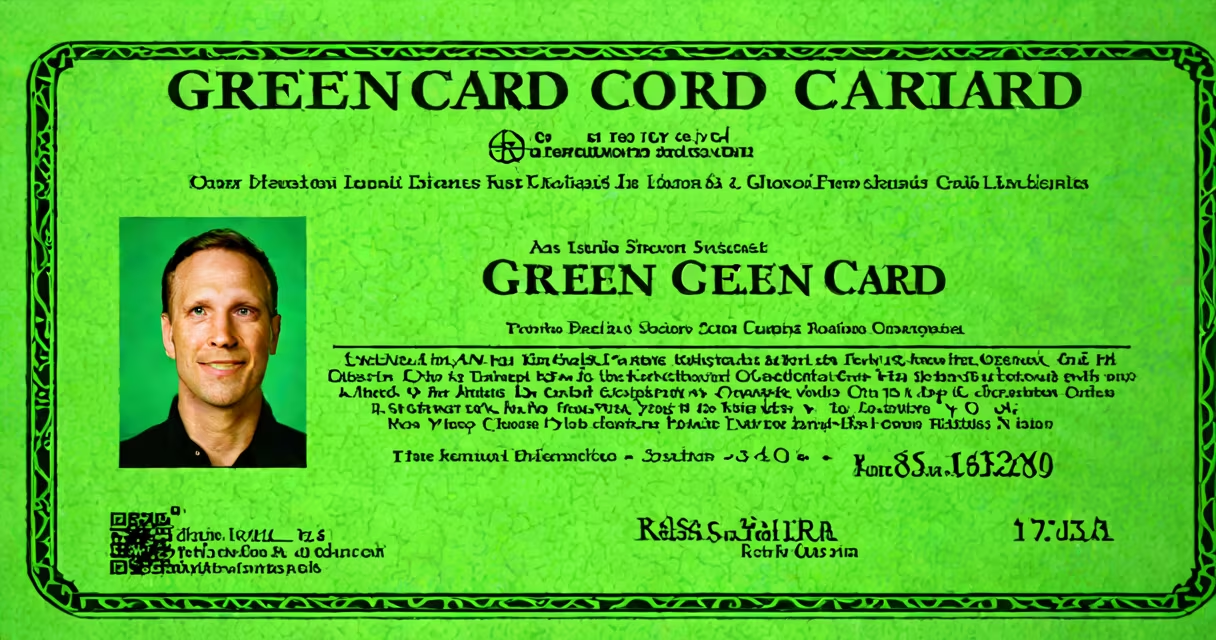
Having a green card means you are a lawful permanent resident of the United States, authorized to live and work in the country indefinitely. The card, officially called a Permanent Resident Card, confirms your immigration status under U.S. law.
The green card is issued by U.S. Citizenship and Immigration Services (USCIS), part of the Department of Homeland Security. It grants rights such as employment authorization, access to public benefits like Social Security, and the ability to travel abroad and return without needing a visa. However, it does not confer U.S. citizenship or voting rights.
Green card holders must maintain their residence in the U.S. and avoid extended absences. Staying outside the country for more than one year may result in loss of status unless a re-entry permit was obtained beforehand. The card is valid for ten years and must be renewed every decade, though conditional green cards-issued to those who obtained residency through marriage or investment-expire in two years and require additional steps to remove conditions.
When USCIS approves a petition for permanent residence-through family sponsorship, employment, refugee resettlement, or the Diversity Visa Lottery-the applicant receives a notice to appear for biometrics and an interview. Upon approval, the green card is mailed to the address listed on the application.
The card contains a unique number, the holder's photograph, full legal name, date of birth, and the expiration date. It also includes a machine-readable zone and a magnetic stripe. The physical card is not required for entry into the U.S., but it serves as proof of status during employment verification, renewals, and interactions with federal agencies.
Employers use Form I-9 to verify work eligibility. A green card satisfies the requirement. Border officials may ask to see the card upon re-entry, especially if the holder has been away for months. Failure to carry it can lead to delays or questioning, even if the person is legally entitled to return.
There are several pathways to obtaining a green card. The most common categories include:
| Category | Eligibility Basis | Typical Processing Time |
|---|---|---|
| Family-sponsored | Immediate relative (spouse, parent, child) or preference category (siblings, adult children) | 6 months - 3 years |
| Employment-based | Job offer with employer sponsorship; EB-1 to EB-3 categories | 1 - 3 years |
| Refugee/Asylum | Granted protection based on fear of persecution | 1 year after arrival |
| Diversity Visa Lottery | Random selection from eligible countries | 6 months - 1 year |
Each path involves distinct forms, fees, and documentation. For example, employment-based applicants must have a job offer and employer filing of Form I-140. Family-based petitions require a U.S. citizen or permanent resident sponsor to file Form I-130.
A lesser-known fact: Conditional green cards are issued to individuals who obtained permanent residence through marriage to a U.S. citizen within the past two years. These holders must jointly file Form I-751 to remove conditions within 90 days before the card expires. Failure to do so results in deportation proceedings.
Many people confuse a green card with a visa. A visa allows temporary entry into the U.S. for tourism, study, or work. A green card grants permanent residence. You cannot use a tourist visa to live and work indefinitely. A visa does not lead to permanent status unless it is part of a formal adjustment process.
Another misconception is that green card holders can vote. They cannot. Only U.S. citizens may vote in federal elections. Green card holders may participate in local elections depending on state laws, but they are barred from national ballots.
Some assume that having a green card guarantees automatic citizenship. This is false. Naturalization requires meeting specific criteria: five years of continuous residence (three for spouses of citizens), physical presence in the U.S. for at least 30 months out of the last five years, and passing a civics and English test. The process takes about six to twelve months after filing Form N-400.
In 2022, Maria, a software engineer from Colombia, received her green card after her employer filed an EB-2 petition based on her advanced degree and job offer. She had lived in the U.S. on an H-1B visa for four years. After approval, she applied for her green card using Form I-485 while remaining in the country.
She received her card in 90 days. With it, she changed jobs without losing status. When she traveled to Colombia for two months, she presented her green card and a valid passport at U.S. Customs and Border Protection. She was admitted without issue because her card was still valid and she had maintained her primary residence in the U.S.
She later applied for naturalization. After passing the test and attending an interview, she became a U.S. citizen in 2024. Her green card was surrendered as part of the oath ceremony.
Having a green card does not mean you are immune to deportation. Serious crimes, fraud in the application process, or abandonment of residence can lead to removal proceedings. In 2021, USCIS reported that approximately 11,000 green card holders were removed from the U.S. due to criminal convictions or immigration violations.
Also, a green card does not grant automatic access to federal financial aid for college. While green card holders qualify for in-state tuition in many states, they are not eligible for Pell Grants unless they meet additional criteria, such as being a long-term resident or qualifying under a state-specific program.
One key distinction often missed: a green card is not a passport. It is not used for international travel. Travelers must carry a valid passport from their home country and a visa if required. The green card is only proof of U.S. residency.
I once reviewed a case where a client mistakenly believed their green card allowed them to cross borders freely. They attempted to enter Canada using only their green card and were denied entry. Canadian border agents require a passport and, in most cases, a visa. The green card alone is insufficient.
If you hold a green card, keep it current. Renew it at least six months before expiration. Report changes in address to USCIS within 10 days. Avoid actions that suggest intent to abandon residence-such as living abroad for more than a year without a re-entry permit.