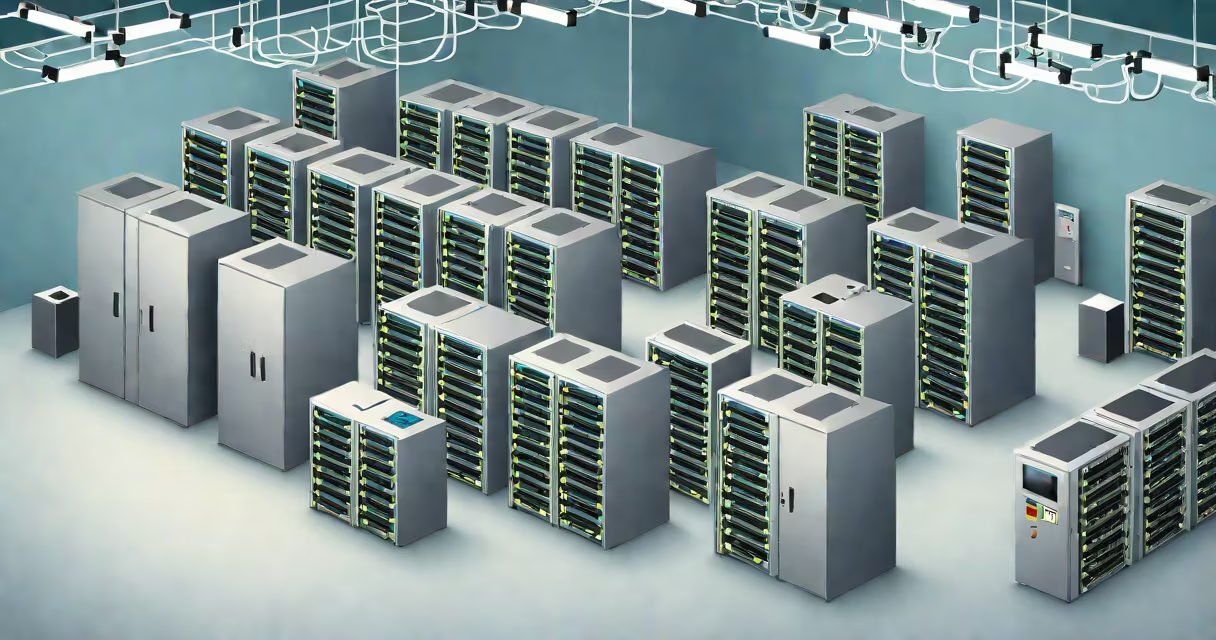
Enterprise technologies are integrated software, hardware, and infrastructure systems designed to support complex business operations at scale. They enable organizations to manage data, automate workflows, ensure security, and connect departments across global networks. These systems underpin mission-critical functions in finance, healthcare, logistics, and manufacturing.
They differ from consumer-grade tools by prioritizing reliability, scalability, and compliance. A single failure in an enterprise system can halt production, disrupt supply chains, or expose sensitive customer data. As such, deployment involves rigorous testing, redundancy planning, and dedicated IT teams.
According to Gartner, 70% of large enterprises rely on hybrid cloud architectures by 2025, reflecting the growing dependence on enterprise technologies for digital resilience. The International Data Corporation (IDC) reports that global spending on enterprise IT solutions reached $2.6 trillion in 2023, driven by AI integration, cybersecurity upgrades, and data center modernization.
These systems operate through layered architecture. At the base is infrastructure-physical servers, storage arrays, and networking gear. Above it sits middleware that manages communication between applications. The application layer hosts business-specific software like ERP (Enterprise Resource Planning), CRM (Customer Relationship Management), and HRIS (Human Resources Information Systems).
Data flows through APIs (Application Programming Interfaces) that allow different programs to exchange information securely. For example, when a sales team enters a new contract in Salesforce (CRM), the system updates inventory levels in SAP (ERP) via API calls. This synchronization prevents overselling and ensures accurate financial reporting.
Security is embedded at every level. Multi-factor authentication, role-based access controls, and end-to-end encryption protect data both in transit and at rest. Organizations often deploy SIEM (Security Information and Event Management) tools to monitor logs in real time and detect anomalies that may indicate breaches.
Enterprise technologies fall into several core categories based on function:
| Type | Purpose | Examples | Key Feature |
|---|---|---|---|
| ERP Systems | Centralize financials, procurement, and operations | SAP S/4HANA, Oracle Fusion, Microsoft Dynamics 365 | Real-time dashboards across departments |
| CRM Platforms | Manage customer interactions and sales pipelines | Salesforce, HubSpot Enterprise, Microsoft Dynamics 365 Sales | AI-driven lead scoring and predictive analytics |
| Cloud Infrastructure | Host applications and store data remotely | AWS, Microsoft Azure, Google Cloud Platform | Auto-scaling during traffic spikes |
| Business Intelligence Tools | Analyze data for strategic decisions | Tableau Server, Power BI Premium, Qlik Sense | Interactive dashboards with drill-down capabilities |
| Cybersecurity Suites | Protect against threats and enforce policies | McAfee Enterprise, CrowdStrike Falcon, Palo Alto Prisma Access | Threat intelligence feeds and automated response |
Each category supports specific operational goals. For instance, a retail chain uses ERP to track inventory across 500 stores, while a bank deploys cybersecurity suites to meet PCI-DSS compliance standards.
Many assume enterprise technologies are only for large corporations. In reality, mid-sized businesses and even startups in regulated sectors-like fintech or biotech-must adopt them to remain competitive and compliant. A company processing credit card transactions, for example, cannot operate without encrypted payment gateways and audit trails mandated by PCI-DSS.
Another misconception is that enterprise systems are slow and rigid. Modern platforms like Salesforce and AWS offer agile development environments with continuous deployment pipelines. Teams can release updates weekly, not quarterly. The perception of slowness stems from legacy systems still in use, not the technology itself.
Enterprise technologies do not replace human roles-they augment them. A 2022 McKinsey study found that companies using AI-enhanced enterprise tools saw a 25% increase in productivity among customer service agents, who spent less time searching databases and more time resolving issues.
Consider a multinational electronics manufacturer. It uses SAP ERP to plan production, Oracle SCM (Supply Chain Management) to track raw materials, and AWS for cloud-based logistics analytics. When a shipment from Vietnam is delayed due to port congestion, the system detects the delay via IoT sensors on containers and triggers an alert in the central command center.
The system automatically reroutes shipments through alternate ports, adjusts delivery timelines in the CRM, and notifies affected customers via email templates approved by legal teams. All actions happen within minutes, coordinated across departments without manual intervention.
This scenario illustrates how enterprise technologies create interconnected decision-making. Without them, delays would go unnoticed until after delivery dates passed, leading to penalties and lost trust.
People sometimes equate enterprise technologies with "big data" or "AI." While these are components, they're not synonymous. Big data refers to volume, velocity, and variety of information. AI enables pattern recognition. But enterprise technologies integrate both into operational workflows.
For example, a retailer might use AI to predict demand (data science), but only enterprise systems can execute orders, update warehouses, and adjust supplier contracts-all in real time. The AI model is a tool; the enterprise platform is the engine.
Geospatial technologies, such as GPS tracking and satellite imagery, are frequently grouped with enterprise systems. However, they serve distinct purposes. Geospatial tools map locations and movements. Enterprise technologies process the business logic behind those movements. A delivery company uses geospatial data to route trucks, but relies on enterprise software to assign drivers, calculate fuel costs, and generate invoices.
I once worked with a regional utility provider transitioning from paper-based billing systems to a full-stack enterprise solution. The old system required clerks to manually enter meter readings, cross-reference them with customer accounts, and mail bills. Errors were common, and disputes took weeks to resolve.
We implemented a cloud-hosted ERP with mobile apps for field technicians. Each meter reading was captured via smartphone app, uploaded instantly, and matched against historical usage patterns. Discrepancies triggered alerts. Customers received digital invoices with breakdowns of usage and rates.
Within six months, billing accuracy improved from 87% to 99.6%. Customer complaints dropped by 63%. The system didn't eliminate jobs-it shifted staff from data entry to problem resolution and customer outreach.
What are enterprise technologies? They are the foundational systems that enable organizations to operate efficiently, securely, and at scale. From managing finances to coordinating global supply chains, these technologies integrate people, processes, and data into unified workflows. They are not optional for modern business-they are essential.
Understanding them begins with recognizing their purpose: to solve complex problems that individual tools cannot. Whether deploying cloud infrastructure or integrating AI into customer service, the goal remains consistent-supporting sustainable growth through reliable, intelligent systems.