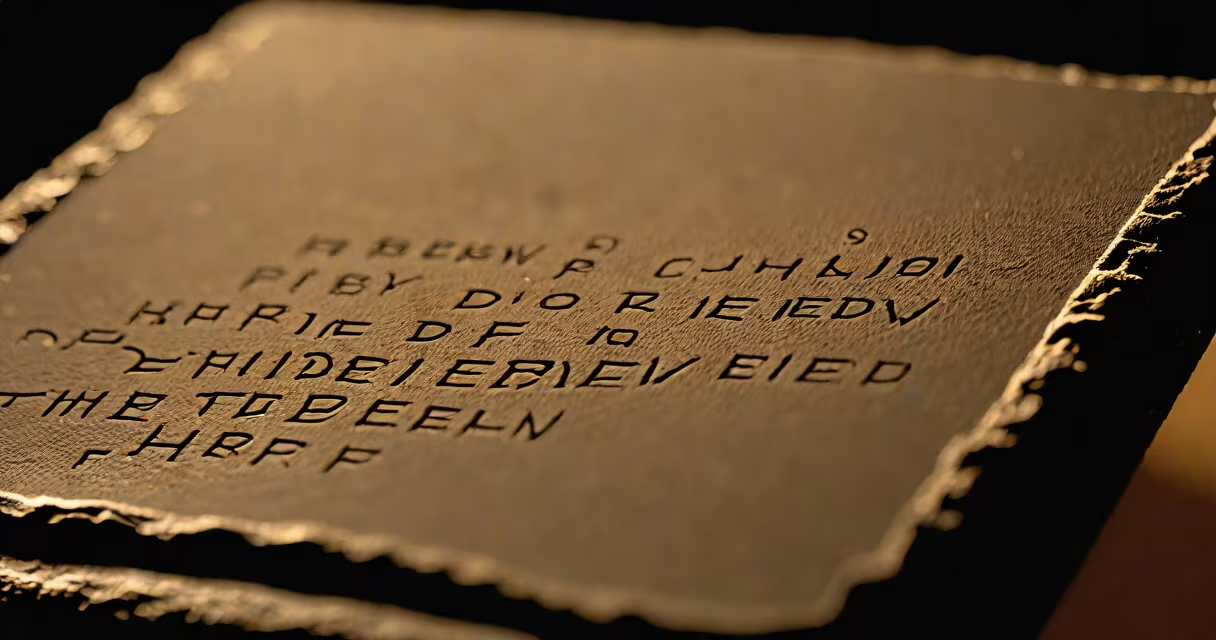
The Hebrew people were an ancient Semitic-speaking group who lived in the southern Levant during the Late Bronze and Iron Ages, forming the cultural and religious roots of ancient Israel and later Judaism. They are first mentioned in Egyptian records from the 13th century BCE, and their identity evolved through tribal confederations, monarchy, and exile.
Historical references to the Hebrew people appear in texts such as the Amarna Letters, where they are described as a semi-nomadic group in Canaan. The term "Hebrew" (ʿIvri) appears in the Hebrew Bible, often associated with Abraham, Isaac, and Jacob-figures central to the formation of Israelite identity. These patriarchs are described as migrating from Ur in Mesopotamia to Canaan, marking the beginning of a distinct ethno-religious lineage.
Archaeological evidence from sites like Hazor, Megiddo, and Lachish shows material culture consistent with early Israelite settlement patterns. Pottery styles, house designs, and religious artifacts from the 12th-10th centuries BCE reflect a community that practiced monotheistic worship, though early forms included local deities like Baal and Asherah before centralization under Yahweh.
The Hebrew people did not emerge as a unified nation overnight. Their identity formed through migration, intermarriage, shared rituals, and conflict with neighboring groups. Early Hebrew communities were likely organized around kinship and clan systems rather than centralized states.
By the 11th century BCE, a shift occurred: the rise of kingship under Saul, David, and Solomon marked the transition from tribal confederation to a centralized monarchy. This period saw the construction of the First Temple in Jerusalem, which became the spiritual and political heart of the Hebrew people. The Temple's destruction by the Babylonians in 586 BCE ended the monarchy and triggered the Babylonian Exile-a turning point in Hebrew identity.
After the return from exile under Persian rule, Hebrew religious life became increasingly centered on written law. The Torah, compiled between the 6th and 4th centuries BCE, codified laws, stories, and rituals that defined the Hebrew people as a covenantal community bound to God through obedience and ritual practice.
Core elements of Hebrew identity included monotheism, adherence to the Mosaic Law, and a sacred narrative rooted in covenant theology. Unlike many contemporary cultures, Hebrew society emphasized ethical responsibility alongside ritual observance. The Ten Commandments, for example, link moral behavior with divine command.
Language played a important role. Biblical Hebrew, a Northwest Semitic language, was used in religious texts, legal documents, and poetry. Modern Hebrew, revived in the 19th century, is a direct descendant of this tradition. The Hebrew alphabet-written right-to-left-remains a symbol of continuity across millennia.
A lesser-known fact: the term "Hebrew" was not originally a national identifier. In ancient usage, "Hebrew" referred to someone from across the river (from the root *'āvar*, meaning "to cross"). Abraham is called "the Hebrew" in Genesis 14:13 because he came from beyond the Euphrates. Over time, the term evolved from a geographical descriptor to a religious and ethnic label.
As the Hebrew people expanded, internal divisions arose due to geography, politics, and theology. The most significant split occurred after the death of King Solomon in the 10th century BCE, leading to the division of the united kingdom into Israel (north) and Judah (south).
| Group | Region | Religious Focus | Historical Fate |
|---|---|---|---|
| Tribe of Reuben | Transjordan | Local shrines, pastoralism | Exiled by Assyria in 722 BCE |
| Tribe of Levi | Scattered | Priesthood, temple service | Preserved religious traditions |
| House of David (Judah) | Judea | Centralized worship, prophetic tradition | Survived Babylonian exile |
After the fall of Jerusalem in 586 BCE, the surviving Hebrew population-primarily from the tribe of Judah-became known as Jews. The term "Jew" derives from "Yehudi," meaning "from Judah." This linguistic shift reflects a transformation from a tribal confederation to a diasporic religious community.
Many assume the Hebrew people were a single, homogeneous nation. In reality, they were a diverse mix of clans, tribes, and migrant groups with varying customs and dialects. Archaeological findings show that early Hebrew settlements incorporated Canaanite religious symbols and architectural styles before adopting exclusive monotheism.
Another misconception is that all Hebrews lived in the land of Israel. Evidence from the 8th century BCE shows Hebrew communities in Egypt, Mesopotamia, and Anatolia. The Elephantine Papyri-documents from a Jewish military colony in southern Egypt-reveal that Hebrew religious practices persisted far beyond the borders of the promised land.
Even the idea of a "chosen people" requires nuance. The Hebrew Bible presents this concept not as racial superiority but as a covenantal obligation: chosen to uphold justice and serve as a light to other nations. Deuteronomy 7:6 states, "For you are a holy people to the Lord your God; the Lord your God has chosen you to be a people for His own possession out of all the peoples who are on the face of the earth." The emphasis is on duty, not privilege.
In 1947, Bedouin shepherds discovered scrolls in caves near Qumran, believed to have been hidden during the Roman siege of Jerusalem in 70 CE. Among them were fragments of every book of the Hebrew Bible except Esther, along with sectarian writings from a Jewish sect known as the Essenes.
These scrolls confirm that Hebrew religious texts had stabilized by the 2nd century BCE. The Great Isaiah Scroll (1QIsaa), for example, contains nearly the entire Book of Isaiah in Hebrew, with minimal variation from modern versions. This demonstrates notable textual continuity across 2,000 years.
One fragment, 4QMMT, reveals how Hebrew scribes interpreted the law. It discusses tithing, Sabbath observance, and purity regulations-practices still central to Jewish life today. The scroll shows that Hebrew religious identity was not static but evolved through interpretation and adaptation.
I once visited the Israel Museum in Jerusalem and stood before a replica of the Dead Sea Scrolls. Holding a magnifying glass, I examined a fragment of Leviticus written in tiny, precise Hebrew script. The ink was faded, the parchment cracked-but the letters were unmistakably legible. That moment confirmed something I'd read: the Hebrew people didn't vanish. Their words endure.
Understanding the Hebrew people requires distinguishing them from related groups. The term "Israelite" often refers to members of the twelve tribes after the Exodus, while "Hebrew" is older and more fluid. "Jew" emerged after the Babylonian exile and applies to descendants of Judah and the exiled elite.
The Hebrew people remain a foundational reference in Abrahamic faiths. Their legacy lives in scripture, liturgy, and ethics. Their story is not just about survival-it's about the enduring power of belief, memory, and written tradition.