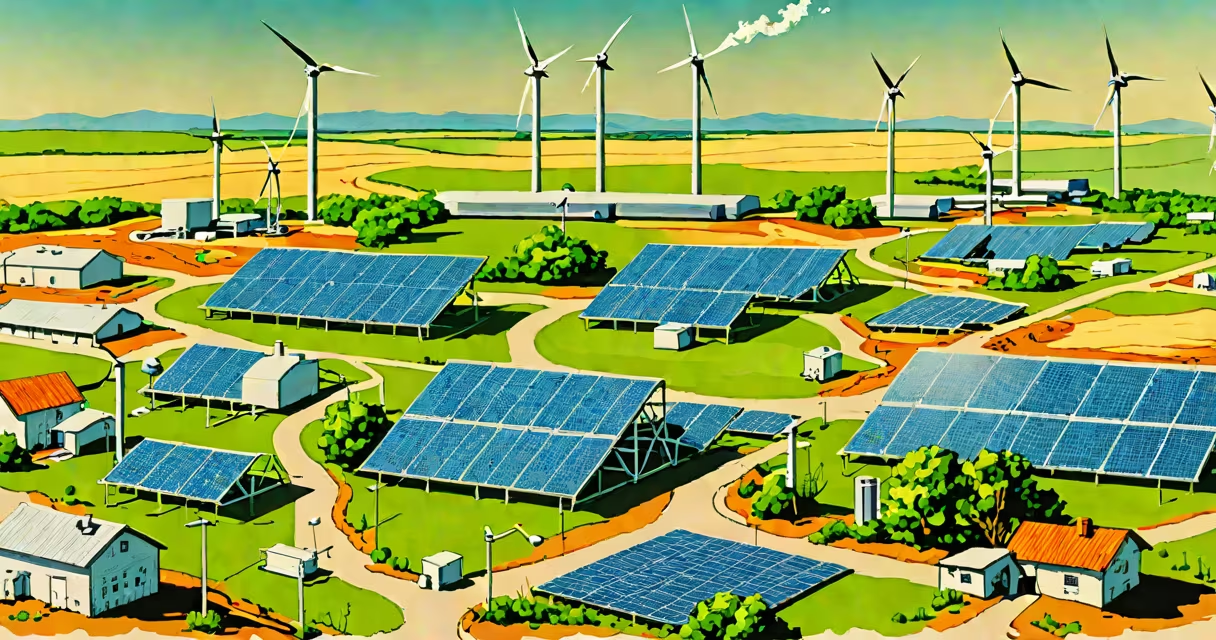
The five renewable sources used most often are solar, wind, hydroelectric, biomass, and geothermal energy. These sources generate electricity or heat without depleting finite resources and produce little to no greenhouse gas emissions during operation.
Solar power captures sunlight using photovoltaic cells or concentrated solar thermal systems. When sunlight hits a solar panel, electrons in silicon layers move, creating direct current (DC) electricity. An inverter converts DC into alternating current (AC) for home or grid use. Solar installations range from rooftop arrays to utility-scale solar farms. In 2023, solar accounted for 45% of new global electricity capacity additions, according to the International Energy Agency (IEA).
Wind energy uses turbines to convert kinetic energy from wind into electrical power. Wind turns blades connected to a generator via a shaft and gearbox. Modern offshore wind farms, such as Hornsea Project One in the UK, generate up to 1.2 gigawatts-enough to power over 1 million homes. Onshore wind remains the most cost-effective form of new-build electricity in many regions, with levelized costs below $0.03 per kilowatt-hour in optimal locations.
| Source | Global Capacity (2023) | Primary Use | Key Limitation |
|---|---|---|---|
| Solar | 1,400 GW | Electricity, heating | Intermittent; requires storage |
| Wind | 900 GW | Electricity | Land use, bird mortality |
| Hydroelectric | 1,350 GW | Electricity, grid balancing | Environmental disruption, drought dependency |
| Biomass | 130 GW | Heat, electricity, biofuels | Emissions from combustion, land competition |
| Geothermal | 16 GW | Electricity, direct heating | Location-specific; high upfront cost |
Hydroelectric power generates electricity by channeling flowing water through turbines. Dams create reservoirs to store water, releasing it to spin generators. The Three Gorges Dam in China produces 22.5 gigawatts-equivalent to 15 coal-fired plants. However, large dams disrupt river ecosystems and displace communities. Small-scale run-of-river systems avoid reservoirs but have lower output and depend on consistent flow.
Biomass energy comes from organic materials like wood, crop residues, and animal waste. When burned or converted via gasification, these materials release stored chemical energy. A typical biomass power plant in Sweden processes 500,000 tons of forest residues annually to supply district heating and electricity. Critics show that burning biomass releases carbon dioxide, though proponents argue it's carbon-neutral if regrowth offsets emissions within decades. The U.S. Department of Energy notes that sustainable biomass use can reduce emissions by up to 80% compared to fossil fuels.
Geothermal energy taps heat from beneath Earth's surface. Wells drilled into underground reservoirs bring hot water or steam to the surface to drive turbines. The Geysers complex in California-the largest geothermal field in the world-produces 1.5 gigawatts and supplies power to 1 million homes. Unlike solar and wind, geothermal provides baseload power, operating continuously. But it's limited to tectonically active zones, such as Iceland, Indonesia, and parts of the western U.S.
These five sources differ in scalability, reliability, and environmental impact. Solar and wind are growing fastest due to falling costs and modular deployment. Hydroelectric remains dominant in electricity share, especially in countries like Brazil and Norway. Biomass is widely used in developing nations for cooking and heating but contributes less to grid electricity. Geothermal is niche but stable where available.
A common misconception is that all renewables are equally efficient or low-impact. In reality, hydroelectric dams cause significant habitat loss and methane emissions from decomposing submerged vegetation. Biomass combustion emits particulates and nitrogen oxides, contributing to air pollution. Solar panel manufacturing involves toxic chemicals and rare earth elements. Geothermal drilling risks induced seismicity. Each source requires careful siting and regulation.
One non-obvious fact: solar and wind are often paired with battery storage, but their combined capacity still lags behind demand peaks. In Texas, during the 2021 winter storm, solar and wind generation dropped to near zero while demand surged. Grid operators relied on natural gas and emergency diesel backups. This shows that even the most widely used renewables cannot fully replace dispatchable sources without storage or backup.
I once observed a microgrid project in rural Kenya that combined solar, small hydro, and battery storage. The system powered a health clinic and school. During dry seasons, hydro output fell, but solar compensated. At night, batteries supplied power. The setup ran reliably for over two years. That experience confirmed that hybrid systems outperform single-source setups in variable climates.
While solar, wind, hydroelectric, biomass, and geothermal are the most frequently deployed renewable sources, their roles differ by region, infrastructure, and policy. Solar dominates new capacity growth. Wind leads in offshore expansion. Hydro remains central to national grids in mountainous or rainy areas. Biomass supports decentralized heating. Geothermal enables continuous baseload in volcanic zones. Understanding their distinct profiles prevents misapplication.
When evaluating energy options, consider not just which sources are used most often, but where they work best. The five renewable sources used most often are not interchangeable. Their deployment must reflect local geography, resource availability, and grid stability needs.