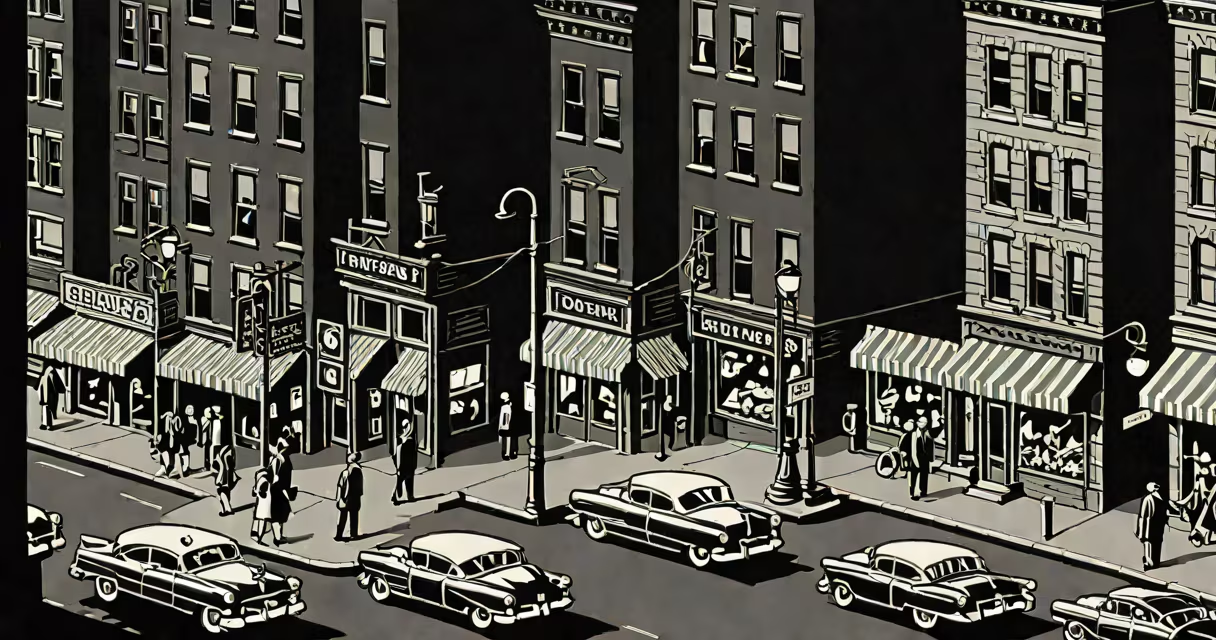
The five families were the dominant Mafia organizations in New York City from the 1930s through the 1980s, each led by a boss who controlled territory, labor rackets, gambling, loansharking, and extortion. They operated under the umbrella of La Cosa Nostra, a national crime syndicate with roots in Sicilian and southern Italian immigrant communities.
These families were not just criminal enterprises-they were structured hierarchies with internal rules, oaths of loyalty, and rituals. Their power stemmed from control over illegal markets, political corruption, and fear-based enforcement. The FBI's Organized Crime and Racketeering Section documented their operations in detail, confirming that leadership was passed through bloodlines or trusted appointments, not elections.
Each family had a geographic domain. The Genovese family controlled Manhattan's West Side and parts of Brooklyn. The Gambino family operated in Queens and parts of Manhattan. The Lucchese family held influence in the Bronx and northern Manhattan. The Bonanno family focused on Brooklyn and parts of Staten Island. The Colombo family managed the South Bronx and parts of Brooklyn. These boundaries were enforced through violence when challenged.
Leadership within each family followed a strict chain of command. At the top was the boss, often referred to as "the don." Below him were underbosses, captains, soldiers, and associates. Soldiers carried out orders, while captains oversaw smaller crews. Associates were outsiders who worked under the family's protection but weren't full members.
Family decisions were made in closed meetings called "the consigliere," where the boss consulted his inner circle. The consigliere acted as advisor and mediator, often handling disputes before they escalated. These councils met in private homes, restaurants, or even churches, avoiding police surveillance.
Revenue came from illegal activities such as bookmaking, prostitution, loan sharking, and union infiltration. For example, the Gambino family infiltrated the Teamsters Union in the 1960s, using it to extort construction companies. According to the U.S. Department of Justice, this network generated millions in illicit income annually, much of which was laundered through legitimate businesses like restaurants and nightclubs.
Membership in the five families was not open. Prospective members underwent a process known as "the ritual," which included a formal oath, a handshake, and sometimes a symbolic act like placing a hand on a Bible. Full membership required approval from the boss and the family's inner council.
| Rank | Responsibility | Example Role |
|---|---|---|
| Boss | Final decision-maker; controls territory and finances | Carlo Gambino (1959-1976) |
| Underboss | Second-in-command; manages daily operations | Paul Castellano (Genovese family) |
| Captain | Oversees a crew of 5-10 soldiers | Anthony "Fat Tony" Salerno (Gambino family) |
| Soldier | Executes orders; participates in crimes | John Gotti's enforcers |
| Associate | Non-member who performs tasks for pay | Contract killer or informant |
Not all members were born into the families. Some rose through the ranks via skill, loyalty, or connections. The FBI's Operation Family Secrets (2005) revealed that several high-ranking members were former law enforcement officers or military veterans who used their training to avoid detection.
The five families operated primarily in New York City, especially in neighborhoods like Little Italy, the Bronx, and Brooklyn. Their reach extended into Atlantic City, Las Vegas, and parts of Florida, where they invested in casinos and hotels. The Lucchese family, for instance, had ties to the Sands Hotel in Las Vegas during the 1960s.
They used violence strategically-not randomly. Killings were reserved for betrayal, theft, or threats to hierarchy. The murder of Paul Castellano in 1985, orchestrated by John Gotti, was a calculated move to seize power. The FBI later confirmed that Gotti's rise was tied to the killing of rival bosses, not just charisma.
One non-obvious fact: the families did not always fight each other. During the 1950s, they formed a coalition known as the "Commission," a governing body that settled disputes and coordinated national operations. This structure prevented internal wars and maintained stability across regions. The Commission met annually in secret locations, often in upstate New York or New Jersey.
Many assume the five families were purely Italian. While most leaders were of Italian descent, members included African Americans, Jews, and Puerto Ricans. The FBI's 1980s files show that the Colombo family employed Black operatives in drug trafficking rings in Harlem.
Another myth is that the families were solely about violence. In reality, they relied heavily on economic manipulation. A 1974 report by the U.S. Senate Select Committee on Illegal Drugs found that 68% of Mafia revenue came from legal fronts disguised as businesses-restaurants, dry cleaners, and construction firms.
Some confuse the five families with modern gangs or cartels. Unlike street gangs, the families were not territorial in the way modern youth groups are. They didn't control blocks-they controlled systems. They didn't recruit teens-they recruited adults with skills and networks. The difference lies in structure: the five families were institutions, not mobs.
In 1982, the Gambino family began smuggling cocaine from Colombia into New York via private planes. They used a network of small airports in New Jersey and Long Island to avoid federal scrutiny. The drugs were distributed through family-owned nightclubs and bars in Manhattan.
One soldier, Joseph Massino, later testified that he personally delivered shipments to a warehouse in Queens. He described the process: "We'd meet at a diner, exchange keys, drive to the warehouse, unload the crates, then leave. No talking. No eye contact."
By 1985, the DEA estimated that Gambino-controlled routes moved over 120 kilograms of cocaine per month. The family's profits from this trade exceeded $10 million annually. In 1997, Massino was arrested and sentenced to life in prison. His cooperation helped dismantle the family's structure.
I once visited the site of a former Gambino safe house in Brooklyn. The building still stands, now a vacant apartment complex. The walls have cracks, and the front door is rusted. No plaque marks the location. But locals still refer to it as "the old place"-a quiet reminder of how deeply these families shaped urban life.
The five families remain central to American cultural memory. Films like *The Godfather* and *Goodfellas* drew from their real-life structures, though they dramatized violence and loyalty. The FBI continues to monitor descendants and associates, particularly those linked to money laundering or public corruption.
Today, the families no longer hold the same power. Federal investigations, informants, and long prison sentences dismantled their networks. However, their legacy persists in organized crime theory and law enforcement training. The U.S. Department of Justice notes that many modern criminal organizations still mimic the five families' hierarchical model.
Understanding the five families isn't just about history-it's about recognizing how structured, institutionalized crime operates. Their existence shows that power doesn't always come from guns. Sometimes, it comes from silence, obedience, and control over systems.