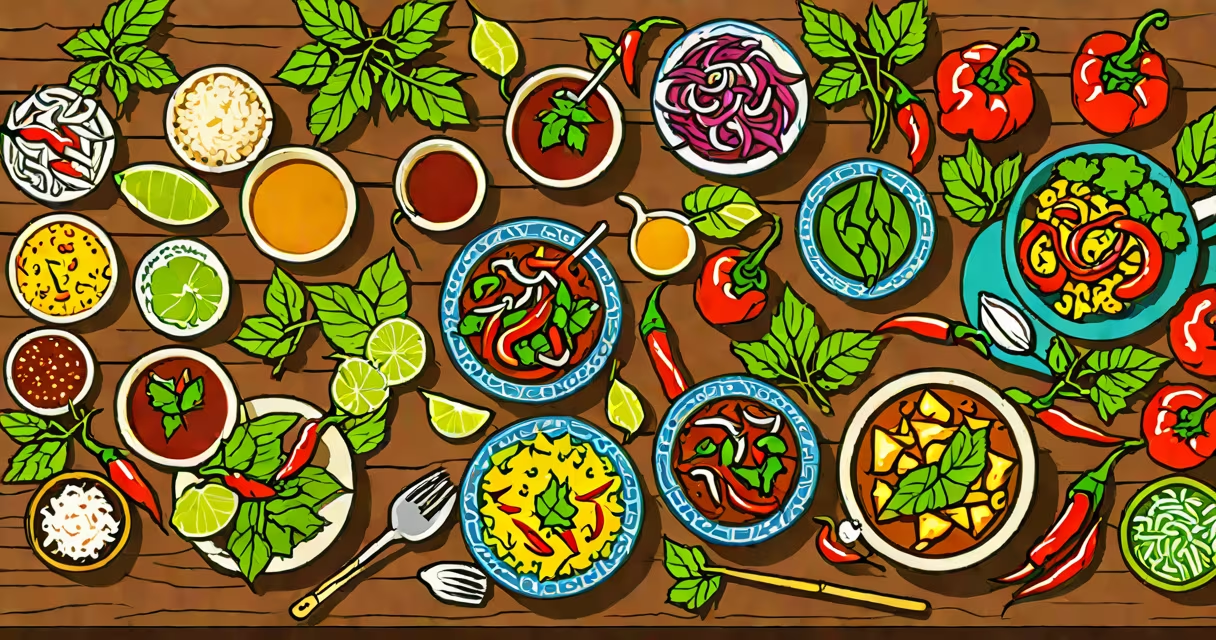
A Thai food menu lists traditional and modern dishes from Thailand's diverse regional cuisines, featuring balanced flavors of sweet, sour, salty, bitter, and spicy. Each entry reflects centuries of culinary practice shaped by geography, climate, and trade.
Thai food menus organize dishes by category-appetizers, soups, curries, stir-fries, noodles, and desserts-often grouped by region. Northern Thai dishes emphasize earthy spices and fermented ingredients, while Southern Thai food uses coconut milk and fresh seafood. Central Thai cuisine, dominant in Bangkok, blends sweet and savory profiles with herbs like kaffir lime and lemongrass.
Menus may include both familiar international favorites and lesser-known regional specialties. Pad Thai appears on nearly every menu, but authentic versions use tamarind paste, fish sauce, and crushed peanuts-not sugar-heavy versions common in Western restaurants. Green curry (kaeng khiao wan) includes bird's eye chilies, Thai eggplant, and basil, while tom yum soup features lemongrass, galangal, and shrimp.
Thailand's four main regions-North, Northeast (Isaan), Central, and South-each contribute distinct flavor profiles to menus. Northern dishes like khao soi (curried noodle soup) use turmeric and dried chilies, while Isaan food features larb (spicy minced meat salad) and som tam (papaya salad) with fermented fish sauce and roasted chili.
Central Thai menus often show dishes with complex layering of taste. For example, gaeng keow wan (green curry) balances heat from chilies with sweetness from coconut milk and a hint of bitterness from kaffir lime leaves. The presence of specific ingredients signals authenticity: fresh galangal instead of powdered ginger, or makrut lime leaves rather than regular lime zest.
Regional variation extends beyond flavor. Southern menus frequently feature seafood due to proximity to the Andaman Sea and Gulf of Thailand. Dishes like massaman curry include cinnamon, cardamom, and dried coconut, reflecting Indian and Malay influences through centuries of trade.
| Region | Signature Dishes | Flavor Profile | Key Ingredients |
|---|---|---|---|
| North | Khao soi, sai oua | Earthy, mildly spicy | Turmeric, dried chilies, pork blood |
| Isaan (Northeast) | Larb, som tam | Spicy, sour, tangy | Fermented fish sauce, lime juice, roasted chilies |
| Central | Pad Thai, green curry | Sweet-savory, aromatic | Tamarind, fish sauce, kaffir lime |
| South | Massaman curry, tom yum goong | Rich, coconut-based, slightly sweet | Coconut milk, cinnamon, dried shrimp |
Many menus list "Thai food" as a monolith. This overlooks the country's 77 provinces and hundreds of local variations. A dish labeled "pad Thai" on a Bangkok menu may differ from one in Chiang Mai, where tamarind is less common and palm sugar replaces refined sugar.
Westernized versions often oversimplify flavor. Some menus describe green curry as "mild" when authentic versions use 6-8 bird's eye chilies per serving. The term "Thai food" on a menu doesn't guarantee authenticity-some restaurants substitute fish sauce with soy sauce or replace fresh herbs with dried ones.
One non-obvious distinction: Thai food menus rarely use "spicy" as a descriptor. Instead, they rely on context. A dish listed as "spicy" (phat pet) indicates heat level, but many authentic preparations assume diners will adjust spice themselves. This reflects cultural norms-Thai people eat spicy food daily, and menus don't warn unless the heat exceeds typical levels.
I visited a family-run restaurant in Chiang Mai called Siam Kitchen. Their menu had 28 entries, organized by course. I ordered:
Each dish matched the regional profile. Yam nua used raw ingredients, avoiding cooking to preserve texture. Kaeng phet used whole chilies pounded in mortar, not pre-made paste. The dessert used glutinous rice soaked overnight-a detail often skipped in commercial kitchens.
When ordering, look for specificity. "Green curry" is vague. "Kaeng khiao wan" specifies the dish. "Pad Thai" may be generic, but "pad Thai nam prik" (with chili sauce) or "pad Thai with egg" indicates preparation. Menus that list ingredients like "fresh kaffir lime leaves" or "roasted garlic" suggest authenticity.
Authentic Thai food menus reflect history and environment. They avoid shortcuts. A true tom yum soup contains lemongrass, galangal, kaffir lime leaves, and fish sauce-not canned broth or MSG. The balance of flavors-sour from lime, spicy from chilies, umami from fish sauce-is intentional, not accidental.
According to the World Health Organization, traditional diets like Thai cuisine are linked to lower rates of chronic disease. Thai meals often include vegetables, lean protein, and fermented elements like fish sauce and pickled mustard greens. These components appear on menus not as marketing points, but as staples of daily eating.
Thai food menu is not a single entity. It is a living document of culture, geography, and taste. When you see a dish name like "gaeng tai pla" (fish curry), you're seeing a recipe passed down through generations. The menu is not just a list-it's a map of Thailand's kitchens.