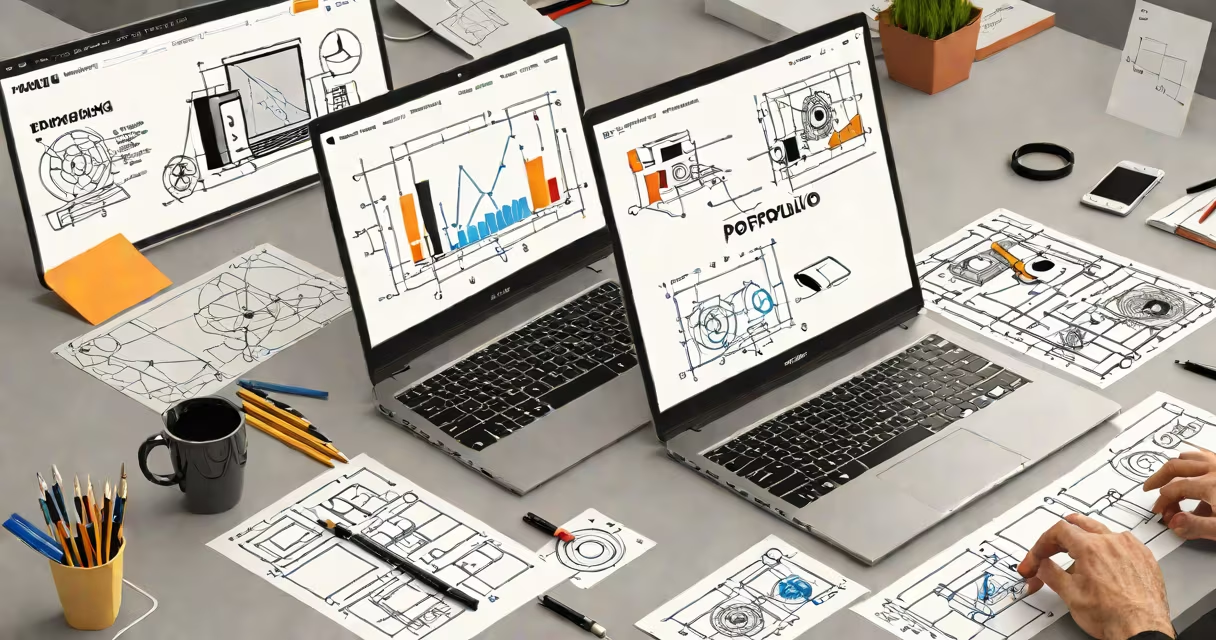
A web portfolio is a personalized website that showcases your work, skills, and professional background in a structured, visually engaging format. It serves as a digital resume and creative archive, often used by freelancers, artists, developers, and designers to demonstrate expertise beyond traditional résumés.
Unlike static documents, a web portfolio allows real-time updates, interactive elements, and direct access to live projects. It's not just a list of past jobs-it's a changing presentation of your capabilities, tailored to your audience.
For example, a front-end developer might embed working code snippets, show responsive design behavior, and link to GitHub repositories-all within a single site. This level of interactivity gives hiring managers immediate insight into technical ability.
At its core, a web portfolio functions like a custom website built around a central theme: you. It uses standard web technologies-HTML, CSS, and JavaScript-to structure content, apply styling, and enable interaction. Many sites are hosted on platforms like GitHub Pages, Netlify, or Vercel, which simplify deployment and domain setup.
Navigation is typically organized by category: "Projects," "About Me," "Skills," "Contact." Each section includes media-images, videos, code samples, or downloadable files-that supports your narrative. A well-designed portfolio balances visual appeal with clear information hierarchy.
When someone visits your site, they don't just read your experience-they see it. A photography portfolio displays high-resolution images with captions and metadata. A UX designer's portfolio shows wireframes, user flows, and before/after comparisons. The medium becomes part of the message.
Portfolios vary based on purpose and audience. Here are common formats:
| Type | Best For | Key Features |
|---|---|---|
| Minimalist | Designers, developers | Simple layout, focus on content, fast loading |
| Interactive | Front-end devs, motion artists | Scroll animations, micro-interactions, embedded demos |
| Content-Rich | Writers, researchers, educators | Blogs, case studies, long-form writing |
| Project-Focused | Freelancers, independent creators | Individual pages per project with detailed process breakdowns |
Some portfolios integrate tools like Notion or Airtable for content management, while others use static site generators such as Jekyll or Hugo to automate publishing.
Employers and clients increasingly expect candidates to have a public-facing presence. According to LinkedIn's 2023 Workplace Learning Report, 76% of recruiters review a candidate's online profile before an interview. A web portfolio improves visibility and credibility compared to a PDF résumé alone.
For example, a graphic designer applying to a startup might link to a portfolio page showing branding projects with client testimonials, mood boards, and final deliverables. This provides context that a job listing cannot.
Even entry-level applicants benefit. A student studying web development can host a live site demonstrating responsive layouts, accessibility features, and mobile-first design-proving competence through execution, not just theory.
Many assume a web portfolio must be complex or expensive. That's incorrect. You don't need a team or a budget. A single-page site built with free tools like HTML/CSS and hosted on GitHub Pages can be effective.
Another misconception: that portfolios only serve job seekers. In reality, they're important for freelance work, grant applications, speaking engagements, and networking. A music composer might use their portfolio to submit pieces to film festivals or licensing agencies.
One key distinction often missed: a web portfolio is not a social media profile. Instagram or Behance may display work, but they lack control over narrative flow, metadata, and search engine indexing. A personal website lets you own your brand and improve for discoverability.
Consider Alex, a junior full-stack developer who built a portfolio using React and Firebase. The site includes:
Alex deployed the site via Vercel and claimed a custom domain (alex.dev). Within two months, they received five outreach messages from companies interested in internships and contract roles.
This outcome wasn't luck. The site was optimized for search engines: titles included keywords like "full-stack developer portfolio," meta descriptions referenced location and experience level, and alt text described every image.
I once reviewed 47 portfolios during a hiring cycle for a remote design role. Only 12 had functional navigation, consistent typography, and clear project documentation. The rest either crashed on mobile devices or required excessive scrolling to find relevant work.
One applicant submitted a portfolio built entirely in Figma with embedded prototype links. While new, it failed to load properly in Safari. The site was inaccessible-not because of poor design, but due to technical oversight. A simple test on multiple browsers would've caught the issue.
This reinforced a lesson: a web portfolio must work across devices and browsers. Accessibility isn't optional. It's part of the standard.
Creating a web portfolio doesn't require advanced coding. Popular options include:
Each tool balances ease of use with customization. Choose based on your skill level and goals.
A web portfolio is more than a digital resume-it's a living record of your growth, creativity, and problem-solving. It's not about perfection. It's about clarity, consistency, and authenticity.
Seasoned professional, building a web portfolio strengthens your presence in a crowded online field. Start small. Update regularly. Measure engagement. Let your work speak.
Every great career begins with a single page. Make yours count.