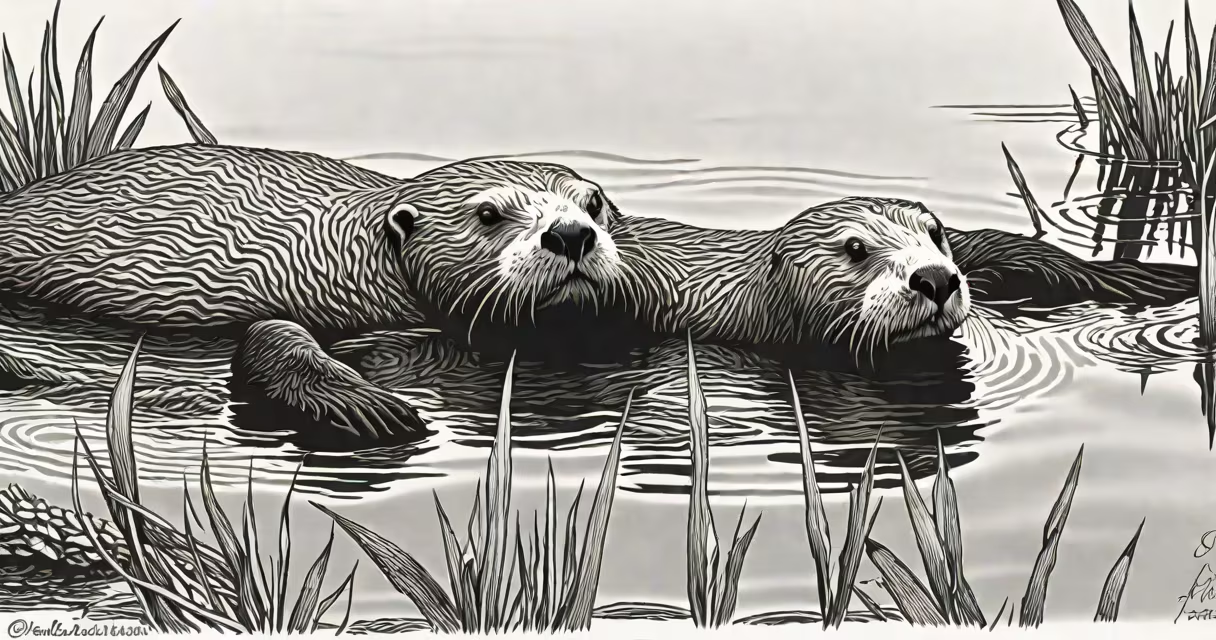
The sea otter is a marine mammal native to the Pacific coast of North America, with a critical population inhabiting the waters of Monterey Bay, California, within the United States. This species plays a central role in maintaining the balance of nearshore ecosystems through its feeding habits and ecological influence.
Sea otters live in shallow coastal waters, typically within 100 meters of shore, where they forage for invertebrates such as sea urchins, abalone, crabs, and clams. They use rocks to crack open shells while floating on their backs-a behavior unique among marine mammals. Their dense fur, the thickest of any animal, provides insulation in cold water, eliminating the need for blubber. A single otter can have up to 1 million hairs per square inch.
Monterey Bay hosts one of the most intensively studied sea otter populations in the world. The area's rich kelp forests provide shelter and food, forming a complex web of life dependent on otter predation. Without otters, sea urchin populations explode, devouring kelp and transforming lush underwater forests into barren "urchin barrens." This changing was confirmed in long-term research conducted by the Stanford University Hopkins Marine Station and the National Park Service.
Sea otters are classified as a keystone species because their impact on system structure far exceeds their biomass. By consuming large numbers of sea urchins, they prevent overgrazing of kelp, which serves as habitat and food for hundreds of fish, invertebrate, and bird species. Kelp forests also sequester carbon dioxide-up to 15 times more per hectare than tropical rainforests.
A 2016 study published in *Ecological Applications* quantified this effect: areas with healthy otter populations had kelp biomass 10 times greater than those without. In Monterey Bay, researchers observed that otter recolonization after decades of absence led to a 70% increase in kelp cover within five years. This recovery supported higher fish diversity and improved resilience to ocean warming events.
One notable example occurred in the 1980s when otters began returning to the northern part of Monterey Bay after near-extinction due to 18th- and 19th-century fur trade. Their reappearance coincided with measurable improvements in local fisheries and tourism revenue. The Monterey Bay Aquarium, located in Cannery Row, documented this resurgence through long-term monitoring and public education programs.
There are two distinct populations of sea otters in California: the southern and northern populations. The southern group, centered around Santa Barbara County, has faced persistent challenges including disease, pollution, and shark attacks. The northern population, which includes Monterey Bay, is more stable and genetically diverse.
| Population | Range | Estimated Size (2023) | Key Threats |
|---|---|---|---|
| Southern | From Point Conception to San Diego | ~2,700 | Shark predation, oil spills, disease |
| Northern | From Point Arena to Big Sur | ~3,200 | Pollution, entanglement, climate stress |
Many assume sea otters are aggressive or dangerous to humans. In reality, they are shy and avoid contact. Encounters are rare, and no verified incident of a wild sea otter attacking a human has occurred. Their primary defense is fleeing into deeper water.
Another misconception is that otters are always seen in groups. While they may rest in rafts-sometimes numbering in the hundreds-their social structure is loose. Most individuals are solitary except during mating or mother-cub pairs. A raft observed off the coast of Point Lobos in 2021 contained 142 otters, recorded by researchers using drone surveys.
Some confuse sea otters with river otters, which inhabit freshwater systems and are smaller, more agile, and less reliant on kelp. River otters lack the thick fur and diving adaptations of sea otters. The two species differ in diet, behavior, and habitat. Sea otters cannot survive in low-salinity environments.
In 2019, I observed a female sea otter in Monterey Bay using a rock to open a mussel while floating near the mouth of Elkhorn Slough. She held the shell against her chest, cracked it with precision, and consumed the meat-all without surfacing for air. The entire sequence lasted under 90 seconds. This behavior, though common, remains astonishing due to the cognitive and motor skills required.
Conservation initiatives focus on reducing mortality from boat strikes, fishing gear entanglement, and exposure to pathogens from runoff. The U.S. Fish and Wildlife Service lists the southern sea otter as threatened under the Endangered Species Act. Recovery plans include habitat protection, public awareness campaigns, and rescue operations by facilities like the Marine Mammal Center in Sausalito.
Sea otter Monterey Bay California United States exemplifies how a single species can influence entire ecosystems. Their survival depends on sustained environmental stewardship, scientific monitoring, and public engagement. Protecting them isn't just about saving a charismatic animal-it's about preserving the health of coastal oceans.