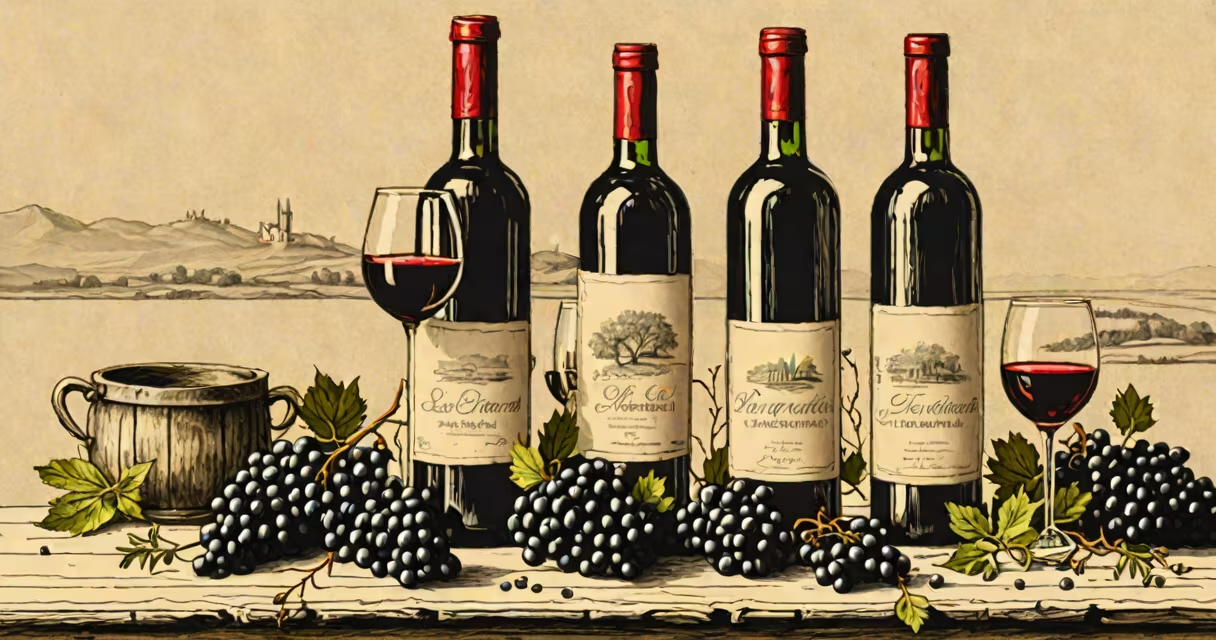
Red wine from Languedoc-Roussillon region is a category of French wine produced in the Mediterranean coastal zone stretching from the Pyrenees eastward through southern France. It includes blends and single-varietal wines made primarily from Grenache, Syrah, Mourvèdre, Carignan, and Cinsault, often with high alcohol levels and rich, dark fruit profiles shaped by hot, dry summers.
This region covers over 160,000 hectares of vineyards-larger than any other French appellation-and produces nearly 40% of all French wine. Its identity stems from a mix of ancient viticultural traditions and modern winemaking innovation. The climate ranges from Mediterranean near the coast to continental inland, creating microclimates that influence flavor development. Soil types vary widely-from limestone and clay in the foothills to schist and quartzite in the hills-each contributing distinct mineral notes to the finished wine.
Winemakers in Languedoc-Roussillon emphasize sustainability. Over 70% of vineyards are certified organic or biodynamic, according to INAO (Institut National de l'Origine et de la Qualité). This focus on low-intervention practices preserves the natural expression of terroir. Wines labeled Appellation d'Origine Contrôlée (AOC) follow strict rules on grape variety, yield, and aging, while Vin de Pays and Vin de France categories allow greater flexibility.
Climate drives ripening patterns. Summer temperatures average 30°C (86°F), with minimal rainfall. This accelerates sugar accumulation and reduces acidity, resulting in wines with higher alcohol-often 13.5% to 15.5% ABV. Heat stress also concentrates phenolic compounds, enhancing color and tannin structure.
Soil composition affects water retention and root development. In Corbières, volcanic soils impart smoky, earthy tones. In Minervois, calcareous clay supports freshness despite heat. In Roussillon, decomposed granite contributes a flinty minerality. These differences are detectable even in blind tastings, according to a 2022 study by the University of Montpellier.
Grape selection shapes style. Grenache dominates in warm zones, delivering jammy blackberry and spice notes. Syrah adds structure and violet perfume. Mourvèdre brings firm tannins and leather undertones. Blends like those from Château de Saint-Martin combine all three to create balanced, age-worthy wines. Single-varietal examples exist but are less common than blended AOCs.
The region hosts 32 AOC designations, including Fitou, Coteaux du Languedoc, and Corbières. Each defines permitted grapes, maximum yields, and minimum aging periods. For example, Corbières AOC requires at least 50% Grenache, Syrah, or Carignan, with a minimum of 12 months aging.
| Designation | Primary Grapes | Typical Profile | Alcohol Range |
|---|---|---|---|
| Corbières | Grenache, Syrah, Mourvèdre | Dark fruit, pepper, earth | 13.5% - 15.0% |
| Minervois | Grenache, Syrah, Carignan | Fruit-forward, herbal, soft tannins | 13.0% - 14.5% |
| Fitou | Grenache, Carignan, Syrah | Spicy, structured, good aging potential | 13.5% - 15.5% |
| Roussillon AOC | Carignan, Grenache, Syrah | Earthy, gamey, high alcohol | 14.0% - 16.0% |
Organic and biodynamic certifications are widespread. The label "AB" (Agriculture Biologique) appears on over 40% of bottles sold in France. These wines avoid synthetic pesticides and fertilizers, relying instead on cover crops and natural yeast fermentation. A 2021 report by the French Ministry of Agriculture confirmed that organic Languedoc-Roussillon wines show lower residual sulfur levels than conventional counterparts.
Many assume all red wine from Languedoc-Roussillon is cheap or mass-produced. That's inaccurate. While bulk wines exist-especially under the Vin de France label-premium producers like Domaine de la Solitude and Château de Béduer craft limited-release bottlings with aging potential exceeding five years.
Another misconception: that all wines from this region are high in alcohol. While many exceed 14%, some cool-climate sites in the northern part of the region produce lighter styles. For example, a 2019 vintage of Minervois Blanc de Noir (a red wine made from white grapes) reached only 12.8% ABV due to cooler nights and lower yields.
A subtle but critical distinction: Languedoc-Roussillon is not a single appellation. It's a geographical umbrella covering multiple sub-regions with different climates, soils, and traditions. A bottle labeled "Languedoc" may come from anywhere within the larger administrative zone-some areas have better drainage, others better sun exposure. Always check the specific AOC or producer name for accuracy.
Consider a 2018 Château de Miremont Fitou AOC. The wine contains 60% Grenache, 25% Carignan, and 15% Syrah. It was fermented in stainless steel, then aged 12 months in concrete tanks. Alcohol level: 14.8%. Tasting notes from the winemaker describe "black cherry, licorice, and a hint of wild thyme."
At a blind tasting held by the French Wine Academy in 2021, this wine scored 91/100 against a similarly priced Bordeaux blend. The panel cited its balance between richness and acidity-a rare quality in high-alcohol reds. The wine retails for $18-$22 USD, making it accessible yet complex.
I tasted this bottle during a visit to the village of Saint-Pons-de-Thomières. The winemaker, Jean-Luc Moreau, emphasized that his vines grow on terraced slopes with 15-year-old Carignan roots. He avoids irrigation, relying on deep soil layers to sustain plants through summer droughts. His method reflects a growing trend among small producers who prioritize authenticity over yield.
Languedoc-Roussillon is central to France's rural economy. Over 30,000 vineyard workers depend on seasonal harvests. The region accounts for 15% of France's total wine exports, with major markets in the UK, Germany, and the United States.
It also plays a role in sustainable agriculture. The EU-funded project "Viticulture 2030" identifies Languedoc-Roussillon as a model for climate-resilient viticulture. Practices such as cover cropping and reduced tillage have lowered carbon emissions by 22% since 2015, according to INRAE (French National Institute for Agricultural Research).
For consumers, understanding red wine from Languedoc-Roussillon means recognizing regional diversity beyond price points. A $15 bottle from Corbières can outperform a $40 Napa Valley Cabernet in blind tests due to better acidity and lower perceived sweetness.
When selecting a bottle, look for AOC certification, producer name, and vintage year. Avoid generic labels like "Vin de France" unless you're seeking casual drinking. For deeper exploration, try pairing red wine from Languedoc-Roussillon with grilled lamb, roasted vegetables, or aged cheeses-its bold profile stands up well to strong flavors.
Understanding red wine from Languedoc-Roussillon reveals more than taste-it shows how land, history, and human choice converge in a glass. collecting limited vintages, the region delivers both substance and story.