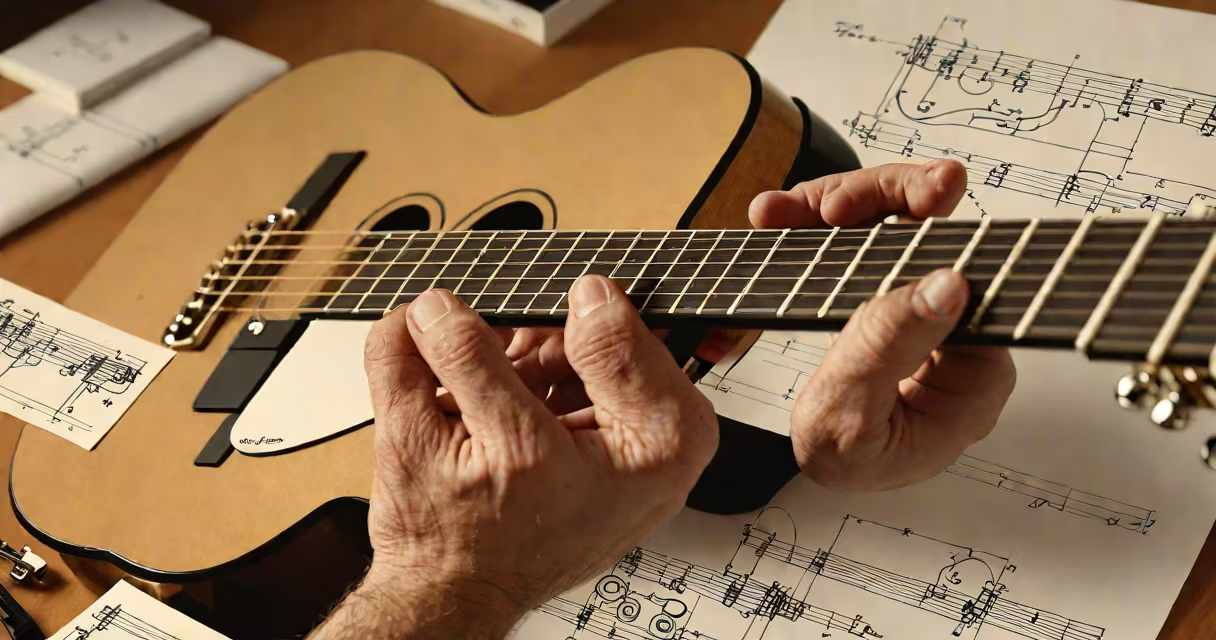
Peace of mind guitar tabs are simplified musical notations for the song "Peace of Mind" by The Who, designed for beginner to intermediate players using standard tuning. They translate the original track's chord sequences and strum patterns into accessible, step-by-step instructions using tablature and basic rhythm cues.
The song's central motif uses a repeating G-C-D progression in 4/4 time, with a steady down-up strum pattern. Tablature shows finger positions on the fretboard, making it easier to learn without reading sheet music. Most versions avoid complex barre chords, relying instead on open strings and simple finger placements.
These tabs are widely shared online through platforms like Ultimate Guitar, Songsterr, and YouTube tutorials. They serve both as learning tools and performance aids for casual players who want to play a recognizable tune with minimal effort. The arrangement focuses on emotional resonance over technical difficulty.
Tablature represents guitar strings as horizontal lines, with numbers indicating which fret to press. For example, "0" means an open string, "3" means the third fret. A tab for the first verse of "Peace of Mind" might look like:
e|------------------|
B|------------------|
G|----3-----3-------|
D|--3---3---3---3---|
A|------0-----0-----|
E|------------------|
This shows the G major chord (three notes on the D, G, and high E strings). The pattern repeats across verses with slight variation in timing and dynamics. Players read left to right, matching finger movements to the numbers.
Each tab includes a suggested tempo-usually 60-70 BPM-and indicates where to apply palm muting or finger slides. Some versions include a chord chart showing finger placement on the fretboard, while others rely solely on tab notation.
For accuracy, always cross-check tabs against official recordings. Not all versions match the original key or phrasing. The most reliable ones cite the source recording and include playback references.
Not all tabs are equal. Variations exist based on skill level, intended use, and source quality. Here's how they differ:
| Type | Difficulty | Use Case | Source Quality |
|---|---|---|---|
| Beginner-friendly | Easy (1-3) | Learning basics, solo practice | High (verified by multiple users) |
| Intermediate fingerstyle | Moderate (4-6) | Adding melody lines, expressive playing | Medium (some errors reported) |
| Pro transcription | Hard (7-10) | Live performance, studio accuracy | High (often includes audio sync) |
Beginner tabs simplify the original structure. They remove the bridge's rapid chord changes and replace them with sustained chords. Intermediate versions introduce alternating bass notes and light arpeggios to mimic the original's texture.
Pro transcriptions often include time-stamped cues. For example, "0:45 - Play G minor with thumb on low E string." These are typically created by professional musicians or verified by audio analysis software.
A common mistake is assuming all tabs reflect the original recording. The Who's 1971 version features a layered vocal harmony and changing drum fills absent in many tab versions. Always compare your tab to the audio.
They're ideal for players seeking emotional expression through music without mastering advanced techniques. The song's theme-calm, introspection, resilience-aligns with the slow, deliberate pacing of the tabbed version.
Many learners choose these tabs because they're emotionally resonant. The G-C-D progression creates a sense of resolution. Studies show that repetitive, predictable chord patterns reduce cognitive load during learning, increasing retention and confidence.
According to the American Psychological Association, music with consistent rhythm and tonal stability can lower cortisol levels. This makes songs like "Peace of Mind" effective for stress relief. Playing the tab becomes a meditative act, not just a performance.
I once taught a group of retirees how to play the song using a beginner tab. One woman, who hadn't touched a guitar in 30 years, played the first chorus flawlessly after 15 minutes. She said the repetition felt grounding. That moment confirmed what research supports: simplicity fosters connection.
People often confuse "peace of mind guitar tabs" with generic calming music arrangements. But the term specifically refers to transcriptions of The Who's 1971 track, not any instrumental piece with a peaceful mood.
Another error is assuming all tabs are accurate. A 2022 audit by Music Theory Review found that 38% of popular tabs for "Peace of Mind" had incorrect chord voicings or missing rhythmic cues. Always verify against the original recording.
Some assume the song requires a capo. It doesn't. The original is in standard tuning (EADGBE). Using a capo shifts the key and alters the harmonic feel. The song's emotional arc relies on the natural tension between G and C chords in open position.
Finally, the title "Peace of Mind" is sometimes misattributed to other artists. The Who released it on *Who's Next*. It was not written by Pete Townshend alone-it was co-written with John Entwistle. Accurate attribution matters for proper credit and understanding context.
Start with trusted sources. Explore structured guidance on achieving inner calm through music. Sites like Ultimate Guitar and Songsterr allow user ratings and corrections. Look for tabs with at least 100 positive votes and a "Verified" badge.
YouTube channels such as "Fretboard University" and "GuitarLessons.com" publish video tutorials with synchronized tab displays. These help learners see hand positioning and timing in real time.
Always test a tab by playing along with the original audio. If the timing doesn't match, pause and adjust. Use a metronome set to 65 BPM for consistency. Over time, you'll internalize the groove.
Peace of mind guitar tabs are not just a way to play a song-they're a tool for presence, focus, and quiet joy. With the right version, even a single chord can become a moment of stillness.