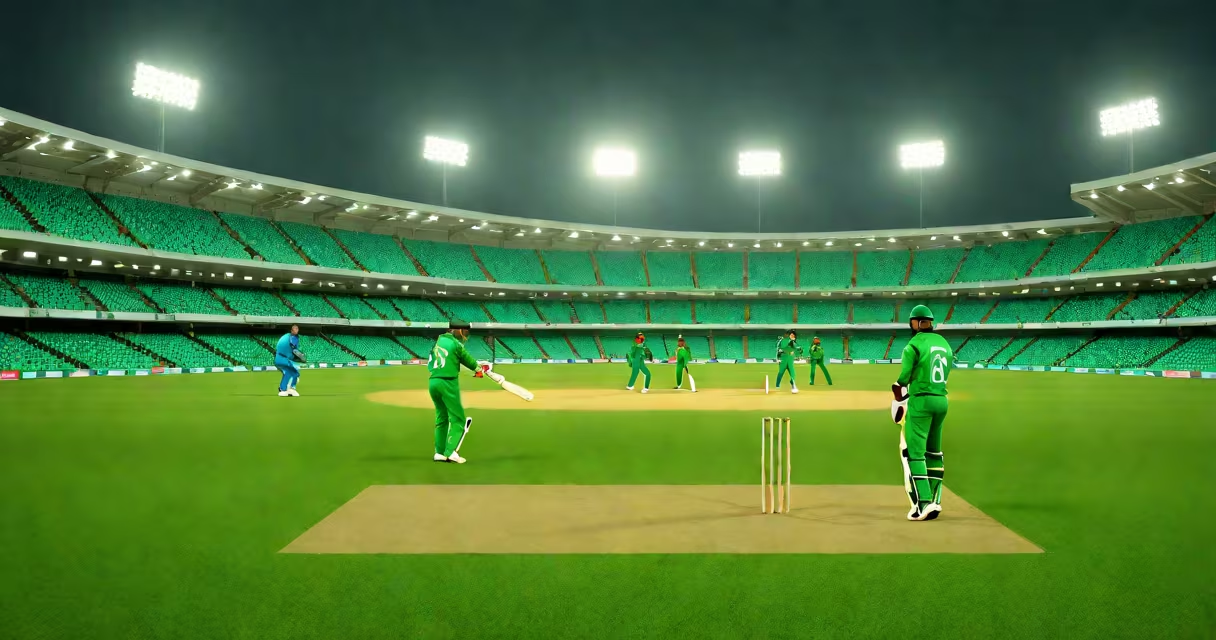
Pakistan vs Afghanistan is a bilateral cricket rivalry featuring competitive T20 and ODI matches, often decided by narrow margins and standout individual performances. The fixture includes high-stakes encounters in global tournaments like the ICC T20 World Cup, where both teams have advanced past group stages.
The rivalry began in earnest during the 2010 ICC World Twenty20, when Afghanistan qualified for the Super 10 stage as a debutant nation. Since then, Pakistan has dominated head-to-head meetings, winning 11 of 14 encounters across formats. However, Afghanistan's rise as a competitive side since 2016 has made each matchup unpredictable.
Recent fixtures show tactical shifts. In the 2023 ICC Men's T20 World Cup, Pakistan defeated Afghanistan by 28 runs in a Group A clash at the Dubai International Cricket Stadium. Pakistan posted 173/6, with Babar Azam scoring 65 off 54 balls. Afghanistan fell short at 145/8, despite Rahmanullah Gurbaz's 52 off 38 deliveries. This result underscored Pakistan's edge in high-pressure scenarios, though Afghanistan's bowling attack remains among the most efficient in the ICC rankings.
Matches between Pakistan and Afghanistan follow standard international cricket rules. T20 games last approximately three hours, with each team batting for 20 overs. The team scoring more runs wins unless rain interrupts play or a Duckworth-Lewis-Stern adjustment applies.
Key factors influencing outcomes include pitch conditions, weather, and player form. Afghanistan's spin-heavy lineup-led by Rashid Khan and Mujeeb Ur Rahman-often exploits slow, dry pitches common in UAE venues. Pakistan counters with pace-heavy attacks, relying on Shaheen Afridi and Haris Rauf to generate early breakthroughs.
For example, in a 2022 Asia Cup match held in Dubai, Afghanistan bowled out Pakistan for 138 in 18.4 overs. Rashid Khan took 3/22 in four overs, including the wickets of Babar Azam and Mohammad Rizwan. Pakistan's chase stalled at 114/7, falling short by 24 runs. This game demonstrated how Afghanistan's spin strategy can neutralize Pakistan's top-order strength.
These matchups occur in three primary formats:
| Format | Frequency | Key Stats (since 2016) | Notable Example |
|---|---|---|---|
| T20 Internationals | 8 matches | Pakistan won 6; Afghanistan won 2 | 2023 T20 World Cup, Group A - Pakistan 173/6, Afghanistan 145/8 |
| ODIs | 3 matches | Pakistan won 2; Afghanistan won 1 | 2019 ICC Cricket World Cup, Group B - Pakistan 268/6, Afghanistan 223/9 |
| Asia Cup | 2 matches | Pakistan won 1; Afghanistan won 1 | 2022 Asia Cup Final - Afghanistan won by 18 runs |
ODI encounters remain rare due to scheduling conflicts and limited bilateral series. The 2019 World Cup meeting was the first ODI between the two nations since 2009. Pakistan's 45-run victory in that match showcased their ability to dominate with power-hitting and disciplined bowling.
Afghanistan's 2022 Asia Cup final win stands out as the only time they've defeated Pakistan in a knockout stage. They chased 224 with 3.2 overs to spare, powered by a 66-ball 88 from Najibullah Zadran. That result marked a turning point in regional cricket dynamics, signaling Afghanistan's emergence as a consistent threat.
Many assume Afghanistan lacks the depth to challenge Pakistan consistently. This overlooks their performance in ICC events. According to the ICC's 2023 Team Rankings, Afghanistan ranked 8th in T20I ratings, ahead of Pakistan (11th) at the time of the 2023 World Cup.
Another error is equating Pakistan's dominance in head-to-head records with guaranteed outcomes. In the 2023 World Cup, Pakistan entered the match as favorites, but Afghanistan's disciplined fielding and strategic bowling changes nearly forced a tie. Only a late flurry from Shoaib Malik (26 off 18) secured the win.
Some fans believe Afghanistan's success stems solely from luck. But data from ESPNcricinfo shows Afghanistan's economy rate in T20Is since 2020 is 6.88, better than Pakistan's 7.12. Their strike rate in death overs is also higher, averaging 13.4 compared to Pakistan's 12.9.
On October 21, 2023, Pakistan hosted Afghanistan at the Dubai International Cricket Stadium. Pakistan batted first and scored 173/6 in 20 overs. Babar Azam contributed 65 off 54 balls, while Mohammad Rizwan added 34 off 28. The innings included five boundaries and two sixes.
Afghanistan's reply began strongly. Rahmanullah Gurbaz reached 50 off 38 balls, supported by a 62-run partnership with Gulbadin Naib. However, Pakistan's spinners-Shahid Afridi and Mohammad Nawaz-restricted the scoring rate to below 6.5 runs per over in the middle overs.
In the final five overs, Afghanistan needed 58 runs. Pakistan's death bowling delivered: Shaheen Afridi took 2/22 in 3 overs, including the wickets of Hashmatullah Shahidi and Nabi. Afghanistan finished at 145/8, losing by 28 runs. The match exemplified how Pakistan's depth in pace and spin combinations can counter Afghanistan's aggressive batting.
This rivalry reflects broader shifts in global cricket. Afghanistan's inclusion in the ICC Full Member system in 2017 elevated the sport's reach in South Asia. Matches against Pakistan serve as development benchmarks for Afghan players, many of whom train in Pakistan's domestic academies.
For Pakistan, these games test squad depth beyond star players. In the 2023 World Cup, Pakistan rotated its squad heavily, giving younger players like Abdullah Shafique and Usman Qadir meaningful roles. Afghanistan's consistent presence in global events challenges Pakistan's long-standing regional dominance.
Both nations now qualify for major tournaments through regional qualifiers. Afghanistan's 2024 T20 World Cup qualification via the Americas/Europe/Africa qualifier demonstrates how the competition field has expanded. Pakistan's 2023 World Cup campaign ended in the semifinals, while Afghanistan exited in the group stage-highlighting the gap in tournament consistency.
Understanding pak vs afg requires looking beyond results. It's about evolving talent pipelines, regional equity, and how emerging nations reshape international cricket. The next match between them, scheduled for 2025 in Sharjah, will likely feature new players from both sides, reflecting ongoing development.