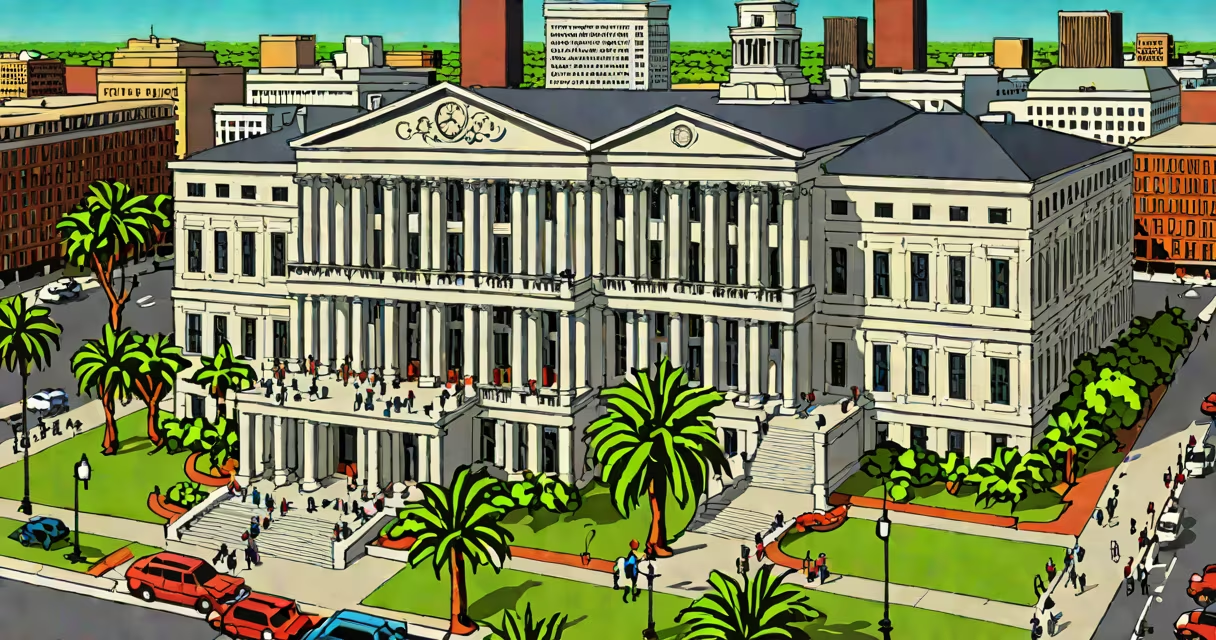
New Orleans City Council meetings are regularly scheduled public sessions where elected council members deliberate on city legislation, approve budgets, and address community concerns. These gatherings occur at City Hall and are open to residents who wish to observe or participate during public comment periods.
Council meetings follow a formal agenda approved in advance. Items include proposed ordinances, budget allocations, zoning changes, and appointments to city boards. Council members debate each item, then vote publicly. A majority vote passes measures. Meetings are recorded and posted online within 24 hours.
Attendance is unrestricted. Residents may attend in person or watch live streams via the city's official website. The public has two minutes per speaker during the comment period, which occurs before voting begins. Comments must relate to agenda items and remain respectful. Council members do not respond to individual remarks during the session.
Each meeting begins with a roll call and approval of the previous meeting's minutes. The council then proceeds through the agenda in order. For each item, a council member introduces the proposal, followed by discussion among members. After debate, a vote is taken. Results are announced immediately.
Items requiring public input-such as rezoning requests or new business licenses-are often preceded by a hearing. During these, citizens may testify under oath. Testimony is documented and included in the official record. The council may request additional staff reports before finalizing decisions.
Meetings are held weekly on Tuesdays and Thursdays at 10:00 a.m. unless otherwise announced. Special sessions may be called for urgent matters. All agendas and supporting documents are published at least 48 hours before the meeting on the city's official calendar page.
The council holds several distinct types of gatherings, each serving a specific function:
| Type | Purpose | Frequency | Example |
|---|---|---|---|
| Regular Session | Debate and vote on new legislation, budget amendments, and policy changes. | Weekly (Tuesdays/Thursdays) | Voting on a proposed increase in property taxes for street maintenance. |
| Work Session | Informal discussion of upcoming proposals. No votes are taken. | Biweekly | Reviewing draft language for a new noise ordinance affecting nightlife districts. |
| Special Session | Emergency or time-sensitive issues not covered in regular sessions. | As needed | Addressing emergency funding after a major storm disrupts water service. |
Only regular sessions result in binding decisions. Work sessions inform future action but lack authority. Special sessions require a formal motion to convene and must be announced at least 24 hours in advance.
Regular City Council meetings take place in the Council Chambers on the second floor of New Orleans City Hall, located at 1400 Perdido Street. The room seats 120 people. Overflow seating is available in adjacent conference rooms, which stream the meeting live.
Virtual attendance is permitted through the city's webcast platform. Viewers can submit questions via a live chat feature monitored by staff. Questions are reviewed and passed to the presiding officer if relevant to ongoing discussion.
Some residents assume council members decide issues in private. This is incorrect. All deliberations are public. Even closed-door executive sessions-rare and legally restricted-are subject to strict oversight. The Louisiana Public Records Act mandates disclosure of all proceedings unless exempted by law.
Another misconception is that public comment leads to immediate action. While comments are read aloud and logged, they do not influence votes directly. Council members consider feedback when drafting amendments, but final decisions rest solely on legal analysis and policy impact.
A third error involves confusing the City Council with the Mayor's Office. The mayor proposes most legislation but cannot pass laws unilaterally. The council must approve all ordinances. For example, the 2023 expansion of the city's bike lane network required both a mayoral proposal and council ratification.
I attended a regular session in March 2023 to observe the process firsthand. The chamber was filled with residents, journalists, and advocacy group representatives. During the public comment period, a homeowner from the Lower Ninth Ward spoke about flooding risks in her neighborhood. Her testimony was entered into the record and later referenced in a committee report on drainage infrastructure.
After the meeting, I reviewed the official minutes and found her name listed under "Public Comment." The council did not act on her request during that session, but it contributed to a subsequent study on flood mitigation strategies.
Unlike state legislative bodies, the New Orleans City Council operates under a charter approved by voters. This gives it broad authority over local affairs such as zoning, public safety, and transportation. The council has 17 members-13 district representatives and 4 at-large members elected citywide.
One non-obvious fact: the council can override the mayor's veto on certain measures. This power applies only to ordinances related to land use, public contracts, and capital improvements. The override requires a two-thirds vote. In 2021, the council exercised this power to approve a redevelopment plan for the Central Business District despite the mayor's opposition.
Another distinction: meetings are not advisory. Council members are legally bound to vote on all agenda items. They cannot skip a vote or defer action indefinitely. The city clerk maintains a log of all votes, including abstentions.
For reference, the Louisiana State Legislature meets in Baton Rouge and handles state-level laws. The City Council governs only New Orleans. Its jurisdiction does not extend beyond city limits.
Understanding new orleans city council meetings reveals how local democracy functions in practice. These sessions are not symbolic-they produce binding decisions that affect housing, safety, and urban development. Residents who attend gain insight into how policy is shaped and can contribute meaningfully through structured public input.