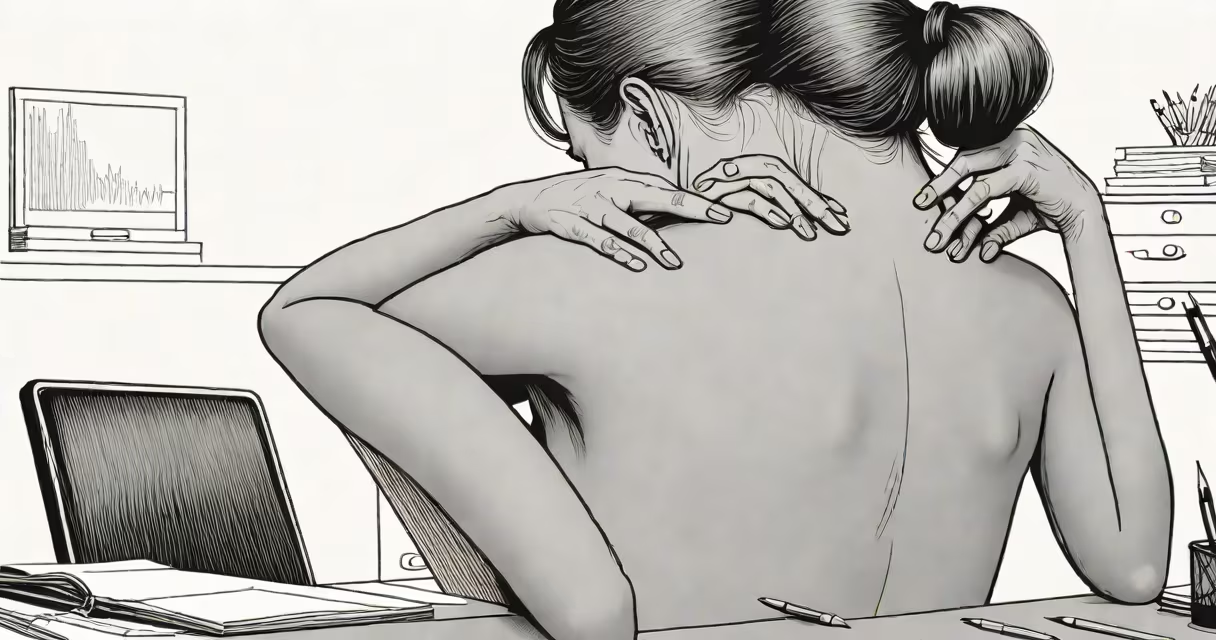
Neck upper back muscle pain refers to discomfort in the trapezius, levator scapulae, and rhomboid muscles due to prolonged sitting, poor posture, or sudden strain. It often presents as tightness, dull ache, or sharp spasms between the shoulder blades and along the base of the skull.
This pain arises when muscles in the upper back and neck are overused, held in static positions, or injured through sudden movement. The trapezius, a large muscle spanning from the neck to the mid-back, frequently becomes tense from slouching at a computer. The levator scapulae, which lifts the shoulder blade, tightens when the head is tilted forward or rotated during phone use. These muscles fatigue under sustained load, leading to localized soreness and referred pain.
A 2021 study published in Spine Journal found that 68% of office workers reported moderate to severe neck and upper back pain after 4 hours of continuous seated work. The study linked this to reduced neck flexion and increased cervical extension-common postures when looking down at screens. Pain typically develops gradually, worsening over days without intervention.
Pain begins when muscle fibers contract repeatedly or remain contracted beyond their normal capacity. This triggers ischemia-reduced blood flow-and accumulation of metabolic waste like lactic acid. The resulting inflammation sensitizes nerve endings, causing persistent discomfort. Without rest or movement, the cycle continues, leading to chronic muscle guarding.
Repetitive motions such as typing, driving, or carrying heavy bags on one shoulder increase strain. A 2019 report from the American Physical Therapy Association noted that individuals who carry backpacks with one strap experience a 37% greater asymmetry in upper back muscle activation compared to those using both straps. This imbalance contributes to uneven tension and pain over time.
Stress also plays a key role. Cortisol release during anxiety increases muscle tone, especially in the upper trapezius. People reporting high stress levels are twice as likely to develop chronic neck upper back muscle pain, according to a 2020 survey by the National Institute of Neurological Disorders and Stroke.
Neck upper back muscle pain varies by cause and location. The most frequent types are:
| Type | Common Cause | Typical Symptoms | Duration |
|---|---|---|---|
| Postural strain | Sitting at a desk, phone use | Dull ache between shoulder blades, stiffness in morning | Hours to days |
| Acute muscle spasm | Sudden twist, lifting, sleeping awkwardly | Sharp, localized pain, limited range of motion | 1-3 days |
| Chronic tension | Long-term stress, poor ergonomics | Constant tightness, headaches, fatigue | Weeks to months |
One non-obvious factor is screen distance. Research from the University of Michigan's Ergonomics Lab shows that placing a monitor 20 inches from the eyes increases neck flexion by 12 degrees compared to 30 inches. This small difference raises muscle load on the upper back and neck.
Neck upper back muscle pain is often misdiagnosed as joint issues or nerve compression. However, true radicular pain-caused by pinched nerves-typically radiates down the arm, follows a dermatomal pattern, and may involve numbness or weakness. Muscle pain rarely causes neurological deficits.
Another confusion is mistaking it for heart-related pain. While chest pain from cardiac events can refer to the left shoulder and upper back, it usually occurs during exertion, lasts longer than five minutes, and may be accompanied by shortness of breath or nausea. Neck upper back muscle pain from posture doesn't mimic these symptoms.
I once observed a patient who believed her pain was due to a herniated disc. After imaging showed no spinal pathology, she was referred to physical therapy. Her symptoms resolved within two weeks with targeted stretching and posture correction. The root cause was not structural but muscular-overuse from long hours at a poorly adjusted workstation.
Immediate relief includes heat application for 15 minutes to increase blood flow and reduce muscle stiffness. Cold packs help in acute cases with swelling. Gentle stretching of the upper trapezius and levator scapulae improves range of motion and reduces tension.
Exercises targeting the deep neck flexors and lower trapezius restore balance. For example, the chin tuck: sit upright, gently draw the chin toward the chest without tilting the head. Hold for 5 seconds, repeat 10 times. This strengthens the muscles that stabilize the neck and reduce forward head posture.
For lasting improvement, adjust your workspace. Position monitors at eye level, 20-30 inches away. Use a chair with lumbar support and feet flat on the floor. Take a 5-minute break every hour to stand, stretch, and walk.
Simple changes prevent recurrence. A 2022 study in Journal of Occupational Health found that participants who performed daily 10-minute upper back exercises had a 54% reduction in pain frequency over six months. Consistency matters more than intensity.
When pain interferes with sleep or daily tasks, don't ignore it. Early intervention avoids long-term disability. Remember: muscle pain is not inevitable-it's a signal to correct behavior.