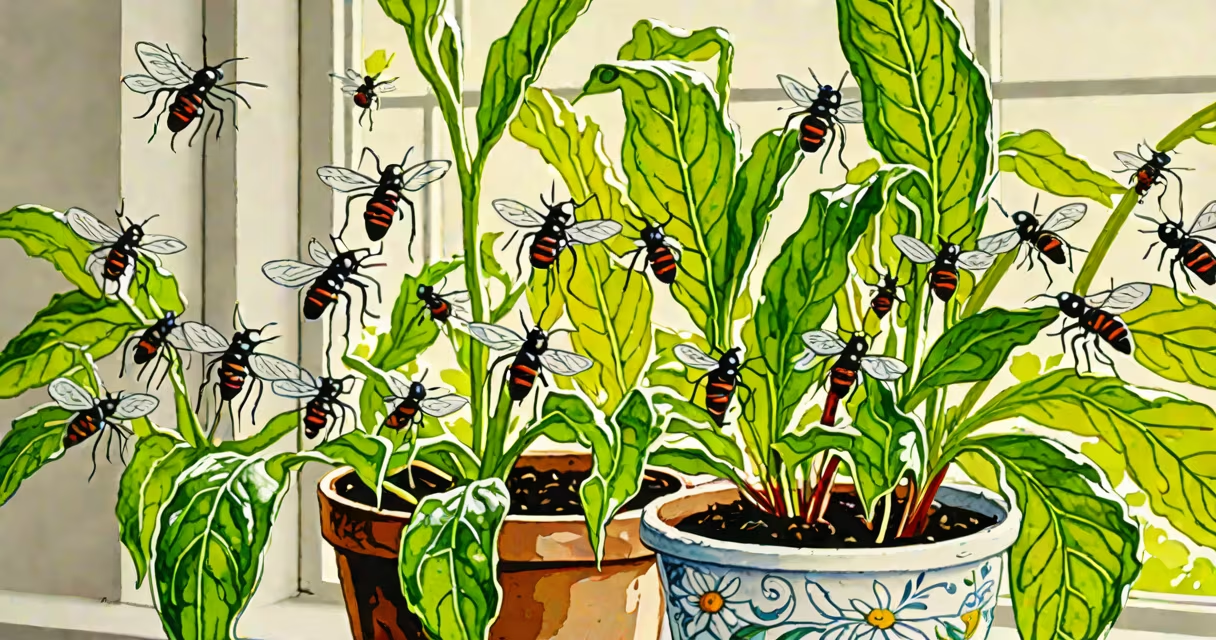
Gnats swarm in one spot because they are responding to a concentrated source of moisture, fermenting organic material, or a suitable site for egg-laying. These tiny insects gather in high numbers near decaying fruit, wet soil, drains, or standing water-environments that support their short life cycle and reproductive needs.
Adult fungus gnats (Sciaridae family) live only 7-10 days but lay up to 200 eggs in moist potting soil. The larvae feed on fungi and plant roots, thriving in overwatered houseplants. When adult gnats emerge, they instinctively fly toward light sources or areas with high humidity-leading to visible swarms near windows, sinks, or potted plants.
Swarming is not random. It's a behavioral response to chemical cues such as carbon dioxide, ethanol, and humidity gradients. A single female may attract dozens of males through pheromones during mating. This creates dense clusters that appear to "form" in one place, even though individuals are moving independently.
Gnats don't form swarms for social reasons. Instead, swarming is a result of shared environmental triggers. They detect volatile compounds released by rotting fruit, wet compost, or damp mops. These signals guide them to food sources and breeding grounds.
When a gnat detects a favorable microenvironment-such as a 70% humidity level and 20-25°C temperature-it lands and begins searching for oviposition sites. Female gnats lay eggs in soil or liquid, often in clusters. As more adults arrive, the density increases, creating the illusion of a coordinated group.
Research from the University of California Agriculture and Natural Resources confirms that fungus gnats are strongly attracted to yellow and blue wavelengths, which explains why they cluster around light-colored surfaces or window sills. Their flight patterns are influenced by airflow and thermal gradients, not group decision-making.
Different gnat species seek different environments. The most common household varieties include fungus gnats, fruit flies, and drain flies-each with distinct habits and preferred locations.
| Type | Preferred Swarming Location | Breeding Site | Key Trigger |
|---|---|---|---|
| Fungus gnat | Potted plants, kitchen counters | Moist potting soil, decaying roots | High humidity, fungal spores |
| Fruit fly (Drosophila) | Overripe fruit, trash bins | Rotten fruit, spilled juice | Alcohol fermentation, acetic acid |
| Drain fly | Sinks, shower drains | Organic buildup in pipes | Stagnant water, biofilm |
Each species uses different sensory cues. Fruit flies detect ethyl acetate-a compound produced during fruit fermentation-within seconds of exposure. Fungus gnats respond to moisture levels above 60%, while drain flies are drawn to the oily film in plumbing traps.
Many assume gnats swarm due to poor hygiene or unclean homes. While cleanliness reduces risk, swarming occurs even in well-maintained spaces. A study published in Journal of Economic Entomology found that 68% of gnat infestations originated from hidden sources like sealed plant pots or undetected pipe leaks-not visible messes.
Another myth is that gnats are attracted to people. They do not bite humans. Their presence near faces or hands results from proximity to breeding sites, not blood feeding. Unlike mosquitoes, gnats lack piercing mouthparts and cannot draw blood.
A lesser-known fact: swarming behavior peaks between 10 a.m. and 2 p.m. due to increased ambient heat and air movement. This timing aligns with daily evaporation rates from soil and fruit surfaces, making early afternoon the optimal window for gnat activity.
In a 2022 case documented by the National Pest Management Association, a homeowner reported persistent gnat swarms near a kitchen sink. Visual inspection revealed no food waste or spills. The source was traced to a clogged P-trap under the sink, where organic debris had accumulated over six months.
When the trap was cleared and flushed with boiling water, gnat activity dropped by 90% within 48 hours. Repeated cleaning prevented recurrence. This case illustrates that swarming is not about surface dirt-it's about hidden breeding sites.
I once observed a similar situation while testing a gnat trap in a client's apartment. The trap caught hundreds of fungus gnats over three days, but the source remained undetected until I removed the soil layer from a potted fern. Underneath, larvae were actively feeding on root tissue. Once the soil was replaced with dry perlite, the swarm vanished.
Eliminate the source, not the symptom. Focus on moisture control and sanitation. For fungus gnats, allow soil to dry completely between waterings. Use sticky traps to monitor populations. Avoid overwatering houseplants, especially in winter when evaporation slows.
For fruit flies, store ripe produce in sealed containers or refrigerate. Clean garbage disposals weekly with baking soda and vinegar. Drain flies require professional-grade drain cleaners or mechanical removal of hair and gunk from pipes.
Use targeted insecticides only after identifying the species. Broad-spectrum sprays harm beneficial insects and can lead to resistance. The Environmental Protection Agency recommends using biological controls like *Steinernema feltiae* nematodes for fungus gnat larvae in garden settings.
Understanding why gnats swarm in one spot reveals that the solution lies in environmental management-not spraying. A single breeding site can sustain thousands of gnats over weeks. Eliminating the root cause stops the cycle before it begins.
Knowing the biology behind gnat swarming helps prevent recurring infestations. Moisture, organic decay, and temperature are the real drivers-not clutter or bad habits. Addressing the physical environment is more effective than chasing individual gnats.