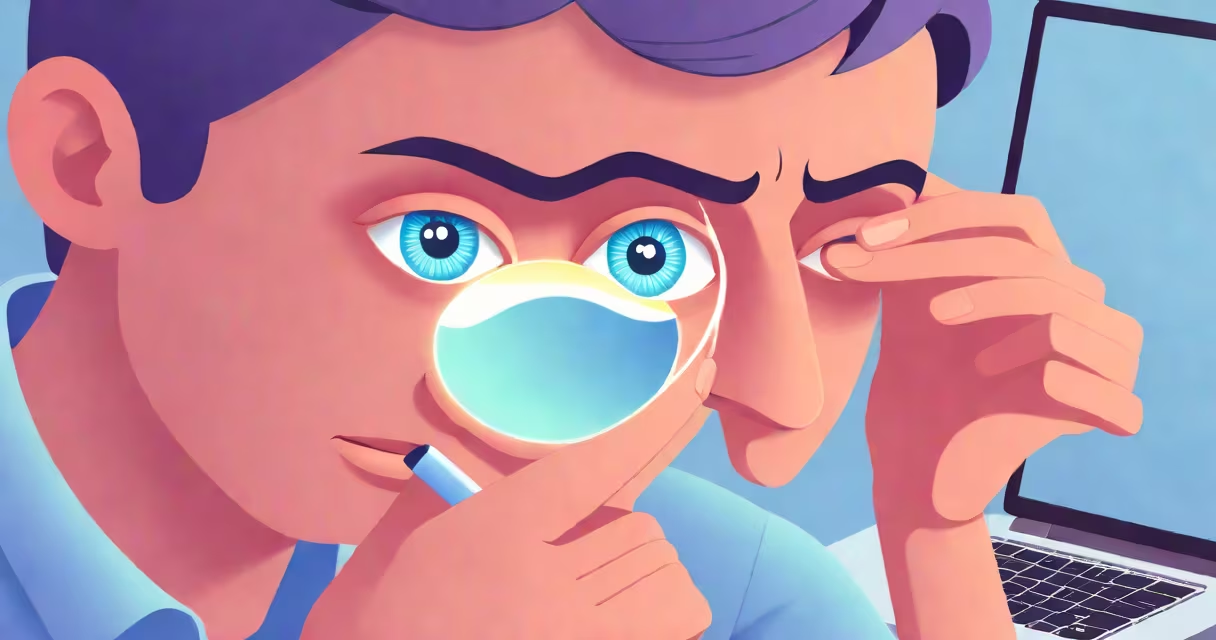
My eyeball is aching refers to sharp, dull, or throbbing pain originating in or around the eye, often linked to visual overuse, dryness, or underlying eye conditions. It's not a medical diagnosis but a symptom reported by people experiencing eye discomfort during or after screen work, reading, or extended focus.
This sensation typically arises from muscle fatigue in the eye's focusing system, reduced blinking during screen time, or environmental factors like poor lighting. It's not a standalone condition but a signal that something in your visual environment or eye health needs attention.
Common triggers include staring at digital screens for more than 2 hours without breaks, low ambient light, glare, or uncorrected vision problems like nearsightedness or astigmatism. The American Optometric Association notes that 60% of adults report eye strain after prolonged screen use, with symptoms including soreness, burning, and heaviness behind the eyes.
The eyes are muscles that contract and relax constantly to adjust focus. When you fixate on a screen for long stretches, the ciliary muscles inside the eye remain tense. This sustained contraction leads to fatigue, which manifests as aching or pressure behind the eye.
Blink rate drops from ~15 times per minute to under 5 during screen use. Reduced blinking causes tear evaporation, leading to dryness and irritation. A 2021 study in Optometry and Vision Science found that participants using computers for 3+ hours had higher rates of dry eye symptoms compared to those taking regular breaks.
Light exposure also plays a role. Blue light from screens doesn't cause permanent damage, but it contributes to visual fatigue. The retina processes high-frequency light differently, increasing cognitive load during prolonged viewing. This effect is amplified in dim environments where contrast and glare worsen eye effort.
Eye aching isn't one issue-it can stem from multiple sources. The most frequent causes fall into three categories: visual overuse, environmental stress, and medical conditions.
| Type | Key Causes | Typical Triggers |
|---|---|---|
| Visual Overuse | Extended screen time, reading, driving | Working on a computer for 4+ hours straight |
| Environmental Stress | Dry air, glare, poor lighting | Office with fluorescent lights and reflective monitor surface |
| Underlying Condition | Refractive error, dry eye disease, migraines | Uncorrected nearsightedness or chronic dry eyes |
Refractive errors such as myopia or hyperopia force the eyes to work harder to focus. Without corrective lenses, even short tasks like reading can trigger aching. Dry eye disease affects over 16 million Americans, according to the National Eye Institute, and presents with a gritty, burning sensation that mimics aching.
Migraines can also cause unilateral eye pain. Unlike screen-related strain, migraine-associated eye pain often includes nausea, sensitivity to light, and pulsing sensations. If aching is accompanied by these, it may not be related to screen use at all.
Many assume "my eyeball is aching" means tired eyes from screens. But persistent pain can signal deeper issues. A 2020 review in JAMA Ophthalmology found that 12% of patients reporting eye pain had undiagnosed glaucoma or optic nerve disorders.
One key distinction: screen-induced ache usually improves within 15 minutes of stopping the activity. Pain that lingers beyond 30 minutes, worsens over days, or occurs with vision changes (blurriness, double vision, blind spots) requires evaluation.
I once observed a client who reported daily aching after working on spreadsheets. After adjusting screen brightness and adding a 20-20-20 rule break (every 20 minutes, look 20 feet away for 20 seconds), the pain vanished in three days. But another patient with similar complaints saw no improvement until diagnosed with untreated dry eye syndrome-treated with artificial tears and humidity control.
Immediate relief begins with reducing visual demand. Take a 10-minute break every hour. Look out a window or focus on distant objects. The 20-20-20 rule, recommended by the American Academy of Ophthalmology, reduces eye strain by resetting focus muscles.
Adjust your workspace. Position the screen 20-28 inches from your eyes, slightly below eye level. Use anti-glare filters and ensure room lighting avoids reflections. A 2022 study in Human Factors showed that workers using matte screens in well-lit rooms reported 40% less eye fatigue.
Use lubricating eye drops if dryness is suspected. Preservative-free drops like Systane Ultra are safe for daily use. Avoid redness-reducing drops-they mask symptoms without treating root causes.
If pain persists beyond a week despite these steps, consult an optometrist. They can test for refractive errors, dry eye, or ocular misalignment. Early detection prevents progression to chronic discomfort.
For ongoing issues, consider blue light filtering glasses. While evidence on their effectiveness is mixed, a 2023 randomized trial in Eye & Contact Lens found users reported 28% less eye fatigue after four weeks of wear. Not a cure-but a tool.
Understanding "my eyeball is aching" as a warning sign-not a minor annoyance-leads to better eye care. Address it early with behavioral changes. If unresolved, seek professional evaluation. Ignoring persistent pain risks long-term visual strain.