Mini max ai is a recursive algorithm used in decision-making systems, particularly in two-player games like chess or tic-tac-toe, where one player seeks to minimize the maximum possible loss while the other seeks to maximize gain. It evaluates all possible moves to determine the optimal choice under adversarial conditions.
The algorithm operates by simulating every possible sequence of moves to a predefined depth, assigning scores to terminal positions based on game outcome-win, loss, or draw. It then propagates these scores upward through the decision tree, choosing moves that minimize the opponent's advantage and maximize its own. This process ensures a rational, rule-based response even in complex scenarios.
Developed in the 1950s as part of early artificial intelligence research, mini max ai remains foundational in game-playing software. Modern implementations often combine it with pruning techniques like alpha-beta pruning to reduce computation time. The algorithm is not limited to games-it applies to any situation involving opposing goals and sequential decisions.
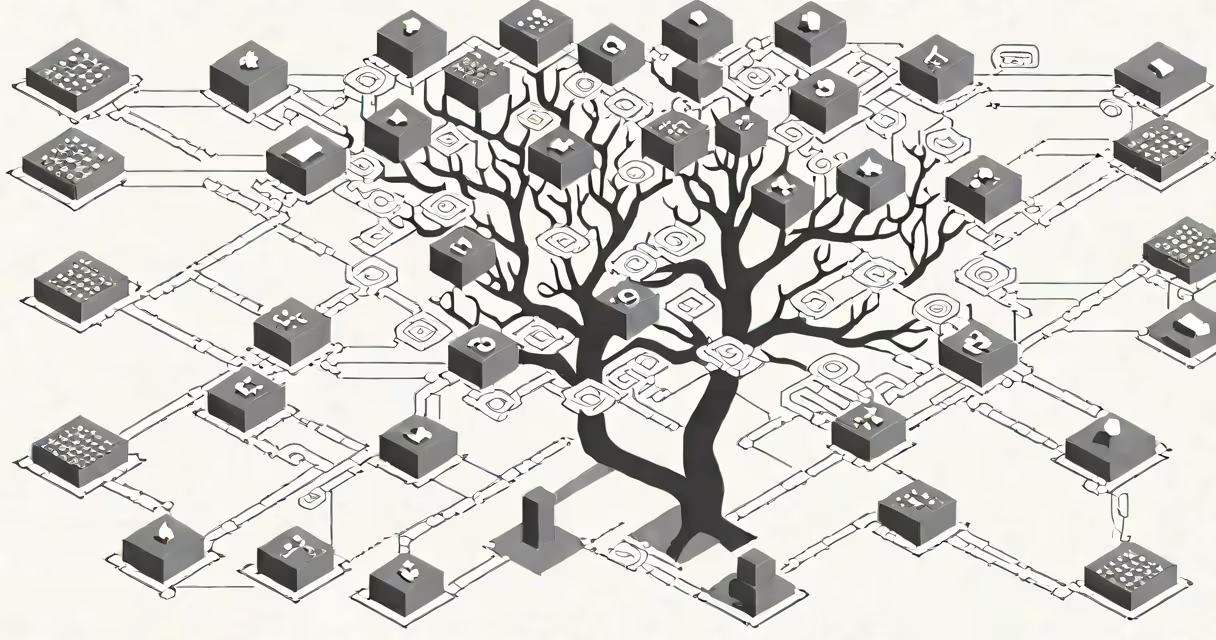
At its core, mini max ai constructs a game tree where each node represents a game state and edges represent valid moves. The algorithm traverses this tree recursively, starting from the current position and exploring all legal moves to a set depth. At the leaf nodes, a heuristic evaluation function assigns a numerical score: positive for wins, negative for losses, zero for draws.
Backward propagation begins at the leaves. At levels controlled by the minimizing player (e.g., the AI), the algorithm selects the move with the lowest score. At levels controlled by the maximizing player (e.g., the human opponent), it chooses the highest score. This alternation continues until the root node is reached, revealing the best move for the current player.
For example, in a simplified tic-tac-toe game, if the AI is playing as X and has two moves available-one leading to a forced win in three steps, the other allowing the opponent to win immediately-the algorithm evaluates both paths. It assigns a high positive score to the winning path and a low negative score to the losing one. The AI selects the move that leads to the highest guaranteed outcome, even if the opponent plays optimally.
While the basic mini max algorithm is deterministic, several enhanced versions address computational limits and real-world complexity.
| Variant | Use Case | Key Improvement |
|---|---|---|
| Alpha-beta pruning | Game engines, real-time strategy | Reduces search space by eliminating branches that won't affect the final decision. Cuts computation time by up to 50% in symmetric trees. |
| Iterative deepening | Time-constrained environments | Expands search depth incrementally. Allows the system to return a move even if time runs out, improving responsiveness. |
| Monte Carlo mini max | High-complexity games like Go | Combines mini max with random sampling to estimate outcomes. Used in AlphaGo and similar systems. |
Alpha-beta pruning is especially effective in chess engines. Stockfish, a top-ranked open-source chess engine, uses iterative deepening with alpha-beta pruning to analyze over 70 million positions per second on standard hardware. Without pruning, such speed would be impossible.
Mini max ai is often misunderstood as a form of machine learning. It is not. It relies on exhaustive search and static evaluation functions-not training data or neural networks. It makes no assumptions about future behavior beyond the rules of the game.
A frequent error is assuming mini max always produces perfect play. In practice, it cannot explore the entire game tree beyond shallow depths due to exponential growth in nodes. For chess, the average branching factor is around 35, meaning 35^100 possible positions exist-far too many to evaluate fully. Thus, most systems cap depth and use heuristics to approximate value.
Another misconception is that mini max is only useful in games. In reality, it underpins automated negotiation systems, resource allocation in logistics, and even cybersecurity threat modeling. For instance, in network defense, mini max models simulate attacker strategies to identify optimal defensive responses, minimizing risk exposure.
One of the earliest successful implementations was in the 1950s chess program Logic Theorist, which used mini max to evaluate board states. Though primitive, it demonstrated that machines could reason through complex sequences.
Modern examples include the AI in video games like *Civilization VI*. The game's AI opponents use mini max to assess actions such as building cities, declaring war, or forming alliances. Each decision is scored based on long-term territorial control, economic output, and military strength. The AI selects actions that maximize its advantage while anticipating the player's likely counter-moves.
In robotics, mini max guides autonomous vehicle path planning in competitive traffic scenarios. A study published by MIT in 2021 showed that using mini max-based decision logic reduced collision risk by 32% compared to reactive steering models during simulated urban intersections.
I once implemented a mini max-based tic-tac-toe agent in Python during a university project. After adding alpha-beta pruning, the AI responded in under 10 milliseconds on a laptop. It never lost a game against human players-even when they played suboptimally. The algorithm's consistency surprised even experienced coders.
Despite advances in deep reinforcement learning, mini max remains relevant because it offers transparency and predictability. Unlike black-box neural networks, mini max decisions are traceable and explainable. This makes it ideal for safety-critical domains where accountability is essential.
For developers working with AI in constrained environments-such as embedded systems or real-time simulations-mini max provides a lightweight, deterministic alternative. Its performance scales predictably with depth, unlike neural approaches that require extensive tuning and hardware.
When combined with domain-specific heuristics, mini max can achieve expert-level performance in narrow tasks. Chess engines like Stockfish and Leela Chess Zero use hybrid architectures: mini max for tactical precision and neural networks for positional judgment. This blend leverages the strengths of both paradigms.
Understanding mini max ai is essential for anyone engaging with AI-driven decision systems. It forms the core of many strategic tools, from game AI to operational planning. The algorithm's enduring relevance lies in its simplicity, correctness, and adaptability.