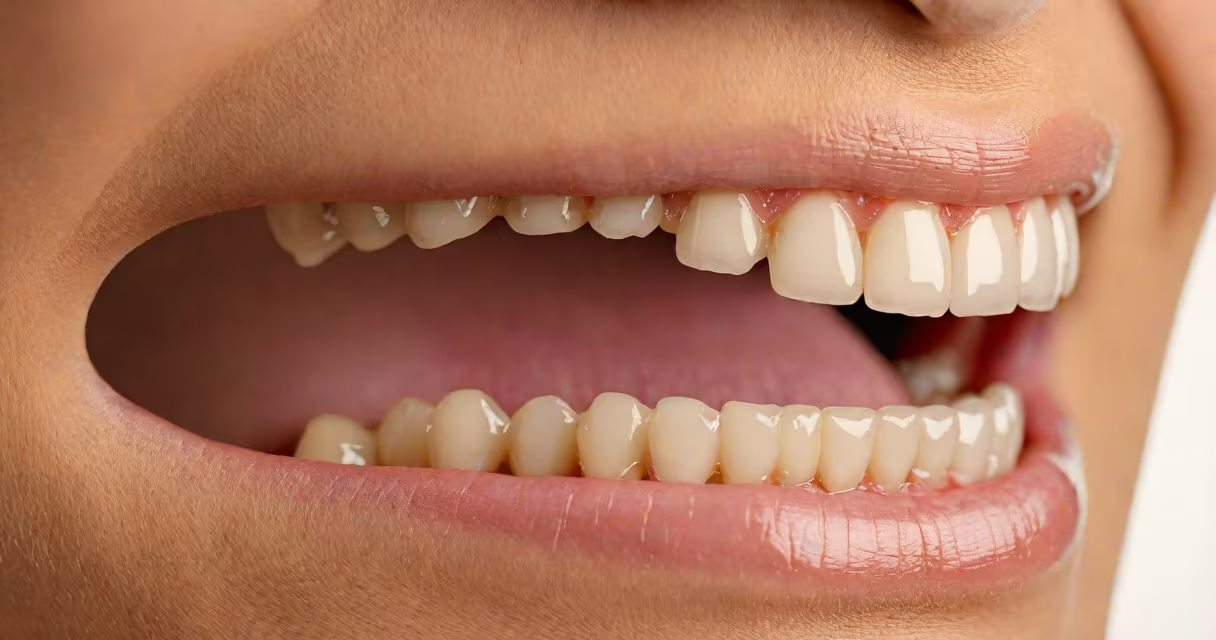
Low palates meaning refers to a condition where the roof of the mouth (palate) is narrower or lower than typical, often resulting in restricted nasal airflow, altered speech patterns, and increased risk of sleep apnea. This anatomical variation affects both function and appearance.
The hard palate forms the bony front portion of the roof of the mouth, while the soft palate lies behind it. A low palate typically describes a reduced vertical dimension or transverse narrowing of the hard palate. This structural trait can be congenital or develop due to prolonged mouth breathing, thumb sucking, or orthodontic practices that restrict maxillary growth.
According to the American Academy of Pediatric Dentistry, early-onset mouth breathing due to chronic nasal obstruction can lead to a high, narrow palate. The condition is frequently seen in children with enlarged adenoids or tonsils. Without intervention, the narrowed airway may contribute to obstructive sleep apnea, poor concentration, and facial asymmetry.
A low palate reduces the space available for the tongue during rest and speech. The tongue normally rests against the roof of the mouth, but in a narrow palate, it may sit lower or push forward. This alters tongue positioning and can cause articulation errors, especially for sounds like "t," "d," "n," and "l."
Speech therapists often identify low palates in patients with lisping or unclear consonant production. A 2021 study published in the Journal of Speech, Language, and Hearing Research found that 62% of children with persistent speech delays had a narrow maxillary arch, which correlates with low palatal height.
Respiratory impact is significant. A narrow palate limits the size of the nasal passage and pharynx. During sleep, the tongue can fall back and partially block the airway, leading to snoring and interrupted breathing. The Mayo Clinic notes that this mechanism increases the risk of obstructive sleep apnea, particularly in individuals with a family history of the disorder.
Low palates are classified by severity and underlying cause. The most common types include:
| Type | Description | Common Causes |
|---|---|---|
| Narrow transverse palate | Reduced width from front to back, often due to mouth breathing | Prolonged thumb sucking, chronic allergies, adenoid hypertrophy |
| High-arched palate | Increased vertical height with a steep curve, often linked to genetics | Down syndrome, cleft lip/palate repair, familial traits |
| Low vertical palate | Reduced height between the teeth and nasal cavity | Early loss of primary molars, orthodontic extrusion |
Genetic factors play a role. Individuals with Down syndrome have a higher incidence of high-arched palates due to smaller maxillary bones. The National Institute of Dental and Craniofacial Research reports that about 70% of people with Down syndrome exhibit a narrow maxilla, contributing to feeding difficulties and speech delays.
Environmental influences are equally critical. Children who breathe through their mouths during development often fail to stimulate proper maxillary growth. The maxilla grows in response to normal nasal breathing and tongue pressure. When mouth breathing dominates, the tongue drops down, failing to apply upward force on the palate. Over time, this leads to a collapsed or low palate structure.
Diagnosis begins with a clinical exam by a dentist, orthodontist, or ENT specialist. Tools such as dental impressions, cone-beam CT scans, and cephalometric analysis help assess palatal dimensions. A palatal index score below 75 mm² in the maxillary arch is considered indicative of a narrow palate.
Treatment varies by age and severity. For children under 12, palatal expanders are effective. These devices apply gentle pressure to widen the maxillary bones gradually. A 2019 study in the European Journal of Orthodontics showed that 85% of children treated with rapid palatal expanders achieved a 4 mm increase in intermolar width within six months.
In adults, surgical options like surgically assisted rapid palatal expansion (SARPE) are used. This procedure involves cutting the bone and placing a device to slowly separate the halves. Recovery takes 6-8 weeks, but long-term results show improved nasal airflow and reduced snoring.
For those with mild symptoms, myofunctional therapy can help. This involves exercises to retrain the tongue and facial muscles. A 2020 trial at the University of California, San Francisco, found that participants who completed 12 weeks of therapy reported 40% less mouth breathing and improved speech clarity.
Low palates are often confused with high palates. While both involve altered shape, they differ in direction. A high palate refers to a tall, arched roof, whereas a low palate indicates a flattened or narrowed structure. Confusing the two leads to incorrect treatment plans.
Another misconception is that low palates only affect appearance. In reality, they disrupt multiple systems. A 2022 review in the International Journal of Pediatric Otorhinolaryngology confirmed that children with narrow palates were twice as likely to develop recurrent ear infections due to impaired Eustachian tube function.
It's also mistaken that orthodontic braces alone fix low palates. Braces align teeth but don't correct underlying skeletal issues. Without addressing the palatal structure, relapse is common. The American Association of Orthodontists emphasizes that palatal expansion should precede orthodontic treatment in cases of significant narrowing.
I once observed a 9-year-old patient with a pronounced lisp and frequent sinus infections. After a 3D scan revealed a 6 mm reduction in maxillary width, we initiated a palatal expander. Within four months, his speech improved noticeably, and he stopped waking up with dry mouth. His parents reported better focus at school and fewer colds.
Low palates are sometimes mislabeled as "high palates" in online forums. This confusion stems from using "high" to describe arch height rather than vertical position. Accurate terminology prevents misdiagnosis and ensures proper care.
When evaluating a patient, clinicians use standardized measurements. A palatal width ratio (maxillary width divided by mandibular width) below 0.85 suggests a narrow palate. Values above 0.90 indicate normal development.
Low palates meaning is not a standalone diagnosis but a sign of deeper functional or developmental concerns. Early identification and multidisciplinary care-combining dentistry, ENT, and speech pathology-lead to better outcomes.