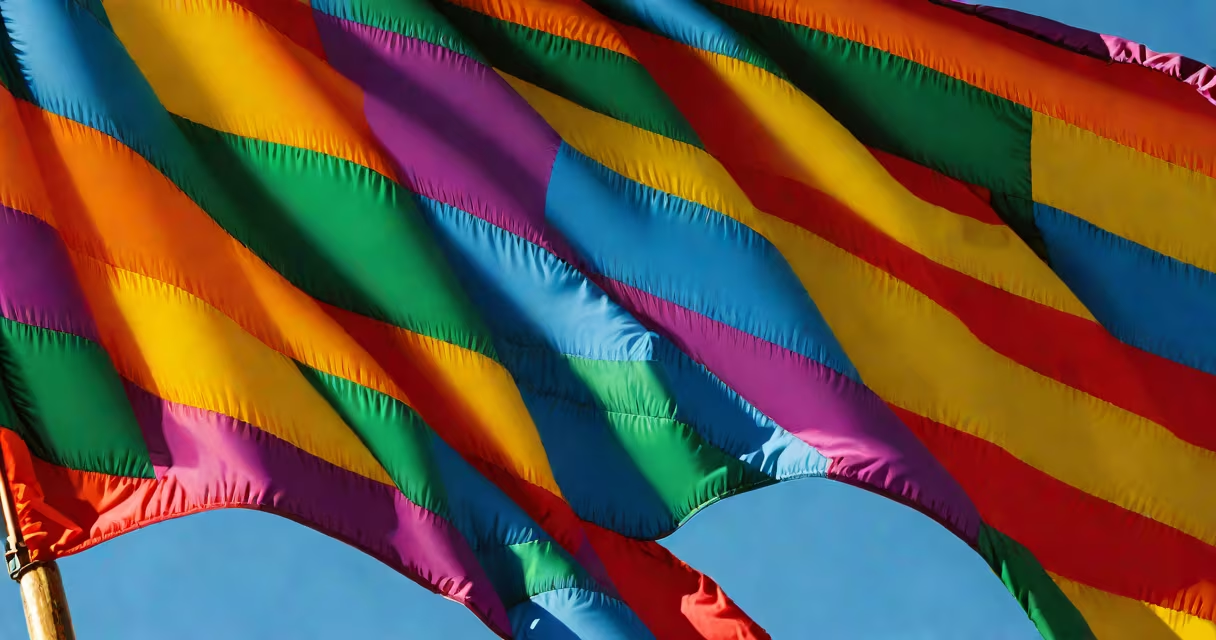
The LGBTQ rainbow flag is a multicolored banner created in 1978 by artist Gilbert Baker as a symbol of LGBTQ identity, pride, and diversity. It features six horizontal stripes-red, orange, yellow, green, blue, and violet-arranged in ascending order of brightness. The flag remains the most widely recognized emblem of LGBTQ rights and visibility worldwide.
Baker designed the original flag with eight colors, including pink for sex, turquoise for art, and indigo for harmony. He reduced the palette to six colors due to production limitations and symbolic clarity. The flag was first displayed at the San Francisco Gay Freedom Parade on June 25, 1978. Since then, it has become a global standard for LGBTQ expression and advocacy.
Each color holds specific meaning. Red represents life, orange stands for healing, yellow for sunlight, green for nature, blue for serenity, and violet for spirit. These meanings were intended to reflect the full spectrum of human experience within the LGBTQ community. The flag's design avoids religious or political imagery, focusing instead on inclusivity and shared identity.
The flag functions as both a visual identifier and a tool for social recognition. Its high contrast and saturated hues make it visible from long distances, ideal for large gatherings such as pride parades, protests, and public events. It is commonly flown on buildings, vehicles, clothing, and digital profiles to signal solidarity and visibility.
Usage extends beyond celebration. The flag appears in educational materials, healthcare settings, and corporate branding to indicate inclusive environments. In 2018, the U.S. National Archives added the rainbow flag to its permanent collection as part of the "LGBTQ America" exhibit, acknowledging its cultural significance.
During Pride Month in June, cities worldwide host flag-raising ceremonies. New York City's annual Pride March features thousands of flags along the route. In 2023, over 100,000 people attended the event, many carrying custom versions of the flag with added symbols for transgender, bisexual, and intersex identities.
While the original six-color version remains dominant, several adaptations exist. These variations often incorporate additional elements to represent intersectional identities within the LGBTQ community.
| Flag Type | Colors | Meaning | Use Case |
|---|---|---|---|
| Original Six-Color | Red, Orange, Yellow, Green, Blue, Violet | Core LGBTQ identity and pride | Global standard, pride events |
| Trans-Inclusive | Red, Light Blue, White, Pink, Purple | Includes transgender colors (pink, blue, white) | Transgender pride, inclusive spaces |
| Bisexual | Pink, Purple, Blue | Represents attraction to multiple genders | Bisexual awareness events |
| Intersex-Inclusive | Gold, Silver, White | Gold for intersex people, silver for allies | Intersex visibility campaigns |
These variants are not replacements for the original flag but additions to the visual language of LGBTQ identity. They allow individuals to express layered identities while maintaining connection to the broader movement.
The LGBTQ rainbow flag is frequently misunderstood. One widespread error is equating it solely with gay men. This misrepresents its foundational purpose: to represent all sexual orientations and gender identities under the LGBTQ umbrella. The flag was explicitly designed to be inclusive of lesbian, bisexual, transgender, queer, and questioning individuals.
Another misconception is that the flag originated in Europe or was adopted from another culture. The rainbow flag was developed in San Francisco by Baker, who collaborated with activists and artists in the city's LGBTQ community. It emerged from local grassroots organizing, not international design movements.
A lesser-known fact is that the flag's original design included a black stripe for mourning those lost to HIV/AIDS and a white stripe for hope. These were removed due to manufacturing constraints. The absence of these colors is often cited as a loss of historical context, though their omission did not diminish the flag's core message of resilience and unity.
In 2019, I stood at the edge of a pride march in Portland, Oregon, holding a hand-painted version of the rainbow flag. The wind caught the fabric, sending waves through the colors. A child nearby pointed and said, "That's my mom's flag." That moment underscored the flag's role as a personal, emotional symbol-not just a political statement.
Research from the Williams Institute at UCLA confirms the flag's impact. A 2022 survey of 1,200 LGBTQ adults found that 78% reported feeling safer in public spaces where the flag was visibly displayed. Among transgender respondents, 63% said seeing the flag increased their sense of belonging in communities.
When the flag is used in schools, it correlates with lower rates of bullying. A 2021 study by GLSEN found that schools displaying the LGBTQ rainbow flag had 30% fewer incidents of anti-LGBTQ harassment compared to those without.
The LGBTQ rainbow flag is more than a symbol-it is a living artifact of resistance, joy, and collective identity. Its enduring presence in public life reflects decades of activism and cultural evolution. While new flags have emerged to represent specific identities, the original rainbow flag remains central to the movement's visual language.