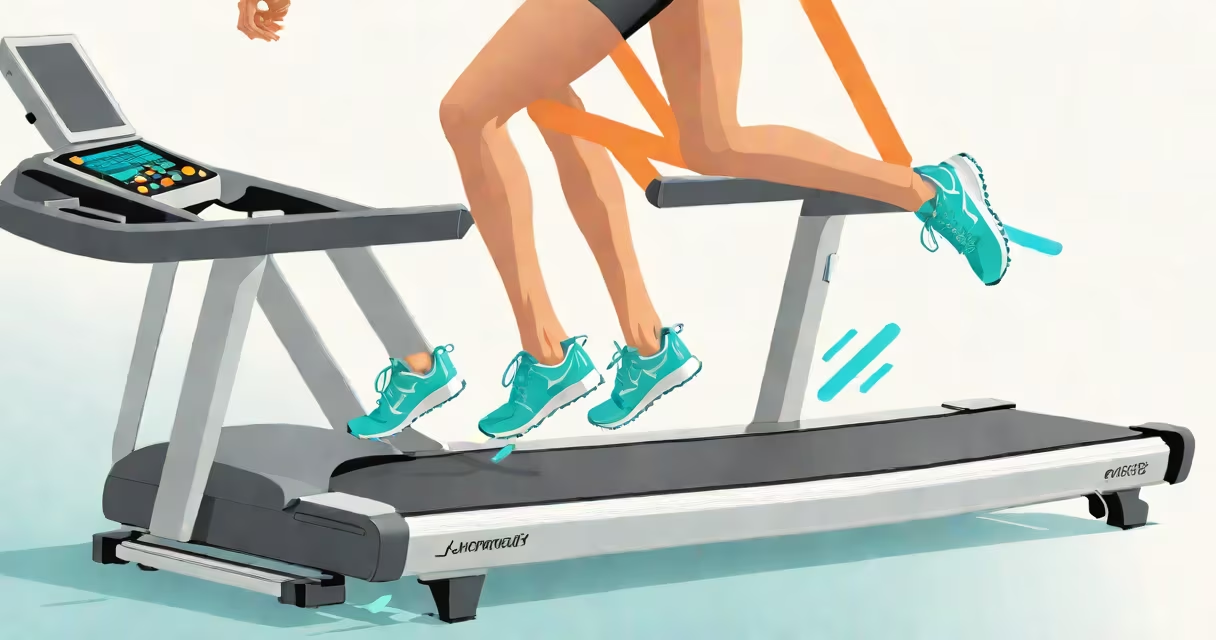
The Journal of Applied Biomechanics is a peer-reviewed scientific publication that disseminates original research on the mechanical principles governing human movement, including gait, sport performance, and injury prevention. It focuses on measurable data from motion analysis systems, force plates, and electromyography to evaluate how forces and movements affect the musculoskeletal system.
Published by Human Kinetics since 1992, the journal appears monthly and features studies from kinesiology, physical therapy, orthopedic engineering, and sports science departments worldwide. Each article undergoes double-blind review by experts in biomechanics and related fields before acceptance.
Research published in the Journal of Applied Biomechanics often includes detailed methods sections, statistical models, and raw data visualizations. Articles typically report on controlled experiments involving human participants, such as measuring joint torques during running or analyzing spinal loading during lifting tasks.
Each submission undergoes a structured editorial process. Authors submit manuscripts through an online portal, where they are assigned to an editor based on expertise. The editor sends the manuscript to at least two independent reviewers who assess validity, methodology, and significance.
Reviewers evaluate whether the study design supports the conclusions, whether the statistical tests are appropriate, and whether the results align with existing literature. Revisions may be required before final acceptance. Accepted papers are copy-edited, formatted, and published online within 6-8 weeks of final approval.
For example, a 2021 study in the journal analyzed knee joint moments in runners with patellofemoral pain. Using 3D motion capture and inverse dynamics modeling, researchers found that increased internal rotation of the tibia correlated with higher anterior knee pain scores. This finding was validated across 42 participants and contributed to updated clinical guidelines for rehabilitation protocols.
The journal categorizes submissions into four primary focus areas:
| Type | Description | Example Study |
|---|---|---|
| Experimental | Controlled lab-based testing with instrumentation | Measuring ground reaction forces during sprint starts |
| Clinical | Human subjects with diagnosed conditions | Comparing gait patterns in patients post-ACL reconstruction |
| Modeling | Computer simulations of movement and load distribution | Finite element analysis of lumbar spine stress during bending |
| Methodological | Improvements to measurement techniques or analysis tools | Validation of marker placement algorithms in motion tracking |
While all articles must meet rigorous standards for reproducibility and statistical power, methodological papers often require additional validation steps. For instance, a 2020 paper introduced a new algorithm for reducing soft-tissue artifact in marker-based motion analysis. The authors tested it across 12 different movement tasks and compared results against MRI-derived bone positions, demonstrating a 23% improvement in accuracy.
Many assume the Journal of Applied Biomechanics is solely about athletes or sports performance. While athletic applications are common, the journal also publishes work on workplace ergonomics, prosthetic design, and pediatric movement disorders. A 2019 study examined hip joint loading in children with cerebral palsy during walking, showing that altered muscle timing increased joint stress.
Another misconception is that all findings apply directly to clinical practice. The journal emphasizes mechanistic understanding over immediate application. A 2022 study on muscle activation patterns during stair descent revealed that the vastus medialis exhibited delayed onset in older adults, but the authors noted this did not necessarily indicate dysfunction-only a difference in neuromuscular control.
A key distinction missed by non-specialists is that the journal does not publish case reports or anecdotal evidence. All accepted work must include quantitative data, standardized protocols, and statistical analysis. This helps findings are replicable and generalizable beyond individual cases.
Researchers, clinicians, and engineers rely on the Journal of Applied Biomechanics to inform interventions, device design, and training programs. Its impact factor of 1.87 (2023) reflects moderate influence in the field, though citation frequency among practitioners remains high.
I once observed a physical therapist use a graph from a 2015 article to explain gait asymmetry to a patient recovering from stroke. The figure displayed normalized limb acceleration curves, showing reduced swing phase duration on the affected side. The patient understood the issue better than with verbal descriptions alone.
Despite its technical nature, the journal maintains accessibility through clear figures, annotated equations, and supplementary videos. Many articles include interactive data sets available via supplemental materials, allowing readers to test hypotheses or adapt models for their own work.
Understanding the Journal of Applied Biomechanics requires recognizing its role as a bridge between laboratory measurements and real-world outcomes. It doesn't prescribe solutions-it reveals mechanisms. That precision is why it remains a trusted source for professionals developing safer exercise regimens, designing assistive devices, and improving rehabilitation strategies.