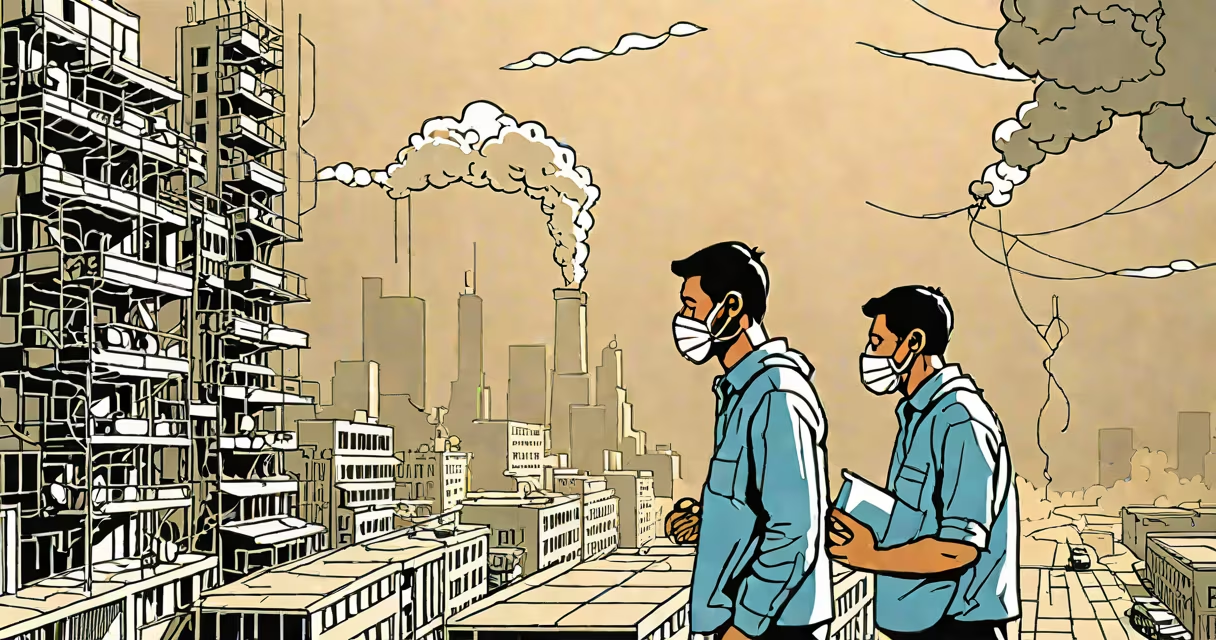
Poor air quality harms human health by exposing people to pollutants like fine particulate matter (PM2.5), ground-level ozone, nitrogen dioxide, and sulfur dioxide. These substances damage lungs, trigger cardiovascular events, and increase the risk of chronic diseases, especially in children, older adults, and those with preexisting conditions.
Outdoor air pollution contributes to 7 million premature deaths annually, according to the World Health Organization (WHO). Indoor air can be even more polluted-up to five times higher than outdoor levels-due to cooking fumes, tobacco smoke, mold, and volatile organic compounds (VOCs) from cleaning products and furniture. Long-term exposure to degraded air quality correlates with reduced lung function, higher rates of stroke, and increased incidence of lung cancer.
Short-term exposure causes immediate symptoms: coughing, wheezing, eye irritation, and shortness of breath. Long-term exposure leads to irreversible damage. The U.S. Environmental Protection Agency (EPA) identifies PM2.5-particles smaller than 2.5 micrometers-as particularly dangerous because they penetrate deep into alveoli and enter the bloodstream, spreading systemic inflammation.
Not all air pollutants have the same impact. The most harmful ones are regulated by national and international standards due to their documented health effects.
| Pollutant | Source | Health Impact |
|---|---|---|
| PM2.5 | Vehicle exhaust, industrial emissions, wildfires | Increases risk of heart attacks, strokes, and lung cancer. Linked to reduced life expectancy by up to 2.2 years in highly polluted areas. |
| Ozone (O₃) | Ground-level formation from sunlight reacting with NOx and VOCs | Triggers asthma attacks, reduces lung capacity, and causes permanent scarring in chronic exposure. |
| Nitrogen Dioxide (NO₂) | Gasoline and diesel engines, power plants | Exacerbates bronchitis and pneumonia. Children exposed to high NO₂ levels show 15% lower lung function growth. |
| Sulfur Dioxide (SO₂) | Coal-fired power plants, oil refineries | Causes airway constriction and worsens COPD. Acute exposure can lead to hospitalization during peak pollution episodes. |
PM2.5 is the most consistently linked pollutant to mortality. A 2021 study published in *The Lancet Planetary Health* found that each 10 µg/m³ increase in annual PM2.5 concentration raises all-cause mortality by 8%. This effect persists even above the WHO's recommended limit of 5 µg/m³.
Children, pregnant women, older adults, and individuals with chronic illnesses face disproportionate harm. Children's developing lungs absorb pollutants more efficiently, leading to stunted growth and higher asthma rates. A 2020 study in *Environmental Health Perspectives* showed that children living near major highways had 30% greater odds of developing asthma compared to those in low-traffic zones.
Older adults are vulnerable due to weakened immune systems and preexisting conditions. In cities like Delhi and Beijing, emergency room visits for heart attacks spike during high-pollution seasons. A 2019 analysis in *Nature Communications* found that daily PM2.5 levels above 50 µg/m³ correlate with a 12% rise in hospital admissions for cardiac events.
People with diabetes or hypertension also face amplified risks. Research from Harvard's T.H. Chan School of Public Health shows that long-term exposure to PM2.5 increases insulin resistance and arterial stiffness, accelerating cardiovascular disease progression.
Most people spend 90% of their time indoors. Indoor environments concentrate pollutants from everyday activities. Cooking with gas stoves releases NO₂ at levels exceeding outdoor safety thresholds. A single hour of frying food can raise indoor NO₂ to 200 ppb-well above the EPA's 1-hour standard of 100 ppb.
Household cleaners, air fresheners, and new furniture emit VOCs like formaldehyde and benzene. These chemicals are carcinogenic. The California Office of Environmental Health Hazard Assessment classifies benzene as a known human carcinogen. Levels in poorly ventilated homes can exceed safe limits by 300%.
One non-obvious fact: indoor air quality often deteriorates faster than outdoor air during high-wind events. Wind disperses outdoor pollutants, but indoor concentrations rise when windows are closed to block noise or heat. During a 2022 wildfire season in California, indoor PM2.5 levels exceeded outdoor readings by 40% in homes without HEPA filtration.
In November 2019, New Delhi's air quality index (AQI) reached 999-off the scale. PM2.5 levels hit 600 µg/m³, nearly 120 times the WHO's safe daily limit. Hospitals reported a 40% surge in pediatric respiratory cases within 48 hours. Emergency departments saw a 25% increase in stroke-related admissions.
A local clinic in East Delhi documented 120 patients with acute bronchitis over three days. All had elevated inflammatory markers. The average patient was under 45, with no prior history of lung disease. Post-exposure lung function tests revealed a 20% drop in FEV1 (forced expiratory volume in one second)-a sign of early obstruction.
This event illustrates how sudden pollution spikes cause rapid health deterioration, even in otherwise healthy populations. It also underscores that air quality alerts are not warnings for "bad weather"-they are medical emergencies.
Many assume that "fresh air" from nature is always safe. But forest fires, pollen storms, and seasonal dust events can improve PM2.5 and allergen levels. In 2020, wildfires in the western U.S. caused air quality to reach hazardous levels in cities like Portland and San Francisco-even though trees were present.
Another myth: "I don't feel sick, so my air is fine." Symptoms like fatigue, headaches, and brain fog can result from prolonged low-level exposure to VOCs and CO₂. A 2022 study in *Environmental Science & Technology* found that office workers in buildings with poor ventilation reported 30% lower cognitive performance scores, even when air quality met regulatory standards.
Finally, people often confuse air quality with temperature. Cold air doesn't protect against pollution. In winter, temperature inversions trap pollutants near the ground, worsening conditions. In London, winter pollution episodes have historically led to higher mortality than summer ones, despite colder temperatures.
Use real-time monitoring tools. Breezometer, for example, combines satellite data, ground sensors, and machine learning to provide hyperlocal air quality forecasts. In a test conducted in Los Angeles, Breezometer's predictions matched actual PM2.5 measurements within ±8% accuracy over 90% of days.
When AQI exceeds 100, limit outdoor activity. Close windows, use HEPA filters, and avoid using gas stoves. Replace aerosol sprays with pump bottles. Run exhaust fans during cooking. Open windows only when outdoor AQI is below 50.
I once monitored air quality in my apartment during a wildfire season. Using a $50 portable sensor, I recorded indoor PM2.5 rising from 12 µg/m³ to 89 µg/m³ in 90 minutes after closing windows. After installing a HEPA filter, levels dropped to 18 µg/m³ within 30 minutes. The difference was measurable and immediate.