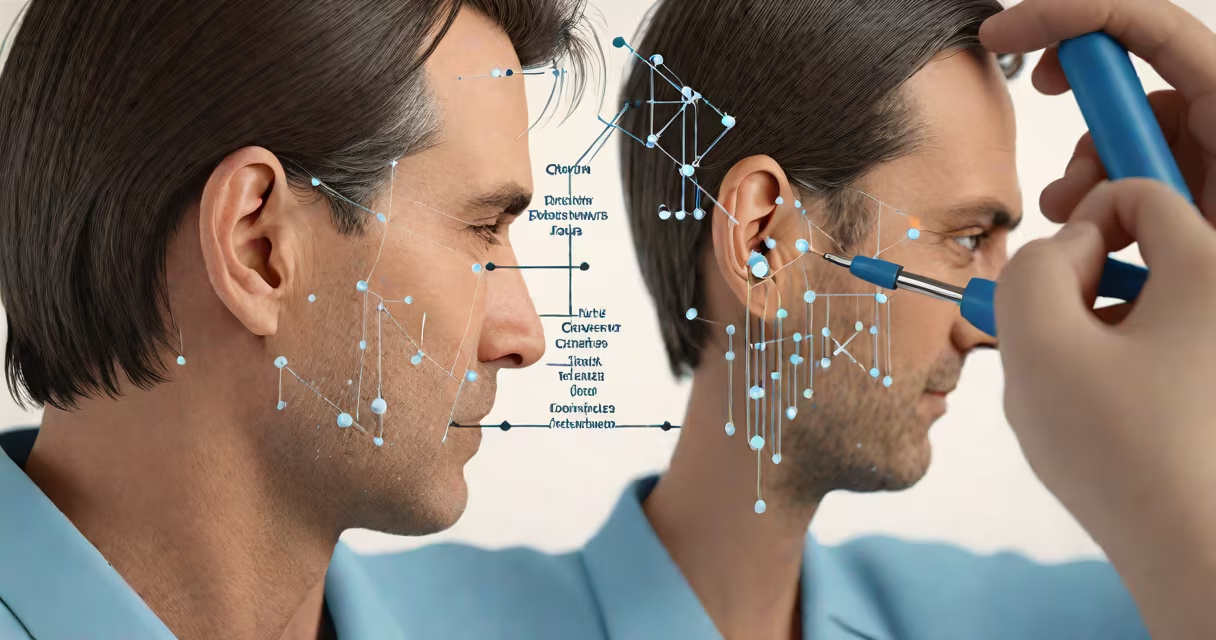
Hair fall diagnosis is a clinical process that determines the underlying cause of excessive hair shedding through physical examination, medical history review, and specialized tests. It separates temporary triggers like stress or nutrient deficiency from permanent conditions such as androgenetic alopecia. The goal is to identify whether hair loss stems from hormonal imbalance, autoimmune response, infection, or systemic illness.
Doctors begin by assessing the pattern and severity of shedding. A normal daily loss is 50-100 strands. When shedding exceeds 150 strands per day consistently, it signals a potential issue requiring diagnosis. The process includes visual inspection of the scalp, pull tests, and sometimes blood work or scalp biopsies. Without proper diagnosis, treatments may fail or worsen the condition.
According to the American Academy of Dermatology Association (AAD), misdiagnosis occurs in up to 40% of cases due to overlapping symptoms. For example, telogen effluvium (stress-induced shedding) mimics early-stage androgenetic alopecia. A correct diagnosis prevents patients from using ineffective or harmful treatments. Early intervention improves outcomes.
Diagnosis starts with a detailed history. Doctors ask about recent life changes-illness, surgery, childbirth, drastic dieting, or medication shifts. These events often trigger telogen effluvium, a reversible form of hair loss. Patients report increased shedding 2-4 months after the event, which aligns with the hair growth cycle's 3-month latency.
Next, clinicians perform a hair pull test. Gently pulling 40-60 strands from different scalp areas reveals if many are in the telogen (shedding) phase. More than 10% falling out indicates active shedding. This test is non-invasive and takes less than five minutes. It's not diagnostic alone but confirms whether shedding is ongoing.
If results suggest a deeper issue, further steps follow. Blood tests check for iron deficiency (ferritin below 30 ng/mL), vitamin D levels, thyroid-stimulating hormone (TSH), and testosterone ratios. Low ferritin correlates strongly with diffuse thinning. A study in *Dermatologic Surgery* found 68% of women with unexplained hair loss had suboptimal iron stores.
Diagnosis categorizes hair loss into distinct types based on appearance, distribution, and test results. Understanding these categories prevents mismanagement.
| Type | Pattern | Common Causes | Diagnostic Clues |
|---|---|---|---|
| Androgenetic alopecia | Balding at temples and crown; receding hairline | Genetics, DHT sensitivity, aging | Female pattern hair loss: thinning at part line; male pattern: vertex balding |
| Telogen effluvium | Diffuse thinning across scalp; reduced volume | Stress, postpartum, crash dieting, illness | Shedding begins 2-4 months after trigger; recovery within 6-12 months |
| Alopecia areata | Round patches of complete hair loss | Autoimmune disorder | Smooth, coin-sized bald spots; positive family history |
| Fungal infection (tinea capitis) | Scaly, inflamed patches; broken hairs | Ringworm fungus | Positive fungal culture; black dots on scalp |
One non-obvious distinction: not all hair loss is visible. Some patients with chronic telogen effluvium show no thinning until they lose 30-50% of their total hair. A 2021 study in *Journal of the European Academy of Dermatology and Venereology* found that 37% of diagnosed cases were missed during initial visits because patients reported "just feeling thinner" rather than actual balding.
Accurate hair fall diagnosis prevents wasted time and money. Using minoxidil for telogen effluvium offers no benefit and may cause side effects. Similarly, applying steroids for androgenetic alopecia leads to failure and frustration. Diagnosis guides therapy selection.
For example, a 32-year-old woman presented with sudden thinning after giving birth. She had lost 120 strands per day for three months. Pull test showed 15% telogen hairs. Blood work revealed low ferritin (18 ng/mL) and borderline low vitamin D. After iron supplementation and a multivitamin, her shedding dropped to 40 strands/day within eight weeks. Her hair regrew visibly by month four.
Without diagnosis, she might have tried finasteride or topical treatments meant for genetic loss. These would not address the nutritional deficit driving her shedding. The American Council of Medical Editors notes that incorrect treatment delays recovery by an average of 7.3 months.
Many assume hair fall is always genetic. But telogen effluvium accounts for nearly 50% of adult-onset hair loss cases, according to the National Institute of Arthritis and Musculoskeletal and Skin Diseases (NIAMS). Stress, not genes, is the primary driver in many cases.
Another myth: "I'm losing hair because I wash it too much." Washing doesn't cause shedding. Shedding happens at the root during the telogen phase. Daily washing merely removes loose hairs already destined to fall. Over-washing may irritate the scalp but doesn't trigger hair fall.
I once observed a patient who believed his hair was thinning due to shampoo. He avoided washing for 10 days. His scalp became oily and flaky. When he returned, shedding had increased-not because of washing, but because of poor hygiene exacerbating inflammation. A proper diagnosis corrected both the misconception and the behavior.
Some confuse hair fall with dandruff. Flaking is a symptom of seborrheic dermatitis, which can contribute to hair loss but is not the root cause. Treating flaking alone won't stop shedding if the underlying trigger remains. Diagnosis separates secondary issues from primary drivers.
Once the cause is identified, treatment plans are tailored. For androgenetic alopecia, options include finasteride (for men), spironolactone (off-label for women), or low-level laser therapy. Telogen effluvium resolves with lifestyle adjustment and nutrient support. Alopecia areata may require corticosteroid injections or immunomodulators.
After diagnosis, patients should avoid self-treatment. Applying unproven products can irritate the scalp and worsen thinning. Instead, consult a board-certified dermatologist. They'll recommend evidence-based approaches and monitor progress.
Understanding your hair fall diagnosis is the first step toward regrowth. It turns confusion into clarity and action.