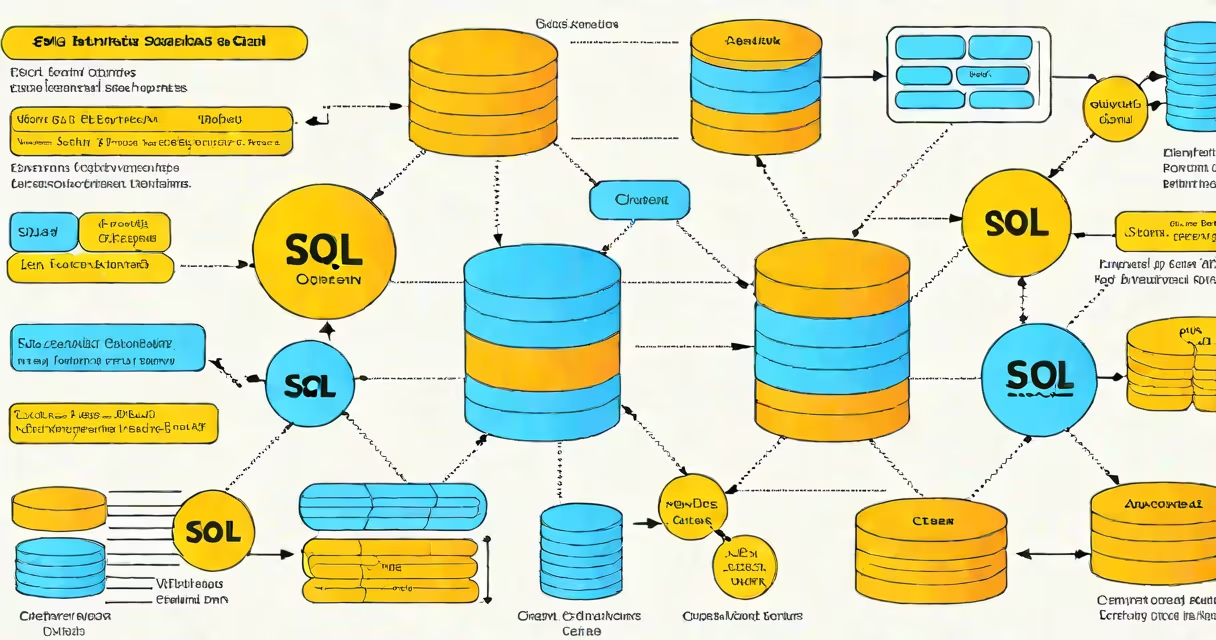
fundamentals of sql are the essential rules and operations used to interact with relational databases. These include querying data, inserting new records, updating existing entries, and deleting unwanted rows using standardized syntax.
SQL, or Structured Query Language, is the standard language for managing structured data in systems like MySQL, PostgreSQL, and Microsoft SQL Server. It allows users to define, manipulate, and control data stored in tables-organized rows and columns. A single command can retrieve thousands of records or modify entire datasets with precision.
Every SQL statement begins with a verb-like command such as SELECT, INSERT, UPDATE, or DELETE. These commands follow a consistent structure: action + target + conditions. For example, "SELECT name FROM customers WHERE country = 'USA'" pulls names from a customer list only for those located in the United States.
When you run a SQL query, the database engine processes your instruction step by step. It parses the syntax, checks permissions, locates the relevant tables, applies filters, and returns results in a format specified by the user. This process happens in milliseconds even for large datasets.
Each database system implements SQL slightly differently. While the core commands remain the same, features like window functions, recursive queries, or custom data types may vary between platforms. For example, PostgreSQL supports JSONB natively, while older versions of MySQL require extensions for advanced data handling.
A real-world example: An e-commerce site uses SQL to track inventory. When a product sells out, a script runs a query like:
UPDATE products SET stock = stock - 1 WHERE id = 1234;This reduces the stock count by one for a specific product. The database ensures the update happens atomically-meaning no other transaction can interfere during the change.
SQL operates on four primary actions: querying, inserting, modifying, and removing data. Below are the most frequently used commands.
| Command | Purpose | Example |
|---|---|---|
| SELECT | Retrieve data from one or more tables | SELECT email FROM users WHERE active = 1; |
| INSERT INTO | Add new rows to a table | INSERT INTO orders (user_id, total) VALUES (456, 99.99); |
| UPDATE | Modify existing data | UPDATE employees SET salary = salary * 1.1 WHERE department = 'sales'; |
| DELETE FROM | Remove rows based on criteria | DELETE FROM logs WHERE timestamp < '2023-01-01'; |
These commands form the foundation of daily database operations. They're used by software engineers, data analysts, and business intelligence teams to extract insights, maintain data integrity, and support application logic.
fundamentals of sql are applied across industries-from finance and healthcare to retail and social media. Any organization storing structured data relies on SQL to access and manage it efficiently.
For instance, a hospital uses SQL to pull patient records by diagnosis date. A bank runs queries to detect unusual transactions. A streaming service analyzes viewing habits using SQL to recommend content. Even mobile apps depend on SQL-based backend systems to function.
According to the 2023 Stack Overflow Developer Survey, SQL remains among the top five most-used programming languages globally, with over 50% of professional developers reporting regular use. Its persistence stems from reliability, readability, and widespread tooling support.
Many assume SQL is a programming language like Python or JavaScript. It's not. SQL is a declarative language-users describe what they want, not how to achieve it. The database engine figures out the execution path.
Another frequent error: confusing SQL with NoSQL. While both handle data, NoSQL databases (like MongoDB or Firebase) store unstructured or semi-structured data in formats like JSON or documents. They don't use SQL. However, some modern systems offer SQL-like interfaces-for example, Google BigQuery supports SQL syntax for analyzing massive datasets.
A lesser-known fact: SQL was developed in the 1970s at IBM, long before the internet existed. The original version, called SEQUEL (Structured English Query Language), was designed to work with IBM's System R prototype. The name was later shortened to SQL due to trademark issues.
I once debugged a production issue where a missing semicolon caused a batch job to fail silently. The error wasn't in the logic-it was in formatting. That taught me that even small syntax errors can break complex workflows, especially when scripts run automatically.
While SQL standards exist (ISO/IEC 9075), implementations differ. Here's how major systems compare.
| Database | SQL Flavor | Unique Feature |
|---|---|---|
| MySQL | Standard SQL with extensions | Supports full-text search and spatial data types |
| PostgreSQL | Advanced SQL with recursive queries | Full support for JSON and custom functions |
| Microsoft SQL Server | T-SQL (Transact-SQL) | Stored procedures, triggers, and integration with .NET |
| SQLite | Lightweight SQL engine | Serverless, embedded database used in mobile apps |
Understanding these differences helps avoid compatibility issues when migrating data or sharing queries across environments.
Learning the fundamentals of sql doesn't require a degree. Many developers start with free tools like SQLite or online playgrounds such as db-fiddle.com. Practice writing simple queries-filtering, joining tables, grouping results-and gradually build complexity.
The fundamentals of sql remain unchanged despite evolving technologies. Mastery of basic syntax, logical thinking, and attention to detail separate effective users from casual ones. With consistent practice, anyone can read and write meaningful queries that drive decisions.