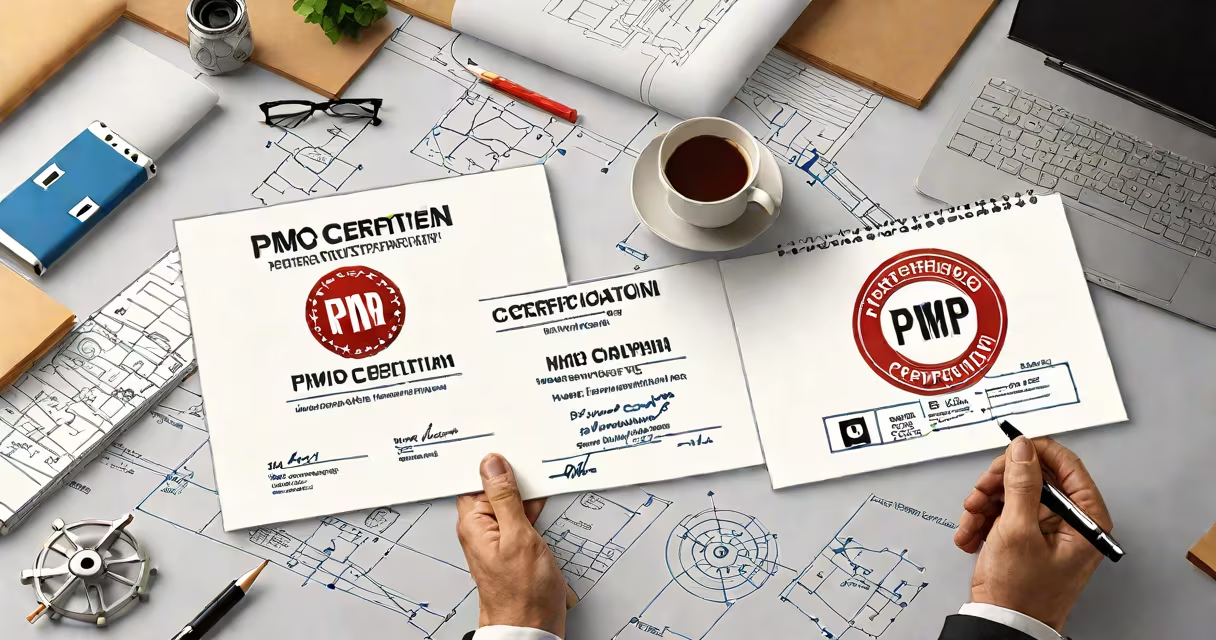
A PMP degree is not a formal academic degree. It is a professional certification in project management issued by the Project Management Institute (PMI). The PMP credential validates expertise in leading and directing projects across industries.
The PMP designation stands for Project Management Professional. It is earned by passing a standardized exam administered by PMI, which tests knowledge of project lifecycle phases, risk management, stakeholder engagement, and leadership practices. The certification is not tied to a university program or academic transcript.
PMI reports that over 3 million individuals worldwide hold the PMP credential. Employers in engineering, IT, construction, healthcare, and finance recognize it as a benchmark for project leadership capability. It is not a substitute for a bachelor's or master's degree, but it complements formal education in fields like business, computer science, or engineering.
To earn the PMP credential, candidates must meet eligibility requirements based on education and project management experience. Those with a four-year degree need 36 months of leading projects and 35 hours of project management education. Candidates with a high school diploma require 60 months of project experience and 35 hours of training.
Once eligible, applicants take a 180-question, four-hour exam. Questions assess knowledge across five domains: people, process, business environment, agile, and predictive approaches. The test uses scenario-based questions requiring practical judgment, not memorization.
After passing, candidates receive the PMP title and can use the credential after their name. Certification must be renewed every three years through earning 60 Professional Development Units (PDUs), such as attending workshops, teaching courses, or publishing articles on project management.
The PMP certification is built on the Project Management Body of Knowledge (PMBOK® Guide), a standard reference published by PMI. The current version, sixth edition, outlines principles, processes, and tools used in project execution, monitoring, and closure.
PMI updates the exam content outline every few years. The 2021 update introduced greater emphasis on agile and hybrid methodologies, reflecting shifts in how organizations deliver work. Over 50% of the exam now covers agile and adaptive approaches, especially in changing environments.
For example, a candidate might face a scenario where a software development team encounters scope creep during sprint planning. The correct response involves using iterative feedback loops and adjusting priorities based on stakeholder input-skills emphasized in the updated PMP exam.
While "PMP degree" is a misnomer, several related credentials exist. They differ in focus, eligibility, and application. Below is a comparison of key options:
| Credential | Eligibility | Focus Area | Best For |
|---|---|---|---|
| PMP | 36 months (bachelor's) or 60 months (high school) | Traditional and agile project management | Project managers in diverse industries |
| PMI-ACP | 2,000 hours leading projects, 21 hours agile training | Agile methods, Scrum, Kanban | Teams using iterative delivery models |
| PRINCE2 Practitioner | Pass PRINCE2 Foundation exam | Process-driven project governance | UK-based or government projects |
| CompTIA Project+ | No experience required | Foundational project skills | Entry-level professionals |
Many professionals pursue multiple certifications. A software engineer with a bachelor's in computer science might earn a PMP to advance into technical project lead roles. A healthcare administrator with a master's in public health may obtain PMP to manage hospital infrastructure upgrades.
Major corporations including Amazon, IBM, and Lockheed Martin list PMP as a preferred or required qualification for project manager positions. According to PMI's 2023 Talent Gap Report, organizations with certified project managers report 28% higher project success rates compared to those without.
In the U.S., PMP-certified professionals earn a median salary of $115,000 annually, according to PayScale data from 2023. Salaries increase with experience and industry. For example, PMP holders in aerospace and defense average $138,000, while those in education earn $92,000.
Non-profits and government agencies also value the credential. The U.S. Department of Defense requires PMP certification for certain acquisition project officers. The World Bank uses PMP standards in evaluating infrastructure projects in developing nations.
"PMP degree" is a persistent misunderstanding. No university offers a "PMP degree." The PMP is a certification, not a degree. Confusing it with academic qualifications leads to incorrect assumptions about educational pathways.
Another misconception is that the PMP exam is purely theoretical. In reality, it emphasizes applied decision-making. A 2022 study by PMI found that 76% of successful candidates reported that real-world project challenges shaped their preparation, not classroom lectures.
Some assume the PMP is outdated due to the rise of agile methods. However, the 2021 exam update explicitly integrated agile frameworks. PMI states that 54% of PMP questions now relate to adaptive planning, team collaboration, and continuous delivery-core tenets of agile.
In 2022, a regional health system in Texas initiated a $12 million expansion to add a new emergency department. The project manager held a PMP credential and a bachelor's in healthcare administration.
She used the PMP structure to define scope, assign roles, track timelines, and manage risks. When a delay occurred due to zoning approval issues, she convened stakeholders, revised the schedule, and adjusted resource allocation-all within the PMI's risk management and stakeholder engagement guidelines.
The project completed on time and under budget. The hospital cited the PMP holder's structured approach as key to success. Her certification was referenced in internal performance reviews and external accreditation submissions.
I once led a cross-functional team implementing a customer portal for a mid-sized bank. Though I had a bachelor's in business, I lacked formal project management training. After earning my PMP, I applied the PMBOK® Guide's change control process when a regulatory requirement changed mid-project. We avoided costly rework by documenting impacts and securing approval before adjustments.
The experience confirmed that the PMP isn't just a credential-it's a practical toolkit. I now use the structure daily, even in non-project settings like team meetings and strategic planning sessions.
There is no such thing as a "PMP degree." The term misrepresents the nature of the PMP credential. It is a professional certification earned through experience, education, and examination. It is not a college degree, nor is it equivalent to a master's in project management.
Those seeking formal academic training should consider a master's in project management or a related field. But for professionals aiming to validate their project leadership skills, the PMP certification remains one of the most respected benchmarks in global business.