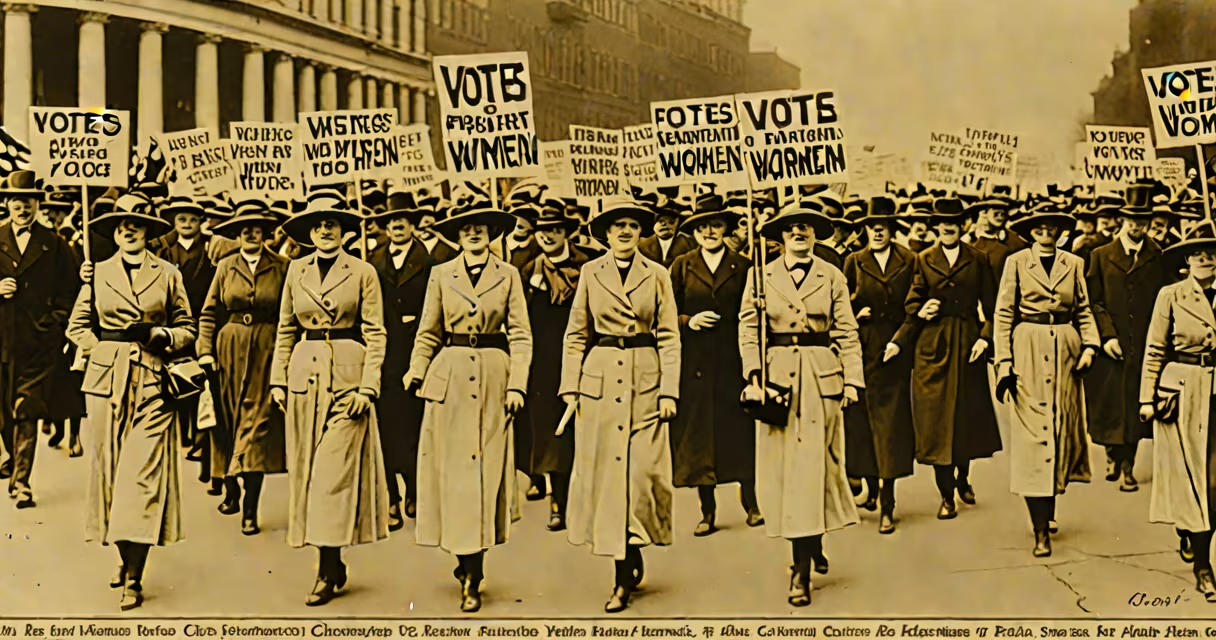
The 19th Amendment to the U.S. Constitution, ratified in 1920, granted women the right to vote nationwide, ending decades of organized activism and legal barriers to female suffrage.
Passed by Congress on June 4, 1919, and officially ratified on August 18, 1920, the amendment altered the foundation of American democracy by extending voting rights to over half the population. Its passage required approval from 36 states, with Tennessee's vote providing the final, narrow margin needed.
Despite being a foundational civil rights achievement, the 19th Amendment did not guarantee equal access to the ballot for all women. Black women in the South faced continued voter suppression through literacy tests, poll taxes, and intimidation well into the 1960s.
The amendment prohibits any U.S. state or federal authority from denying the right to vote based on sex. This means that once ratified, all citizens who meet other voting requirements-such as age, residency, and registration-must be allowed to vote regardless of gender.
Before ratification, voting rights were determined by individual states. Some states, like Wyoming (1869), had already granted women the vote. Others, like Mississippi, banned women from voting until the 1960s. The 19th Amendment standardized suffrage across state lines.
Amendments to the Constitution require a two-thirds vote in both houses of Congress and ratification by three-fourths of the states. The 19th Amendment passed Congress with a 2/3 majority and was ratified by 36 out of 48 states within 14 months.
Leaders such as Susan B. Anthony, Elizabeth Cady Stanton, and Alice Paul mobilized thousands through speeches, protests, and lobbying. Anthony and Stanton founded the National Woman Suffrage Association in 1869, advocating for a federal amendment.
Alice Paul led the more militant National Woman's Party, organizing the 1913 Women's March on Washington-a protest that drew 5,000 participants and resulted in police violence against demonstrators. The march drew national attention and pressured President Woodrow Wilson to support the amendment.
Paul also orchestrated the Silent Sentinels, women who picketed the White House daily from 1917 to 1919. Over 200 were arrested and imprisoned, with some enduring force-feeding during hunger strikes. Their actions contributed to public pressure that helped secure the amendment's passage.
Many assume the 19th Amendment gave all women the right to vote immediately. In reality, it only removed sex-based disenfranchisement. Access still depended on state laws, which often excluded marginalized groups.
Another misconception is that the amendment passed easily. It failed in Congress multiple times before 1919. The final vote in the Senate was 56-25, with 10 senators changing their votes after a last-minute campaign by suffragists.
Some believe the movement was unified. In fact, divisions existed between moderate and radical factions. The National American Woman Suffrage Association focused on state-by-state campaigns, while the National Woman's Party pursued federal action and civil disobedience.
The 19th Amendment set a precedent for future civil rights legislation. It demonstrated that constitutional change was possible through sustained grassroots pressure and strategic political engagement.
Its legacy extends beyond voting. The victory empowered women to run for office, influence policy, and participate in democratic institutions. By 1964, 10 women had served in the U.S. Senate; by 2020, that number reached 25.
However, the amendment's limitations remain visible. Native American women were not granted citizenship until 1924, and even then, many states denied them voting rights. Mexican-American women in Texas faced voter suppression until the 1950s. The Voting Rights Act of 1965 addressed some gaps, but disparities persist.
| Aspect | Fact | Source |
|---|---|---|
| Time to ratification | 14 months after congressional passage | National Archives |
| Final state to ratify | Tennessee (August 18, 1920) | History.com |
| Number of suffragists arrested | Over 200 during White House picketing | National Women's Party records, cited in Women and the Vote by Ellen Carol DuBois |
| First woman elected to Congress | Jeannette Rankin (Montana), 1917 | U.S. Senate Historical Office |
I once attended a reenactment of the 1913 Women's March in Washington, D.C., where descendants of original marchers carried the same signs. The energy was electric-not because of nostalgia, but because the event reminded me that rights aren't permanent. They're earned, defended, and sometimes lost.
One non-obvious fact: the 19th Amendment was not initially drafted to apply to all women equally. The original version included language excluding women in certain territories and military dependents. That clause was removed during debate, but its inclusion shows how race, class, and geography shaped early drafts.
For context, the 19th Amendment was part of a broader wave of reform. The 16th Amendment (income tax) and 17th Amendment (direct election of senators) were passed around the same time. These changes reflect a period of intense constitutional evolution driven by progressive movements.
Understanding the 19th Amendment requires seeing it not as a single moment, but as the culmination of decades of struggle. The fight for women's suffrage spanned four decades, involved over 50 state campaigns, and relied on alliances with labor, abolitionist, and civil rights groups.