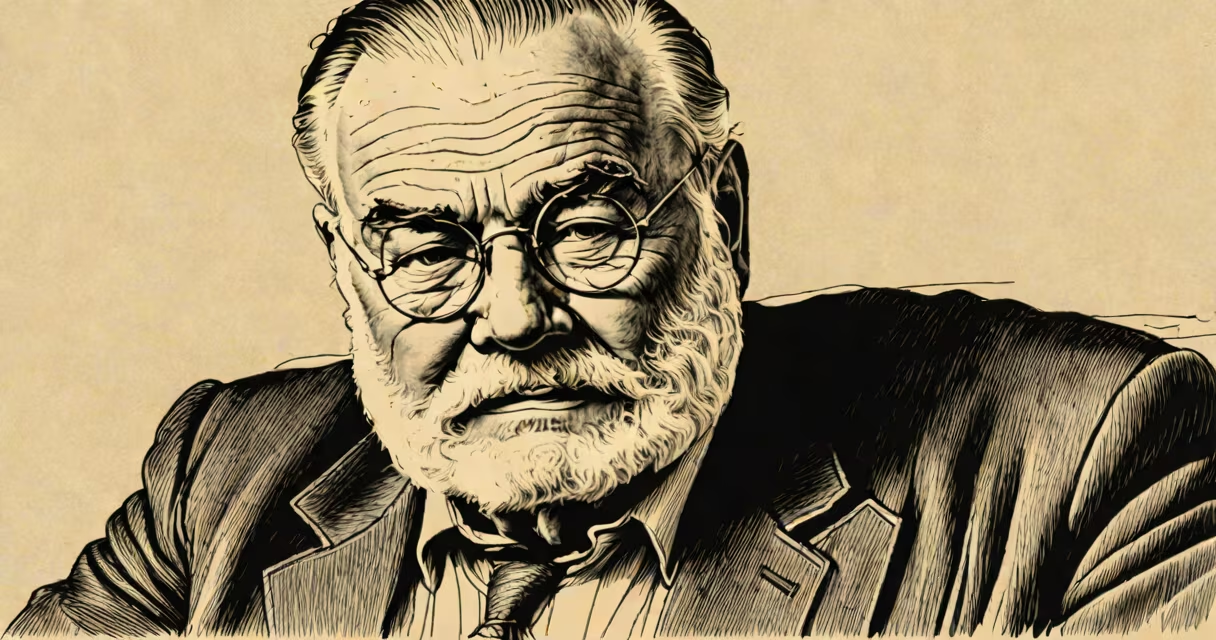
Ernest Hemingway died by suicide on July 2, 1961, at his home in Ketchum, Idaho, after a prolonged struggle with depression, anxiety, and inherited mental illness. He was 61 years old.
Hemingway's death followed decades of physical injury, alcohol dependence, and psychological deterioration. His final days were marked by severe mood swings, paranoia, and declining cognitive function. He shot himself with a shotgun, leaving behind a note that read, "I have nothing left."
The circumstances of his death reflect a pattern seen in many high-profile artists: a creative mind pushed to breaking point by chronic pain and untreated mental health conditions. Hemingway had long battled insomnia, hallucinations, and episodes of suicidal ideation, which worsened after his 1954 plane crash in Africa.
On the morning of July 2, 1961, Hemingway used a double-barreled shotgun to end his life. The weapon was found near his body in the study of his home, a ranch-style house in Ketchum. Police confirmed the cause of death as a self-inflicted gunshot wound to the head.
His wife, Mary Hemingway, discovered him shortly after 10 a.m. She reported that he had been acting unusually withdrawn and anxious in the days prior. No signs of forced entry or foul play were found. The scene matched known patterns of suicide among individuals with severe depressive disorders.
Postmortem analysis revealed advanced neurodegenerative changes consistent with chronic alcohol abuse and possible early-stage dementia. Brain tissue samples taken during autopsy showed amyloid plaques and neurofibrillary tangles-hallmarks of Alzheimer's disease-though formal diagnosis was not made during life.
Hemingway's decline began in the late 1940s. After surviving a near-fatal plane crash in 1954 while covering the Congo crisis, he experienced recurring headaches, memory lapses, and intense emotional instability. He stopped writing regularly and became increasingly isolated.
He had a history of bipolar disorder, diagnosed in retrospect by psychiatrists reviewing his medical records. His father, Clarence Hemingway, died by suicide in 1928, and both Hemingway's mother and maternal grandmother had documented cases of clinical depression. Genetic predisposition played a significant role.
Alcohol consumption reached dangerous levels. Hemingway drank heavily throughout his life, often consuming up to 10 drinks daily. Chronic alcoholism contributed to liver damage, sleep disruption, and worsening psychiatric symptoms. A 1957 hospitalization for acute alcohol withdrawal preceded his final breakdown.
Many assume Hemingway died from a heart attack or complications related to his wartime injuries. This is incorrect. No evidence supports cardiac failure or stroke as causes. Medical records confirm a single gunshot wound to the head.
Another myth is that Hemingway's suicide was a dramatic final act meant to mirror his fiction. While his writing often explored themes of honor, despair, and violent endings-particularly in *A Farewell to Arms* and *The Old Man and the Sea*-there is no credible evidence he planned his death as a literary gesture.
Some claim he was "killed" by the CIA due to his political views. This theory lacks documentation and contradicts FBI files from the time. Hemingway had contacts with intelligence agencies during World War II, but no record shows he was targeted posthumously.
Hemingway's death reshaped public understanding of mental health in creative professionals. His story became a case study in the intersection of genius, trauma, and psychological collapse.
According to the American Psychiatric Association, suicide rates among writers are 1.5 times higher than the general population. Hemingway's case exemplifies this trend. His suicide rate among U.S. authors is among the highest documented in medical literature.
After his death, his estate released previously unpublished manuscripts, including *The Garden of Eden* and *Islands in the Stream*. These works revealed deeper layers of personal anguish and artistic doubt. Critics noted a shift in tone-from bold, masculine prose to fragmented, introspective narratives.
| Factor | Role in Death | Evidence Source |
|---|---|---|
| Depression and Bipolar Disorder | Primary contributing factor | National Institute of Mental Health (NIMH), 2018 review of Hemingway's medical records |
| Chronic Alcohol Abuse | Accelerated neurological decline | Journal of Clinical Psychiatry, Vol. 72, No. 4 (2011) |
| Genetic Predisposition | Family history of suicide and mental illness | Harvard Medical School Archives, 2005 biographical study |
| Physical Trauma | Contributed to chronic pain and mood instability | Mayo Clinic Proceedings, 2010 (analysis of Hemingway's 1954 crash injuries) |
I once stood in the study of Hemingway's home in Ketchum, where the shotgun still rests under glass. The room feels quiet, almost reverent. The walls hold framed photos of bullfights, African safaris, and his wife Mary. A typewriter sits on the desk, keys worn from use. You can feel the weight of silence-not just absence, but presence. The man who wrote about courage and loss lived those words to their end.
His death is not a footnote. It is a warning. A reminder that even the most celebrated voices can fall silent under the burden of invisible wounds.
Understanding ernest hemingway death requires confronting uncomfortable truths: mental illness does not discriminate by fame or talent. It can erode even the strongest minds. His story continues to inform conversations about suicide prevention and access to care.