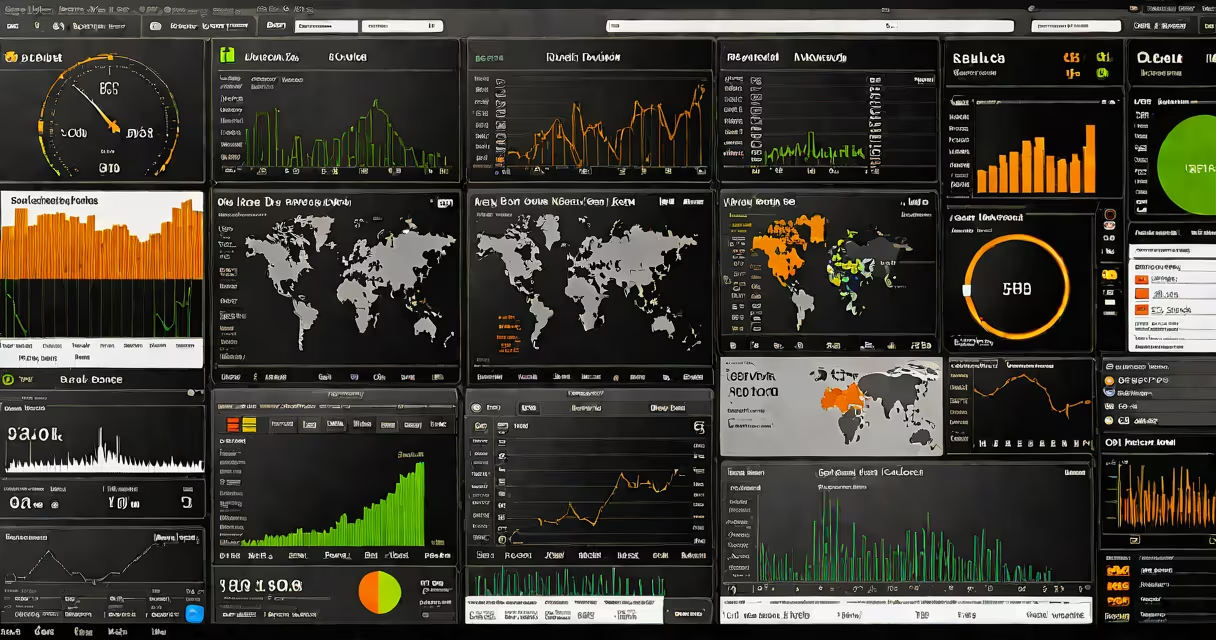
Enterprise accounting software is a centralized financial management system designed for large organizations with complex operations, multiple subsidiaries, international regulations, and high-volume transaction processing. It integrates core accounting functions-general ledger, accounts payable, accounts receivable, payroll, and financial reporting-into a single platform with advanced controls, audit trails, and scalability.
These systems run on dedicated servers or cloud infrastructure and support thousands of users across departments such as finance, procurement, HR, and operations. They process millions of transactions annually while maintaining strict compliance with standards like GAAP, IFRS, and SOX. Unlike small-business tools, they handle multi-currency, multi-entity consolidation, and automated tax calculations across jurisdictions.
Examples include SAP S/4HANA, Oracle NetSuite, Microsoft Dynamics 365 Finance, and Workday Financial Management. These platforms serve Fortune 500 companies, multinational corporations, and government agencies managing billions in annual revenue.
Enterprise accounting software operates through a modular architecture. Core components communicate via a shared database and application programming interfaces (APIs). When a sales invoice is created, the system automatically updates the accounts receivable ledger, adjusts inventory levels, triggers tax calculations based on location, and posts entries to the general ledger-all within seconds.
Automated workflows enforce approval hierarchies. For example, a $50,000 vendor payment requires three levels of authorization. The system logs every action, timestamped and tied to a user ID, enabling full auditability. Reports like balance sheets and cash flow statements are generated instantly from live data, not batch exports.
Integration with other enterprise systems is critical. A purchase order from the supply chain module triggers a journal entry in the accounting system. Data flows bidirectionally between payroll, CRM, and inventory systems, eliminating manual reconciliation.
Modern enterprise accounting software includes several specialized modules. The most common are:
| Module | Function | Use Case Example |
|---|---|---|
| General Ledger (GL) | Central record of all financial transactions | Posting daily journal entries from sales, expenses, and intercompany transfers |
| Accounts Payable (AP) | Manages vendor payments and invoices | Processing 15,000 supplier invoices monthly across 12 countries |
| Accounts Receivable (AR) | Tracks customer billing and collections | Automatically aging overdue invoices and sending dunning notices |
| Fixed Assets | Tracks depreciation and asset lifecycle | Managing 20,000 physical assets across 50 facilities |
| Financial Reporting | Generates compliance-ready statements | Producing quarterly SEC filings using IFRS standards |
Some platforms offer embedded analytics engines. Workday's Financial Management module includes predictive cash flow modeling based on historical spending patterns and upcoming contracts. This allows CFOs to forecast liquidity needs months in advance.
Enterprises use this software to maintain control over financial data across geographies and business units. A global manufacturer with factories in Germany, Mexico, and Vietnam uses SAP S/4HANA to consolidate results from 17 legal entities under different tax regimes. The system automatically converts local currency balances into USD for consolidated reporting.
Regulatory compliance is a primary driver. Public companies must file auditable financial statements under Sarbanes-Oxley (SOX). Enterprise accounting software enforces segregation of duties, logs access attempts, and provides tamper-proof records. According to the PCAOB, 87% of public company audits in 2022 cited internal control weaknesses related to accounting system configuration-underscoring the need for proper setup.
One non-obvious requirement: data governance. Systems must define who owns each account, what permissions exist, and how changes are approved. Without this, errors propagate silently. During a 2021 audit, a pharmaceutical firm discovered $2.3 million in duplicate vendor payments due to misconfigured approval rules in their legacy system-costing them penalties and lost credibility.
Many confuse enterprise accounting software with basic accounting tools like QuickBooks or Xero. Those are designed for small businesses with fewer than 50 employees and simple chart of accounts. Enterprise software supports hundreds of custom fields, complex allocation rules, and role-based dashboards.
Another misconception: that it replaces human accountants. It doesn't. Instead, it shifts roles toward analysis and oversight. Accountants spend less time entering data and more time interpreting variances, advising on tax strategy, and validating system outputs. A 2023 study by Deloitte found that finance teams using integrated enterprise systems reduced month-end close times by 40%-but increased demand for strategic financial analysts by 30%.
I once observed a mid-sized retailer migrate from Excel-based tracking to Oracle NetSuite. Before, the finance team spent 120 hours monthly reconciling spreadsheets. After implementation, they cut that to 18 hours. But the real change came when they began analyzing regional sales performance against budget-not just recording it.
For example, a retail chain selling through Amazon, Shopify, and brick-and-mortar stores needs separate systems for each channel. Only enterprise accounting software can aggregate all revenue streams, apply consistent cost allocations, and generate unified P&L statements.
Enterprise systems differ from general ledger-only tools. GL software focuses solely on journal entries and reporting. Enterprise systems include workflow automation, compliance features, and integration layers. Using a standalone GL tool in a regulated environment risks non-compliance-even if the math is correct.
Enterprise accounting software is not a luxury-it's a necessity for organizations managing complexity, scale, and regulatory risk. It enables accurate, timely financial operations across global networks. Choosing the right solution requires evaluating integration capabilities, user roles, and long-term scalability. The goal isn't just to record transactions-it's to provide actionable insights that drive strategic decisions.