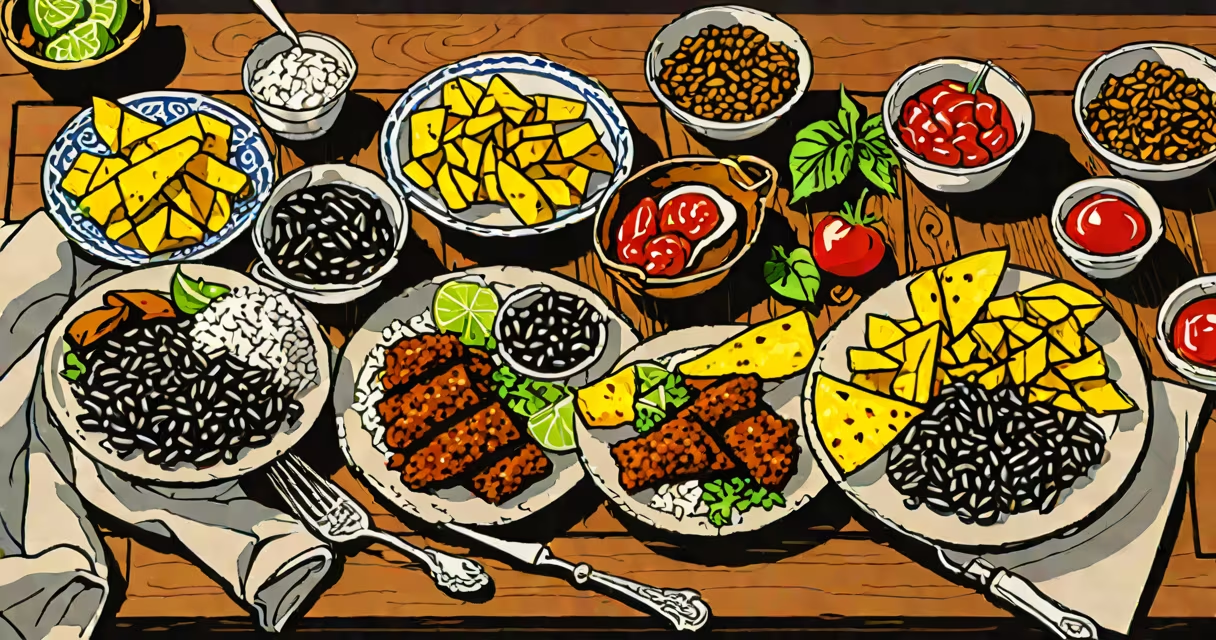
Costa Rica traditional food consists of home-cooked meals rooted in Spanish, Indigenous, and Afro-Caribbean influences, centered around rice, beans, plantains, and fresh produce. Dishes like gallo pinto and casado reflect daily life and regional diversity across the country's six provinces.
These meals form the core of Costa Rican identity. They're prepared in kitchens from San José to the Pacific coast, often using locally grown ingredients and time-honored techniques passed down through generations. The cuisine emphasizes balance-starchy staples paired with protein, vegetables, and tropical fruit.
Costa Rican food is not a single dish but a collection of regional specialties shaped by geography and history. Coastal areas feature seafood-heavy versions of traditional recipes, while highland communities rely on corn, potatoes, and slow-cooked stews. The fusion of cultures explains why a single meal can taste both familiar and distinct depending on location.
Most meals follow a consistent structure: a base of rice and black beans, a protein such as chicken, beef, or fish, sides like fried plantains or yucca, and a salad or fruit. This structure ensures satiety and nutrition in a climate where physical labor is common.
For example, gallo pinto-the national dish-is made by sautéing leftover rice with black beans, onions, peppers, and a touch of oil. It's typically eaten at breakfast with eggs, cheese, and avocado. The name comes from the Spanish "gallo" (rooster) and "pinto" (spotted), referencing the speckled appearance of the mixture.
Another staple, casado, is a lunch plate featuring rice, black beans, shredded cabbage, plantains, a protein (often grilled fish or chicken), and a side of curtido-a tangy cabbage slaw. It's served on a large plate with a small bowl of soup on the side. The combination offers texture contrast and balanced flavor: savory, sweet, sour, and salty.
The foundation of Costa Rica traditional food lies in five core elements:
| Component | Common Forms | Regional Variation |
|---|---|---|
| Rice and beans | Gallo pinto, arroz con pollo, sopa negra | Coastal regions use coconut milk; highlands use less oil |
| Starches | Plátanos maduros, yuca, ñame | Plantains fried or baked; yuca often served with mojo sauce |
| Proteins | Chicken, beef, fish, pork | Pacific coast favors grilled fish; inland areas use more beef |
| Vegetables | Cabbage, tomatoes, cucumbers, onions | Used raw in salads or pickled in curtido |
| Fruits | Mango, papaya, guava, pineapple | Served fresh or blended into agua de frutas |
Each component plays a role in flavor and function. Rice and beans provide complex carbohydrates and fiber. Plantains offer energy and natural sweetness. Vegetables add acidity and crunch. Fruits deliver vitamin C and refreshment.
One lesser-known fact: the word "casado" literally means "married" in Spanish. The dish is named for its marriage of flavors-each element complements the others without overpowering. This naming reflects the cultural value placed on harmony in food and family life.
Costa Rica traditional food is consumed daily across urban and rural settings. In homes, families gather around a single table for lunch between 12 and 2 PM. In markets, vendors serve plates of gallo pinto with fried eggs for under $2 USD.
Restaurants called "comidas típicas" specialize in these meals. A typical menu includes options like arroz con pollo, tamales de elote (corn tamales), and empanadas de queso. Prices remain low-most meals cost between $3 and $6 USD-because ingredients are locally sourced and seasonal.
For example, in the town of Santa Cruz near the Osa Peninsula, a local vendor named Rosa serves a version of casado with grilled snapper caught that morning. She uses wild-caught fish, native corn, and herbs from her garden. Her version costs $4.50 and feeds two people.
These meals are not just sustenance-they're social rituals. Sharing a plate of gallo pinto with family or coworkers reinforces community bonds. Eating traditional food in Costa Rica is tied to identity, pride, and belonging.
Many assume Costa Rican food is spicy. It is not. While some dishes include chili peppers, heat is minimal compared to neighboring countries like Nicaragua or Honduras. The flavor profile leans toward earthy, sweet, and savory.
Another misconception: that "tamales" in Costa Rica are made with masa harina and wrapped in corn husks like in Mexico. In reality, tamales de elote are made from fresh corn dough, steamed in banana leaves, and often served with a light broth. They're softer and sweeter than their Mexican counterparts.
A third error: equating "costa rica traditional food" with "fusion" or "modern" cuisine. While restaurants in San José do blend global styles-like sushi tacos or ceviche bowls-these are not part of the traditional canon. True traditional food avoids imported ingredients and relies on local production.
According to the Ministry of Agriculture and Livestock (MAG), over 70% of Costa Rican households prepare at least one traditional meal per day. The National Institute of Culture reports that 89% of Costa Ricans associate gallo pinto with childhood memories, highlighting its emotional weight beyond nutrition.
I once visited a small village in Puntarenas during a festival. A woman named María cooked a batch of tamales de elote in a clay pot over an open fire. She used corn from her field, fresh milk from her cow, and cinnamon from a tree in her yard. The result was rich, moist, and deeply aromatic. I ate it with my hands, as locals do. That meal stayed with me-not because it was exotic, but because it felt real.
Understanding costa rica traditional food means recognizing its simplicity, resilience, and cultural continuity. It's not about presentation or novelty-it's about nourishment, memory, and place.
When you eat gallo pinto or casado, you're not just consuming food. You're engaging with centuries of adaptation, survival, and joy. These meals endure because they meet basic human needs and express shared values.