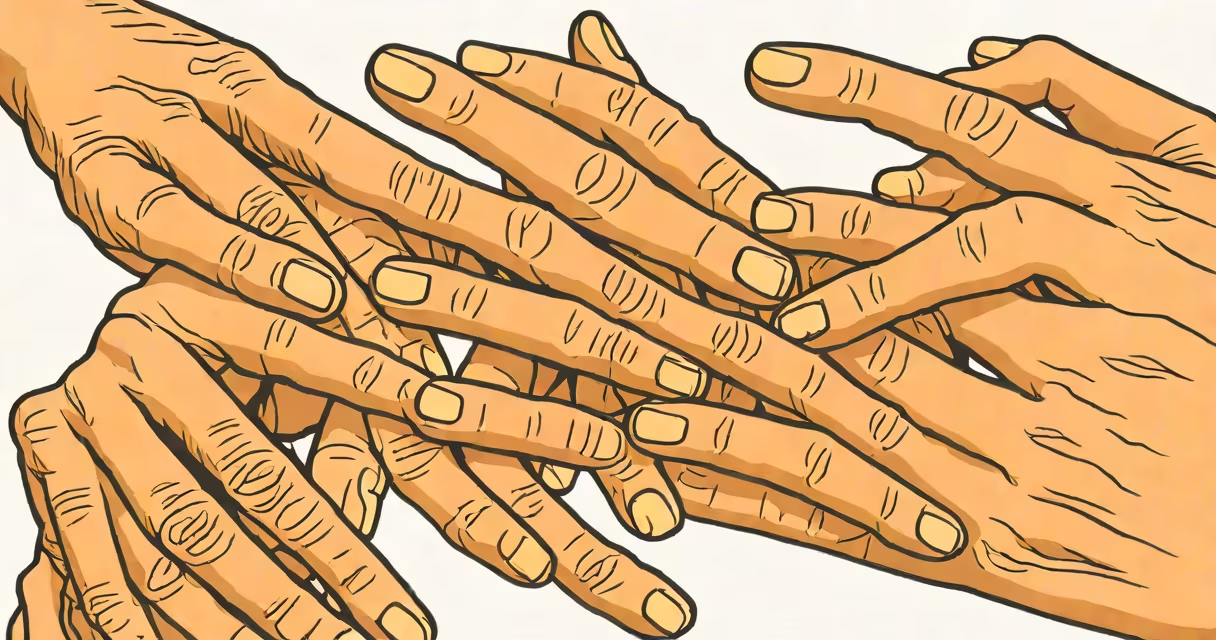
Early signs of rheumatoid arthritis in hands appear as symmetrical joint swelling, warmth, and persistent stiffness-often lasting more than 30 minutes after waking. These symptoms typically develop gradually over weeks, not days, and affect the small joints of the hands and wrists.
Rheumatoid arthritis (RA) is an autoimmune disorder where the immune system attacks the lining of joints, leading to inflammation, pain, and eventual joint damage. In the hands, this process often begins in the metacarpophalangeal (MCP) joints-the knuckles where fingers meet the hand-and the proximal interphalangeal (PIP) joints, which are the middle finger joints. Early detection allows treatment to begin before irreversible damage occurs.
According to the American College of Rheumatology, about 75% of people with RA experience symptoms in their hands within the first year of disease onset. The condition affects women more than men, with a ratio of roughly 3:1, and most cases begin between ages 30 and 60. However, early signs can emerge in younger adults and even teens.
Swelling is the most common early sign. It results from synovial membrane thickening due to chronic inflammation. Swelling may be subtle at first-felt more than seen-and often appears symmetrically, meaning both hands are affected similarly. A person might notice their rings feel tighter or struggle to close their fist.
Morning stiffness is another sign. Unlike mechanical stiffness from overuse, RA-related stiffness lasts longer-typically 30 minutes to several hours. This stiffness improves with movement but returns after rest. A 2021 study published in Arthritis & Rheumatology found that 88% of early RA patients reported prolonged morning stiffness, compared to 32% in osteoarthritis patients.
Pain and tenderness are frequently present. Joints may hurt during light activity-like turning a doorknob or typing-without obvious injury. Warmth over the joint, especially when touched, indicates active inflammation. Some patients describe a "burning" sensation, particularly at night or after prolonged use.
RA follows a predictable pattern in the hands. It typically targets the MCP and PIP joints first, then progresses to the distal interphalangeal (DIP) joints in later stages. DIP joint involvement is rare in RA but common in osteoarthritis, making this distinction critical for early diagnosis.
| Joint Type | Common in RA? | Typical Symptoms | Why It Matters |
|---|---|---|---|
| MCP joints (knuckles) | Yes | Swelling, pain, reduced grip strength | Often first site of RA; visible as "buttonhole" deformity if untreated |
| PIP joints (middle finger joints) | Yes | Stiffness, swelling, limited bending | May show "swan-neck" or "boutonnière" deformities over time |
| DIP joints (tip of fingers) | No | Minimal or absent swelling | Helps differentiate RA from osteoarthritis |
| Wrist joints | Yes | Swelling, pain, reduced range of motion | Can precede hand symptoms; may mimic carpal tunnel syndrome |
A key diagnostic clue is symmetry. RA almost always affects the same joints on both hands. For example, if the left index finger MCP joint swells, the right index finger joint usually does too. Asymmetry suggests other conditions like psoriatic arthritis or gout.
Early signs of rheumatoid arthritis in hands are often dismissed as repetitive strain injury, aging, or minor trauma. A 2020 survey by the National Institute of Arthritis and Musculoskeletal and Skin Diseases found that 40% of RA patients waited over six months to see a specialist after noticing symptoms.
One frequent error is confusing RA with osteoarthritis. OA causes pain and stiffness in weight-bearing joints and often affects one side of the body. In contrast, RA targets small joints symmetrically and is associated with systemic symptoms like fatigue, low-grade fever, and loss of appetite-signs that go beyond joint discomfort.
Another misconception is that joint pain always worsens with use. In RA, pain often improves with gentle movement but returns after rest. This pattern-worse in the morning, better with activity-is a red flag for inflammatory arthritis.
Sarah, a 38-year-old graphic designer, noticed her right ring finger was stiff and swollen in the mornings. She assumed it was from typing. Over two weeks, the stiffness spread to her left hand and involved multiple knuckles. Her rings wouldn't fit anymore. By week four, she had trouble holding a pen.
She visited her primary care doctor, who initially diagnosed tendonitis. After three months of worsening symptoms-including fatigue and low-grade fevers-she saw a rheumatologist. Blood tests showed elevated rheumatoid factor (RF) and anti-CCP antibodies. An ultrasound confirmed synovitis in her MCP and PIP joints. Diagnosis: early rheumatoid arthritis.
Starting methotrexate within six months of symptom onset prevented joint erosion. Without early treatment, up to 70% of patients develop structural damage within five years, according to the European League Against Rheumatism.
If joint swelling, warmth, or stiffness persists for more than two weeks-even if mild-consult a healthcare provider. Early intervention reduces long-term disability. The goal is to start treatment before bone erosion begins, which can happen within 12 to 18 months of symptom onset.
Doctors use a combination of clinical exam, blood tests (rheumatoid factor, anti-CCP), and imaging (ultrasound or MRI) to confirm RA. Ultrasound detects inflammation before X-rays show damage. A 2022 study in The Lancet Rheumatology showed that ultrasound-guided diagnosis improved accuracy by 40% compared to clinical assessment alone.
Early signs of rheumatoid arthritis in hands are not just physical-they impact daily life. Simple tasks like buttoning clothes, opening jars, or using a smartphone become difficult. Recognizing these changes early leads to faster diagnosis and better outcomes.
Early signs of rheumatoid arthritis in hands are not inevitable harbingers of disability. With timely diagnosis and treatment, many people maintain function and quality of life. The window for effective intervention opens within months of symptom onset-making awareness and action important.